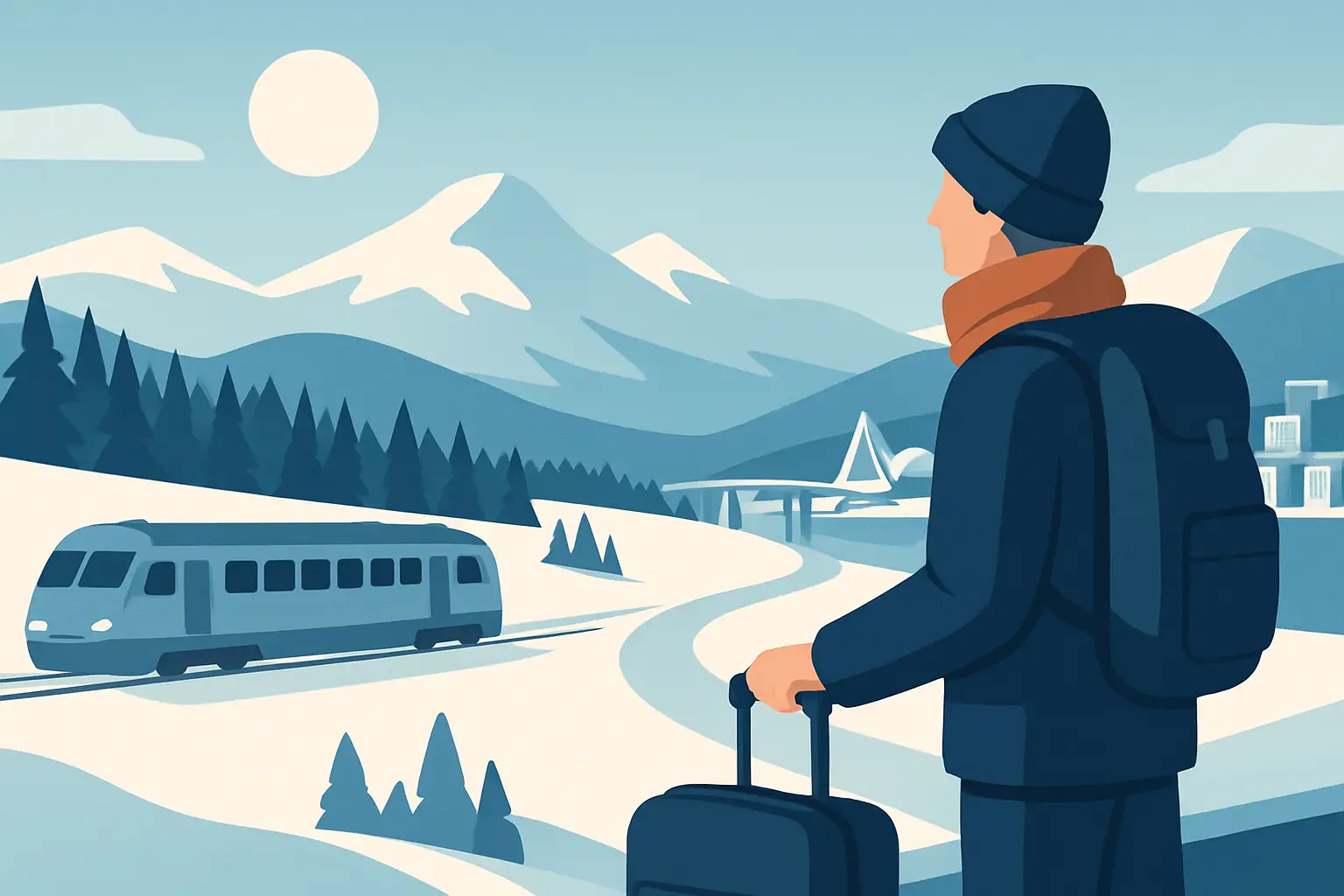
You land in Rovaniemi with that first-hit feeling – pine-scented air, snow underfoot, and the quiet that makes you lower your voice without thinking. Then someone mentions Tromso and suddenly your Lapland break turns into a proper Arctic journey. A rovaniemi to tromso winter tour is not just a transfer between two places. Done well, it is a rolling highlight reel: forest to fells, Finnish saunas to Norwegian fjords, and enough dark sky to give the Northern Lights a fair shot.
Why this route works in winter
Rovaniemi and Tromso both sell the Arctic dream, but they deliver it in different accents. Rovaniemi is all taiga forests, frozen rivers, cosy cabins and that feeling of being deep in the North without needing to go fully off-grid. Tromso is coastal and dramatic – mountains rising straight out of the sea, weather that can change its mind mid-sentence, and a lively little city that still feels like the edge of the map.
Link them together and you get variety without losing the thread. You can build a trip that includes huskies and reindeer on the Finnish side, then swap to fjord landscapes and whale season possibilities on the Norwegian side. The big win is that you are not betting everything on one microclimate. Aurora is never guaranteed, but moving across regions can help you find clearer skies when one area is clouded in.
Rovaniemi to Tromso winter tour: how the journey actually feels
On paper, it is a route across the top of Europe. In real life, it is a day of winter road travel that can feel surprisingly calm. The scenery changes in chapters. You start with dense forest and low light, then open stretches where the snow looks blue, then the border region where the land feels broader and emptier.
Most travellers underestimate the rhythm of Arctic distances. A few hours in, you stop caring about the clock and start caring about the next warm drink and the next viewpoint. The best tours plan the drive like an experience, not a grind: sensible breaks, places where you can walk for ten minutes to shake off the coach-seat stiffness, and timing that respects daylight. In midwinter, daylight is precious – you want to spend it looking at landscapes, not sitting in a petrol station queue.
There is a trade-off here. If you try to cram too many activities into the travel day, you risk turning it into a checklist. But if you treat it purely as transport, you miss the point. The sweet spot is one meaningful stop or experience, plus enough flexibility to respond to weather and road conditions.
When to go: the honest month-by-month feel
If you are choosing dates for a rovaniemi to tromso winter tour, start with what you want most.
December is peak fairy-tale. Snow cover is usually strong, Rovaniemi feels festive, and Tromso has that polar-night energy. The catch is that the sun barely shows itself, so your landscape time is limited. You can still do everything, but your photos will lean twilight-blue.
January and February are the deep winter months. Cold can be properly sharp inland, which is brilliant for crisp air and squeaky snow, but it demands better clothing and a realistic attitude. These are strong months for aurora because nights are long and the snow reflects light beautifully.
March is the crowd-pleaser for many GB travellers. You often get longer days, slightly kinder temperatures, and still plenty of darkness for Northern Lights at night. If you want a trip that feels adventurous but not punishing, March is hard to beat.
It depends, of course. Coastal Tromso can be milder but wetter, while inland Finland can be colder but more stable. A good plan respects both.
What to prioritise: aurora, animals, or adrenaline?
This is where trips get memorable or muddled. Choose your headline experiences, then let everything else support them.
If Northern Lights are your big reason, build your days to protect your nights. That means not stacking early starts after late aurora hunts, and keeping some evenings flexible. It also means choosing guides who understand sky reading, local microclimates, and the difference between “we saw green” and “you felt the sky move”. Photography-focused options are worth considering if you want images you will actually frame, not just mobile-phone grain.
If you are here for animals and heritage, Lapland wins early. Huskies are pure joy – noisy, eager, chaotic in the best way – and reindeer experiences can be quietly moving, especially when you learn how closely Sámi culture is tied to the land. Wildlife parks like Ranua Arctic Zoo can make sense for families or anyone who wants a structured chance to see Arctic species up close.
If you want adrenaline, mix snowmobile-style energy with slower experiences like snowshoeing or ice fishing. The contrast is what makes it feel like a real winter life, not just an action holiday.
The packing reality: comfort is the secret weapon
The Arctic does not reward bravado. It rewards layers.
Start with thermal base layers that actually fit properly. Add a mid-layer that traps warmth, then a proper insulated outer layer that blocks wind. Footwear matters more than almost anything. You want winter boots with room for thick socks, because tight boots kill circulation and cold feet end the night early.
Bring gloves that work in two modes: thin liners for camera/mobile phone moments, and warm outer gloves for standing still under the aurora. A hat that covers your ears is non-negotiable. Hand warmers are not dramatic – they are morale.
A small day bag makes life easier for coach stops and short walks. Pack a bottle for water, a snack, and a spare layer. Arctic air dehydrates quietly, and you feel it most when you are outdoors for long stretches.
A realistic take on Northern Lights on this route
People arrive with a single mental image: green curtains above a cabin. Sometimes you get that. Sometimes you get something better – a whole horizon lit up, or fast-moving bands that make you forget the cold. And sometimes you get cloud.
The trick is to plan for the chase, not just the outcome. The best aurora nights feel like an adventure even before the lights show. You are out in real darkness, away from light pollution, with guides who can read forecasts and make smart decisions fast.
If you are comparing options, pay attention to group size and flexibility. Big groups move slowly. Small groups can pivot quickly when the sky breaks open somewhere else. Also look at how tours handle “no show” nights. Some operators build in multiple attempts or longer hunt windows, which can transform your odds across a multi-day itinerary.
Choosing your tour style: group, private, or photo-led
A group tour is social and cost-effective, and it suits travellers who like a bit of buzz and do not mind sharing the moment. The downside is pace. You will stop when the group stops, and you will move when the group moves.
Private tours cost more but buy you time and control. They are ideal for proposals, families with young children, or travellers who want to make the trip about photography or quiet. If your main goal is a specific outcome like aurora images, private can make sense because you are not negotiating priorities with strangers.
Photo-led tours sit in the middle. You get a guide who thinks in compositions, locations and timing, which helps if you want more than a memory. Just be clear with yourself: do you want to learn, or do you want someone to do the technical heavy lifting while you enjoy the sky?
For travellers who want a curated, small-group approach with that “The Real” focus, it is worth looking at multi-day routes from ArKtictopia that treat the journey as part of the experience rather than a box-ticking transfer.
Practical logistics that make or break the experience
Border crossings are usually straightforward, but winter roads are the real variable. Snow conditions, wind, and visibility can change plans. A good operator builds buffer time and does not promise impossibly tight schedules.
If you are self-driving part of the way, be honest about your winter driving confidence. Dark roads, drifting snow, and long distances can be tiring even for experienced drivers. Guided travel removes that pressure and lets you actually look out of the window.
Accommodation choices matter too. In Rovaniemi, a cosy base with easy pickups keeps life simple. Near Tromso, consider whether you want to stay in the city for restaurants and atmosphere, or outside for darker skies. City lights do not kill aurora, but they can soften the drama.
Making it feel like a journey, not two separate trips
The best rovaniemi to tromso winter tour has a storyline. It starts with the forested heart of Lapland, builds through hands-on winter life – huskies, reindeer, snow under snowshoes – then opens into Norway’s coastal scale.
Do yourself a favour and leave white space. Not a wasted day, a breathing day. Time for a sauna, a slow lunch, a walk on a frozen river, or just sitting with a hot drink while the sky does whatever it is going to do. The Arctic is not here to be consumed quickly. It is here to be felt.
If you plan for that, the journey gives you something rare: not just photos, but the kind of calm confidence that comes from real cold air, real distance, and the sense that you went north on purpose.