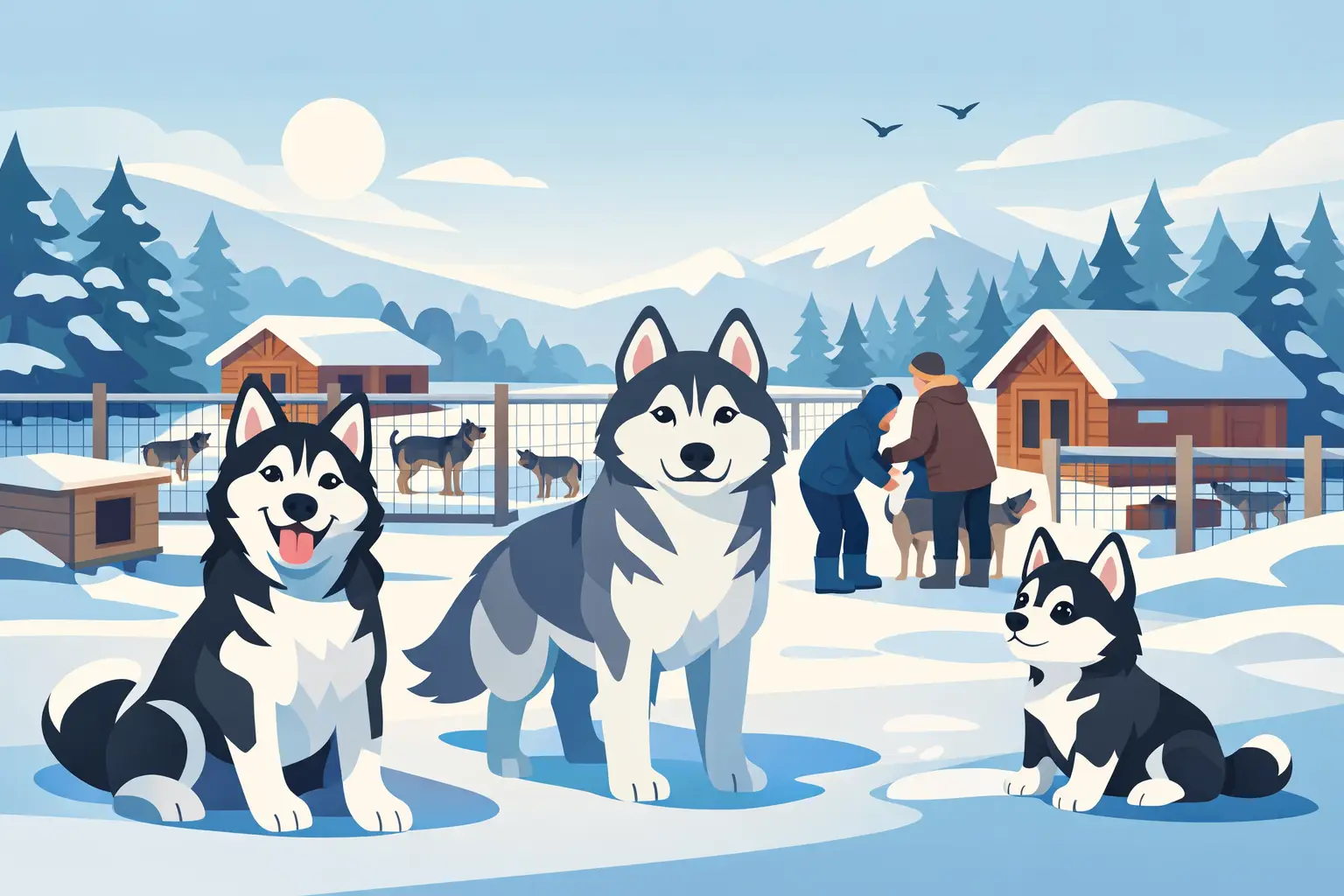
The sound arrives before the sled does. At Finnish husky kennels, dozens of eager dogs may bark, bounce and pull against their lines, each one convinced that today they should lead the team. Then the runners lift, the brake releases, and the noise falls away behind you. Within minutes, there is only the whisper of sled runners on snow, frozen forest and the steady rhythm of paws.
That contrast is what makes a husky experience one of Lapland’s most unforgettable winter adventures. It is thrilling, certainly, but it is not a theme-park ride. A good kennel visit offers a glimpse into working dogs, Arctic landscapes and the close partnership between musher and team.
What happens at Finnish husky kennels?
Most visitors picture the silent sled journey first. It is the magical part, but the experience starts earlier. After arrival, your guide or kennel host will introduce the dogs and explain how the sleds work. You will usually meet the team in their kennel area, where the energy can feel wonderfully chaotic before departure.
Huskies are bred and trained to run. On a winter morning, they know exactly what the harnesses, sleds and guide’s preparations mean. Their excitement is not something staged for visitors. It is part of life at a working kennel, and it is why the start can be louder than people expect.
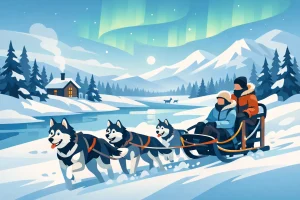
Before setting off, guests are generally shown the key safety points: where to stand, how to use the brake, how to help on hills, and what to do if the sled stops. On self-driving rides, two adults commonly share a sled and switch drivers part-way through. One person stands at the back to steer and brake; the other sits in the sled beneath warm blankets. Families may have different arrangements depending on children’s ages, weather and the kennel’s own safety policy.
Then comes the moment that stays with you. The dogs pull away with purpose, the trail opens ahead, and Finnish Lapland becomes very quiet indeed.
The ride is not always the same
A husky safari can be a gentle introduction or a proper outdoor adventure. Shorter rides are ideal when you have a packed Lapland itinerary, young children, or simply want to experience sledding without committing to a long time in the cold. Longer routes bring more wilderness, more time driving and a stronger sense of travelling through the landscape rather than passing through it.
Weather matters. Fresh snow can make a forest trail feel like a fairy-tale, while a colder, firmer day may make the ride faster and sharper. Wind, temperature, trail conditions and the dogs’ pace all shape the experience. This is real nature, not a conveyor belt, and that is exactly the point.
How to choose responsible Finnish husky kennels
Not every husky visit offers the same level of care, access or atmosphere. The best choice depends on whether you want a family-friendly introduction, an active self-drive safari, a private outing or a longer wilderness day. Yet there are a few signs that should always guide your decision.
Look for an operator that is clear about what the day includes. You should know the approximate sledding distance or duration, whether you will drive, how transfers are organised, and what clothing is provided. Arctic weather is part of the adventure, but unclear arrangements should not be.
A responsible experience should also make space for questions about the dogs. Good guides speak openly about training, feeding, rest, veterinary care and the rhythm of a kennel season. They do not need to give you a polished speech. Straight answers and visible, calm professional handling tell you far more.
Pay attention to the dogs themselves. Before a run, an excited team is normal. During handling, the atmosphere should still feel controlled and respectful. Dogs should be managed by people who understand them, and guests should be given clear instructions on how to approach and interact with them. Never assume every dog wants a cuddle. Some are affectionate and curious; others are focused on the job or prefer a little space.
Small-group experiences can make a genuine difference here. There is more time to listen to the briefing, ask questions and meet the dogs without feeling hurried through a crowded attraction. For couples, friends and solo travellers, that personal contact often turns a good excursion into a story worth telling for years.
What to wear for a husky safari in Lapland
You do not need to arrive as a polar explorer, but you do need to respect the cold. Sitting in a sled is often colder than walking through town because you are not generating much body heat. Even drivers can feel the chill on hands, feet and face after time on an exposed trail.
Many guided winter tours provide an insulated thermal suit and boots, but check what is included when you book. Bring warm base layers, thick socks, gloves or mittens, and a hat that covers your ears. Mittens are usually warmer than gloves, although gloves can be useful if you are driving and want more grip. A buff or scarf helps protect your cheeks and nose on colder days.
Avoid dressing only for the temperature shown on your weather app. Arctic cold feels different when you are sitting still, moving through the forest or standing outside for a briefing. Layering gives you options, and dry clothing is always warmer than damp clothing.
Bring your camera, but do not let it run the ride
The snowy spruce trees, bright eyes of the dogs and blue winter light make Finnish husky kennels wonderfully photogenic. Keep your phone or camera accessible, but secure it before the sled leaves. You will have better chances for photographs at stops or after the ride than while trying to balance, steer and film at once.
Cold drains batteries quickly. Keep spare batteries or your phone close to your body inside a pocket, and use a wrist strap if you have one. More importantly, give yourself a few minutes without a screen. The sound of the runners and the dogs’ breathing is part of the memory.
Is husky sledding suitable for families?
For many families, it is one of the highlights of a winter holiday in Rovaniemi. Children often love meeting the dogs almost as much as the ride itself, and being tucked into a sled under warm blankets can feel especially magical. However, age limits, seating arrangements and driving rules vary between experiences.
Be realistic about your family’s comfort in the cold. A toddler may enjoy a short visit and a brief ride far more than a long expedition, while older children and teenagers may be ready for the excitement of a longer trail. Tell your operator about the ages of everyone travelling before booking so the day can be matched properly.
For adults, the physical side is worth considering too. Steering is manageable for most people, but it does involve standing on the runners, balancing and using the brake. If anyone in your group has limited mobility, feels nervous around dogs or would rather sit than drive, ask about a guide-driven option. There is no prize for choosing the most demanding format. The right ride is the one you can enjoy fully.
Pairing a kennel visit with the rest of your Lapland trip
A husky safari fits beautifully into a broader Arctic adventure. It offers daylight excitement and a close connection with animals, which makes it an excellent contrast to an evening Northern Lights hunt. It can also sit alongside reindeer experiences, snowshoeing, ice fishing or a visit to Ranua Arctic Zoo, depending on how many days you have.
Do not cram every activity into one day. Winter travel takes energy, daylight is limited, and the cold makes a relaxed pace more enjoyable. If your dream is a longer husky ride, give it room in the itinerary rather than squeezing it between transfers and dinner reservations.
At ArKtictopia, we believe the real Lapland is found beyond the postcard moment: in the dogs’ anticipation at the start line, the clear cold on your face and the deep stillness that follows. Choose a well-run experience, dress properly and arrive ready to listen. The sled will take care of the rest.