A Ranua Zoo winter visit is not a quick stop between snowy activities. It is a day spent walking through a silent forest where snow softens every sound, breath hangs in the air and Arctic animals are seen in the environment they were made for. From Rovaniemi, it is one of the most memorable ways to meet Lapland beyond the Northern Lights, huskies and Santa stories.
Known officially as Ranua Arctic Zoo, the wildlife park sits around 80 kilometres south of Rovaniemi. In winter, the journey itself becomes part of the experience. The road winds through white forests and frozen landscapes, giving you a real sense of the scale of Finnish Lapland before you even reach the gates.
Why Ranua Zoo winter feels so special
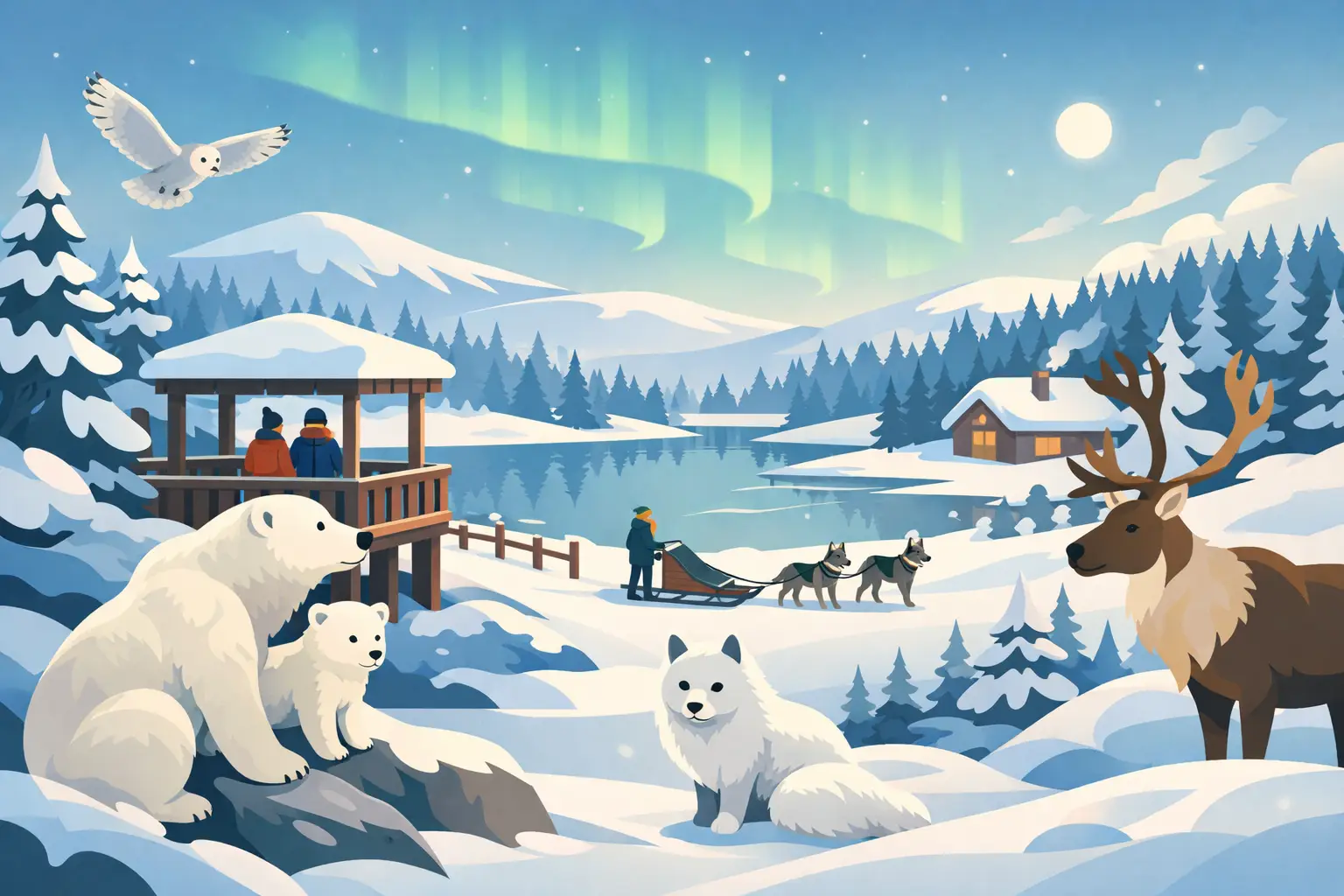
Many wildlife parks are designed around enclosures, crowds and a fast route from one animal to the next. Ranua is different. The route follows a long outdoor trail through the forest, and its winter setting changes the whole mood. Tall spruce trees carry layers of snow, wooden paths lead between habitats and the cold air makes the landscape feel wonderfully wild.
The animals here are native to the Arctic or comfortable in northern conditions. That matters in winter. Rather than trying to spot animals hiding from the weather, you may see species at their most natural: wolves moving through snowy woodland, wolverines in the frost, arctic foxes bright against the white ground and owls watching quietly from their perches.
The polar bears are often the headline for visitors, and understandably so. Seeing these powerful animals in an Arctic setting is a striking moment. Still, a great day at Ranua is about slowing down for the smaller encounters too. A lynx appearing between the trees or a reindeer standing calmly in falling snow can feel just as magical.
Wildlife is never a performance, and that is part of the appeal. Animals have their own routines, especially in changing winter weather. Some may be active, some may rest, and some can be difficult to spot. Go in with curiosity rather than a tick-list and the experience feels far more real.
What to expect on the winter trail
The main trail is roughly 2.5 kilometres, but allow plenty of time. In snow and cold temperatures, a relaxed walk is far better than rushing. Most visitors spend around two to three hours in the zoo itself, depending on the weather, their pace and how long they spend watching each habitat.
The paths are maintained, but winter footing can still be snowy or icy. Wear warm, supportive boots with good grip. You do not need specialist expedition gear, yet this is not the day for fashion trainers or thin city footwear. Layers are your best friend, because a walk through the forest can feel mild when you are moving and sharply cold when you stop to watch an animal.
For a comfortable visit, bring a properly insulated coat, thermal base layers, warm socks and gloves or mittens. A hat that covers your ears is essential. If you are travelling with children, pack more warmth than you think you need. Little hands cool quickly when everyone pauses for photographs.
There are facilities and places to warm up, but do not plan around spending the whole day indoors. Ranua is an outdoor wildlife experience first. The cold is part of the story, and being prepared lets you enjoy it rather than count the minutes until the next heated building.
Photography in low winter light
Winter light in Lapland can be beautiful but changeable. Around December and January, daylight hours are short and the sun may stay low, creating soft blue tones and a gentle golden glow when conditions are right. Snow can also trick cameras, making images look darker or greyer than the scene in front of you.
If you are using a phone, tap on the animal or darker part of the image to avoid overexposing the snow. Keep a small power bank warm inside your jacket, as batteries drain faster in freezing temperatures. For cameras, bring a spare battery and keep it in an inside pocket.
Patience beats a long lens for many moments. Stand quietly, watch the animal’s behaviour and give yourself time. You are likely to come home with stronger photographs and, more importantly, memories that were not spent entirely behind a screen.
Is a Ranua Zoo winter trip right for your Lapland holiday?
For couples, Ranua offers a calm contrast to high-energy snowmobile rides or a late night spent hunting auroras. It is a chance to experience the softer, quieter side of the north together. For families, the trail is engaging without being overwhelming, particularly for children fascinated by polar bears, owls and foxes.
It also works brilliantly for travellers who have only a few days in Rovaniemi and want variety. A classic Lapland holiday might include a husky ride, a reindeer experience and a Northern Lights hunt. Adding Ranua brings wildlife and conservation into the mix, creating a fuller picture of Arctic life.
There is a trade-off, though. A Ranua day trip takes most of the day once transfers, the zoo trail and breaks are included. If your schedule is very short, do not squeeze it between two major activities. Give it the time it deserves, then plan your evening around a relaxed dinner or an aurora tour with a later departure.
Getting from Rovaniemi to Ranua in winter
A self-drive trip offers flexibility, but winter driving in Lapland is not for everyone. Roads are generally well maintained, yet they can be snowy, dark and unfamiliar to visitors. You need confidence with winter tyres, changing visibility and long stretches of road through the forest.
For many visitors, a guided day trip from Rovaniemi is the easier choice. Transfers remove the stress of driving, and a guide can help shape the day around practical details such as timing, weather and winter clothing. It also means you can enjoy the scenery rather than concentrating on the road.
Small-group travel is especially valuable for a nature-focused day. It gives the experience a more personal rhythm, with time to ask questions, take photos and move at a pace that suits the group. At ArKtictopia, this is what The Real experience means: less rushing, more space for the moments that make Lapland stay with you.
When to visit Ranua Arctic Zoo in winter
The best time depends on the kind of atmosphere you want. Early winter, usually from late November into December, brings deep snow, festive energy and the magical blue light of the polar night. It is a wonderful choice if your trip is built around Christmas in Lapland.
January and February are often properly cold, with crisp snow and a more peaceful feel after the busiest festive period. March can bring longer daylight and brighter conditions, making the trail feel slightly easier for families and keen photographers. Snow remains a central part of the landscape well into spring, although exact conditions always depend on the season.
Morning visits can feel quieter, while afternoon timing may suit your plans if you are combining the zoo with an evening Northern Lights adventure. Do not judge the day by temperature alone. A clear, still day at minus 15°C can feel more comfortable than a windy day close to freezing, especially when you have the right clothing.
Make it a day you will remember
Ranua is at its best when you leave room for wonder. Do not race from animal to animal. Listen for the crunch of snow under your boots, notice the changing winter light and enjoy the stillness that makes Lapland unlike anywhere else.
After a few days of thrilling activities, a winter wildlife day can be the moment your holiday becomes more than a collection of photographs. Dress warmly, keep your plans unhurried and let the Arctic forest set the pace.