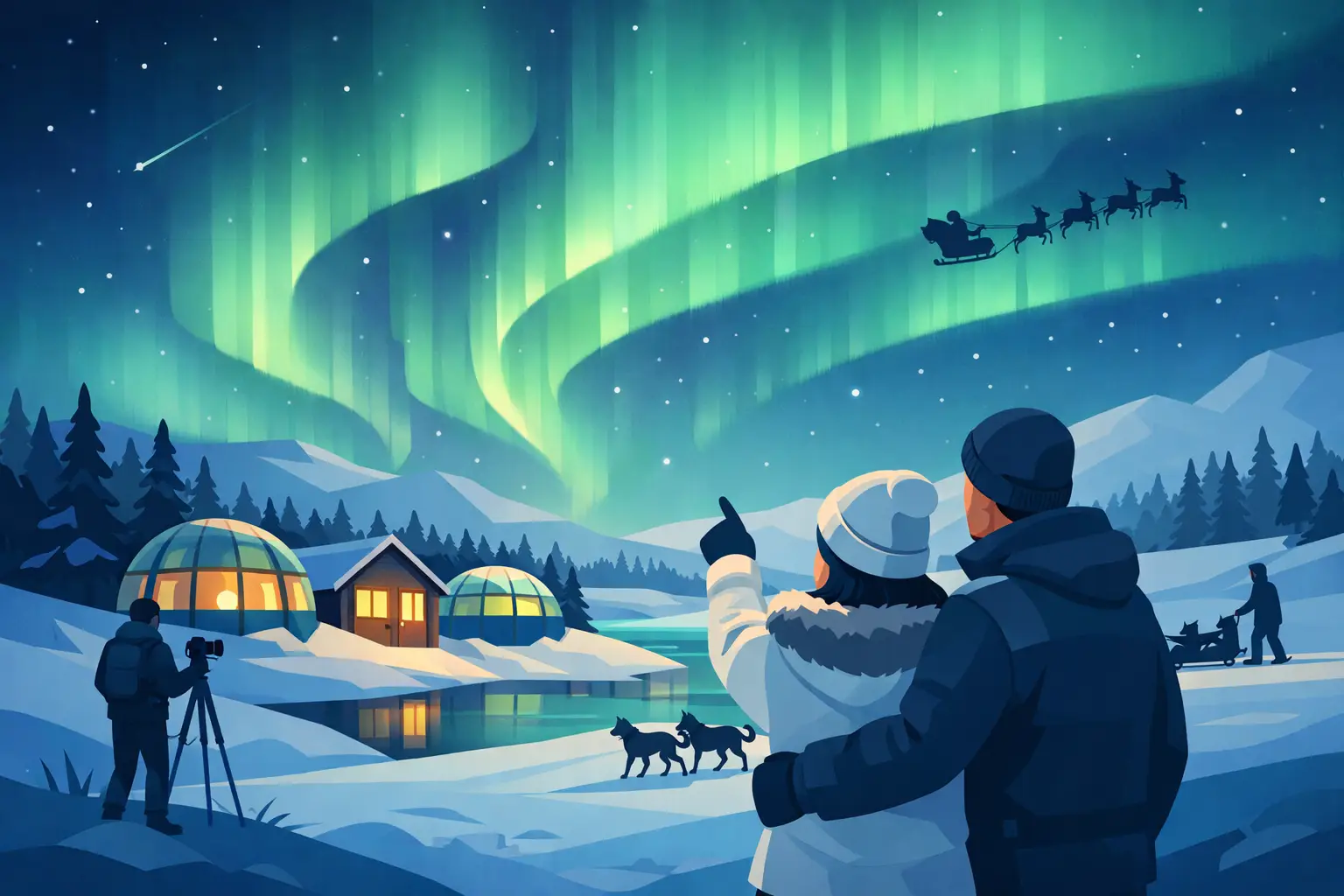
The thermometer is falling, the sky is black, and your guide is studying cloud maps rather than following a fixed road. That is the heart of an aurora hunt. If you are wondering what happens on aurora tour in Lapland, expect far more than standing outside and waiting: it is a guided night adventure built around chasing the best possible conditions for the Northern Lights.
A good tour combines local judgement, Arctic logistics, warm stops and a little patience. The lights are a natural phenomenon, never a switch someone can turn on. But with the right route, timing and guide, the hunt becomes an unforgettable part of your Lapland holiday whether the aurora arrives as a faint green ribbon or a full, dancing display.
What happens on an aurora tour from pick-up onwards?
Your evening normally begins with a pick-up from Rovaniemi or an agreed meeting point. The guide checks that everyone is accounted for, talks through the plan and makes sure you are suitably dressed for the conditions. Arctic winter cold can feel sharper after sunset, especially when you are standing still beneath an open sky, so proper layers, warm boots, gloves and a hat matter as much as enthusiasm.
Before departure, the guide will assess the night’s real conditions. Aurora forecasts are useful, but they are only one part of the picture. Cloud cover, wind direction, local visibility and the forecast across the wider region all influence where the group should go. This is why a genuine hunt is not usually a simple transfer to one predetermined viewpoint.
Then the adventure begins. You may travel through snow-covered forest roads, past frozen lakes and into quieter areas away from Rovaniemi’s city lights. On stronger hunt formats, the route can change as the evening develops. Your guide may head west, east or south in search of a break in the clouds, choosing the road that gives the group the best chance of finding clear skies.
That flexibility is the difference between an aurora viewing trip and an aurora hunt. The aim is not to promise nature, but to work hard for the best outcome nature can offer.
The waiting is part of the experience
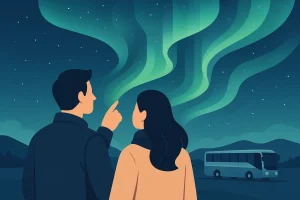
The first stop may feel wonderfully still. There is no city noise, just snow under your boots, breath turning to mist and a huge Arctic sky above the treeline. Your guide will explain what to look for, because the first signs of an aurora are not always obvious. A pale grey-green band can appear low on the horizon before it strengthens, gains colour and begins to move.
Some nights reward you quickly. On others, the group may wait, warm up, move to another location and look again. That is normal. Northern Lights hunting asks for patience, and it also creates the stories people remember: the moment the clouds opened unexpectedly, the group spotted a faint glow through the trees, or a quiet lake became a mirror for green light.
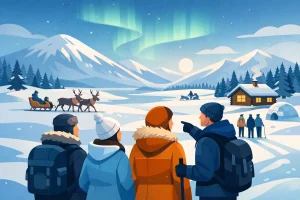
Many tours include a warming break at a campfire or shelter, with hot drinks and simple snacks depending on the experience booked. It is a welcome chance to thaw your hands, speak with fellow travellers and hear local stories about winter life in Lapland. Not every hunt follows the same format, though. A photography-focused tour may prioritise moving quickly between locations, while a private hunt can be tailored around your group’s pace and preferences.
Your guide is reading the night, not following a script
The best guides bring more than transport. They understand the landscape, know which locations are affected by cloud from different directions and can make quick decisions when the weather changes. In Lapland, a patch of clear sky may be only an hour’s drive away – or it may disappear before the group reaches it. That is why an experienced guide keeps checking conditions throughout the evening.
Small groups make this easier and more personal. There is more room to ask questions, more time for help with your camera and less chance that the experience feels like a queue beneath the sky. At ArKtictopia, that personal attention is part of The Real experience: guides who treat the hunt as an adventure, not a timetable to complete.
You should also expect straight answers. If the forecast is challenging, a responsible guide will say so. If the sky is clear but aurora activity is quiet, they will explain what that means. There is magic in the Northern Lights, but there is also science: solar activity sends charged particles towards Earth, where they meet our atmosphere and create the colours we hope to see.
Seeing the lights with your own eyes versus on camera
One of the biggest surprises for first-time visitors is that cameras and eyes see the aurora differently. A phone or camera using night mode can often reveal green colour before it looks vivid to the naked eye. This does not mean the lights are fake or disappointing. It simply reflects how long-exposure photography gathers light.
When the activity builds, the difference becomes less subtle. You may see green arcs, moving curtains, soft waves or bright columns shifting across the sky. On exceptional nights, the aurora can feel alive, changing shape above you faster than expected. Those are the moments that make people forget the cold completely.
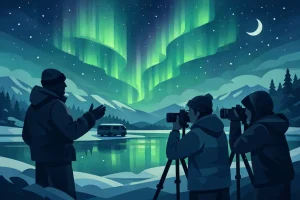
Your guide can help you take better photographs, whether you have a phone, compact camera or DSLR. For phones, switch off the flash, keep the lens clean and use night mode if available. For a dedicated camera, a tripod, wide-angle lens and manual settings give you more control. Photography hunts usually offer extra hands-on support, but no specialist equipment is required to enjoy the sky.
Do not spend the whole evening looking at a screen, though. Take the photo, then look up. The most powerful memory is often not the image you post later but the silence of the forest and the shared gasp when the sky begins to glow.
How long does an aurora hunt last?
Most Northern Lights tours run for several hours, commonly from early evening into late night. The exact duration depends on the product, the season and the conditions. A shorter experience may visit one or two promising locations near Rovaniemi. A longer Unlimited Adventure or Guaranteed Hunt format gives the guide more time and distance to work with when the weather is unsettled.
More time can improve the opportunity to find clear skies, but it cannot guarantee the aurora itself. This distinction matters when choosing your tour. If seeing the lights is the main reason for your Lapland trip, choose a hunt designed to chase conditions rather than a fixed-location excursion. If you would also enjoy a relaxed campfire evening and Arctic scenery, a local experience may suit you well.
Private tours offer another option for couples, families and small groups. You can often enjoy more flexibility around departure times, stops and the style of the evening. They are especially useful for travellers celebrating something special, keen photographers or families who prefer a quieter experience.
What should you wear and bring?
Warm clothing is not an optional extra. Dress in thermal base layers, an insulating middle layer and a windproof outer layer. Wear warm socks, insulated boots, gloves or mittens, and a hat that covers your ears. Mittens are often warmer than gloves, but gloves make camera controls easier, so some travellers bring both.
Bring a fully charged phone and, if you want photographs, a power bank. Batteries lose charge quickly in serious cold. Avoid relying on thin trainers or fashion boots, even for a short walk from the vehicle. Your guide can advise on any equipment included with your specific tour, but planning for the cold means you can focus on the sky rather than your feet.
If the Northern Lights do not appear
It can happen. Even during the best season, cloud can cover every promising area or solar activity can remain too weak. A professional aurora tour is still worthwhile because the guide has made every sensible effort to find conditions, but it is right to set expectations before you travel.
The smartest approach is to schedule your aurora hunt early in your stay, then leave another evening available if possible. Do not save it for your final night in Rovaniemi. Treat every hunt as a chance to experience the Arctic night, and give yourself more than one chance to meet the lights.
When you step into the snow after dark, bring warm layers, an open mind and enough patience to let Lapland do things its own way. The sky owes no one a performance, but when green light begins to move above the forest, you will understand why people travel so far to wait for it.