You step off the minibus, and the first thing you notice is the quiet. Not “nice and peaceful” quiet – proper, snow-swallowing soundlessness where your own breath suddenly feels loud. A guide tightens a strap, checks everyone’s fit, and within minutes you’re walking straight across snow that would normally swallow your boots whole. That small, ridiculous miracle is exactly why a beginner snowshoeing tour in Lapland is such a good idea.
Snowshoeing is the rare winter activity that feels instantly wild, but doesn’t demand you arrive with technique, stamina stats, or expensive kit. It’s you, a pair of snowshoes, and a white landscape that looks like it’s been freshly painted.
Why a beginner snowshoeing tour in Lapland works so well
Lapland is made for first-timers because the terrain around Rovaniemi and the wider Finnish forest belt gives you options. You can keep it gentle in pine woods with soft underfoot snow, or you can chase viewpoints and frozen lakes if your group has the energy. On a guided day, the route can flex with conditions – wind-packed snow one week, powder the next, daylight hours shifting through the season.
There’s another reason it works: snowshoeing rewards slow travel. Unlike snowmobiling or even huskies, you’re moving at walking pace. That means you actually notice the details – animal tracks stitching across a clearing, the way the light goes blue in late afternoon, the frost building on a scarf. It’s active, but it’s also calm, which is a rare combo when you’re trying to fit “everything” into a short Lapland break.
What it feels like underfoot (and why it’s easier than you think)
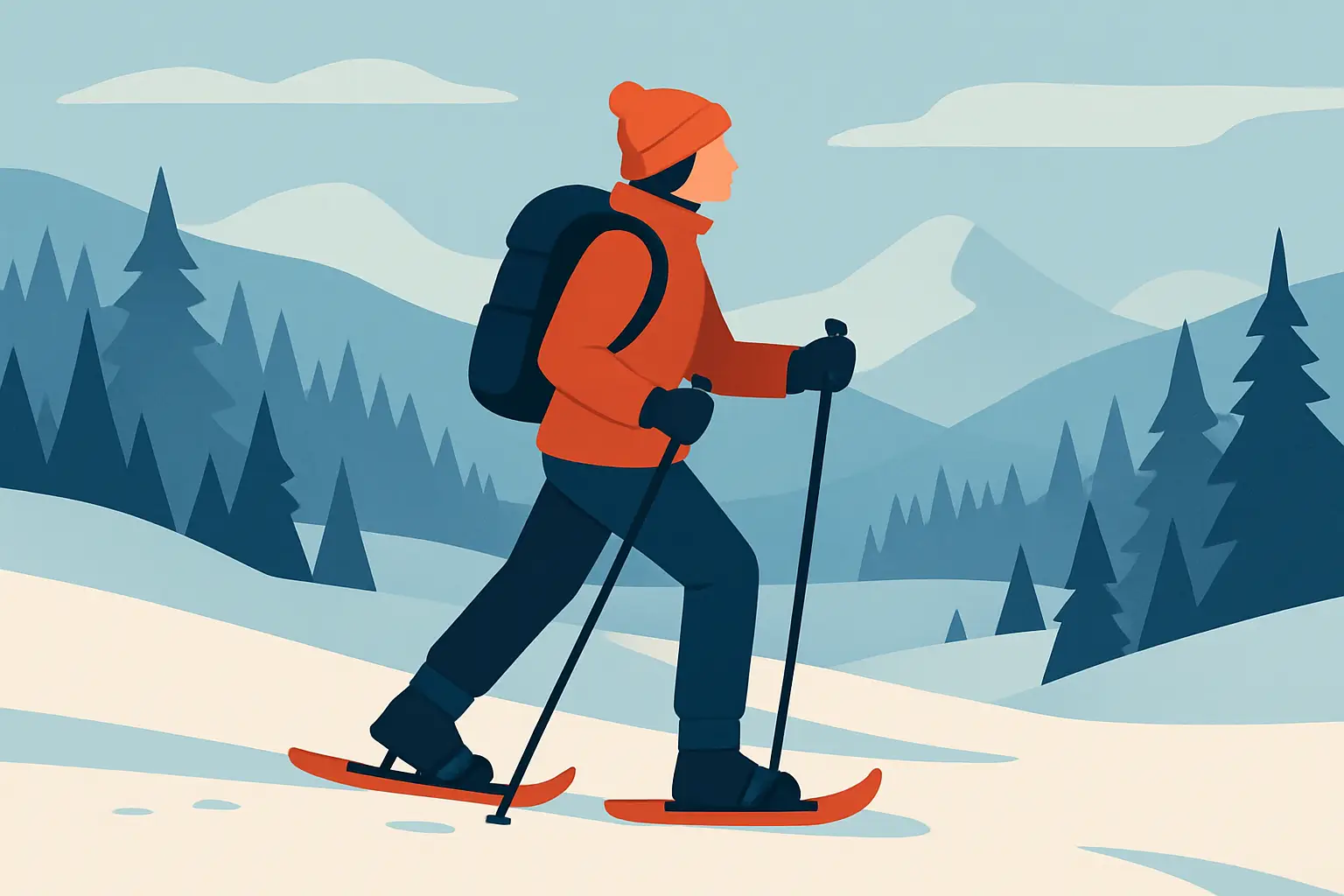
Most beginners worry about balance. The truth is you’ll feel slightly wide for the first five minutes, because snowshoes broaden your stance. After that, your body adapts and it becomes rhythmic: step, crunch, glide.
The main difference from normal walking is how you lift your feet. In deep snow you’ll naturally exaggerate the step a little, and on packed trails you’ll walk almost normally. If there are small inclines, you’ll learn quickly to place your foot flatter and use the grip under the snowshoe rather than relying on toe strength.
You might also be surprised by how social it is. People expect “hardcore hike”, but beginner snowshoeing is more like a moving conversation with pauses. A good guide reads the group – when to push on for a viewpoint, when to stop for hot drink time, when to take a longer break because someone’s layers are too warm.
Beginner snowshoeing tour Lapland: what you’ll actually do
A proper beginner-friendly tour usually starts with a quick gear briefing and a short practice loop near the start point. That’s not just for confidence – it’s where your guide can spot issues like loose bindings, boots that are too flexible, or someone who’s over-layered and already sweating.
From there, the walk becomes a mini journey. In forest routes you’ll weave between trees and follow natural contours, sometimes stepping off-track to find quieter pockets of wilderness. On open sections – frozen lake edges or wide clearings – you get that iconic Lapland feeling: space, light, and a horizon that seems to go on forever.
Distance “depends” in the most honest way. Some days a few kilometres is plenty because the snow is soft and the temperature is low, and you want time for photos and warming stops. Other days you can comfortably cover more, especially if the trail is packed. What matters isn’t a number – it’s the pacing. Beginners do best when the day is designed to feel achievable, not like a fitness test.
What to wear for snowshoeing (without overthinking it)
The goal is simple: stay warm without getting damp. That means dressing for movement, not for standing still. If you start your walk feeling slightly cool, you’re usually spot-on.
Go for a base layer that wicks sweat, then a warm mid-layer like fleece or wool. Over that, you want a windproof outer layer. Insulated jackets are fine, but if it’s mild (Lapland mild, so still below zero) you may prefer a lighter shell because you’ll heat up quickly.
Feet are the make-or-break. Warm socks are great, but too thick can cut circulation and make you colder. Ideally you want winter boots with enough room to wiggle toes, plus a sock system that keeps warmth without turning your boots into a tight squeeze.
Hands and face matter more than people expect. Bring a thin glove liner if you like taking photos – it stops the instant finger-freeze when you take thicker gloves off. A buff or scarf is gold because it warms your breathing and protects cheeks when the air bites.
Safety and comfort: what a guide changes for beginners
Lapland is friendly, but it’s still the Arctic. A guided tour quietly removes the stress that first-timers carry, even if they don’t say it out loud.
Your guide is watching the practical stuff: changing weather, trail conditions, daylight, how your group is coping with the cold, and whether anyone’s getting that early sign of chill in fingers or toes. They’ll also choose places to stop that feel sheltered, not exposed – it’s amazing how much warmer a break feels just by stepping behind a stand of trees.
Then there’s the less obvious safety: route judgement. A frozen lake can be a breathtaking place to walk, but locals know where the safe edges are, how conditions change after snowfall, and when to avoid certain areas entirely. Beginners shouldn’t have to guess.
The best time of day for a first snowshoe
If you’re travelling from GB and you’re only in Lapland for a long weekend, timing matters. Midday is usually the easiest for first-timers because you get the best light and slightly warmer temperatures. That’s also when you’ll feel most relaxed about photos and footing.
Late afternoon tours have their own magic. The light turns pastel, the forest deepens in colour, and you feel the day settle. It’s colder, yes – but it’s also more atmospheric. If you’re dreaming about that fairy-tale blue twilight, that’s when it happens.
Evening snowshoeing is for people who want the mood more than the miles. It can be brilliant on clear nights, especially if the sky is active. But it’s more “experience walk” than “hike”, and it relies more on good guiding and sensible pacing.
Will you see the Northern Lights while snowshoeing?
It depends. That’s the honest answer, and anyone promising otherwise is selling a fantasy.
You can absolutely combine snowshoeing with aurora watching, but the best beginner snowshoeing tours don’t pretend the walk itself is an aurora guarantee. Instead, they build a night where you’re in dark places with open sky potential, and where the group is comfortable waiting if the moment arrives.
If the Lights are a priority, keep snowshoeing as one part of your trip rather than the whole plan. Do your snowshoe day tour for the wilderness immersion, then book a dedicated aurora hunt on another night. You’ll enjoy both more.
Small details that make your first tour feel “The Real”
Lapland has a lot of staged winter experiences. Some are fun, but snowshoeing has a built-in honesty: you can’t fake the forest.
The difference between a good beginner tour and a forgettable one comes down to details. Group size matters because snowshoeing works best when you can stop, ask questions, adjust kit, and not feel like you’re holding up a crowd. The route matters because beginners don’t need steep climbs – they need variety and a sense of progress. And the guide matters because confidence is contagious; when your guide moves like they belong out there, you relax into the experience.
If you want that small-group, nature-first style from a Rovaniemi departure point, ArKtictopia builds its winter days around exactly that idea: personal attention, authentic routes, and experiences designed to deliver more than a photo opportunity.
How to choose a beginner-friendly snowshoeing tour in Lapland
Look for language that’s clear about who it’s for. “Suitable for beginners” should mean the operator has thought about pacing, warming breaks, and kit support, not just that “anyone can do it”. Ask what happens if someone tires early – do they shorten the route, split the group, or push on regardless?
Also pay attention to what’s included. In Lapland, the difference between a comfortable day and a miserable one is often as simple as whether you’re properly equipped. If you’re bringing your own clothing, check you’ll still be provided with snowshoes that fit your boots and conditions.
Finally, choose a tour that fits your trip rhythm. If you’ve got a husky safari and an aurora hunt in the same 48 hours, don’t book the longest snowshoe route available just to prove something. The best Lapland holidays aren’t won on distance – they’re built on moments.
The real win with snowshoeing isn’t that you managed it. It’s that, somewhere between the trees and the open snow, you stop thinking about planning and start feeling completely present – and that’s the bit you take home with you.