
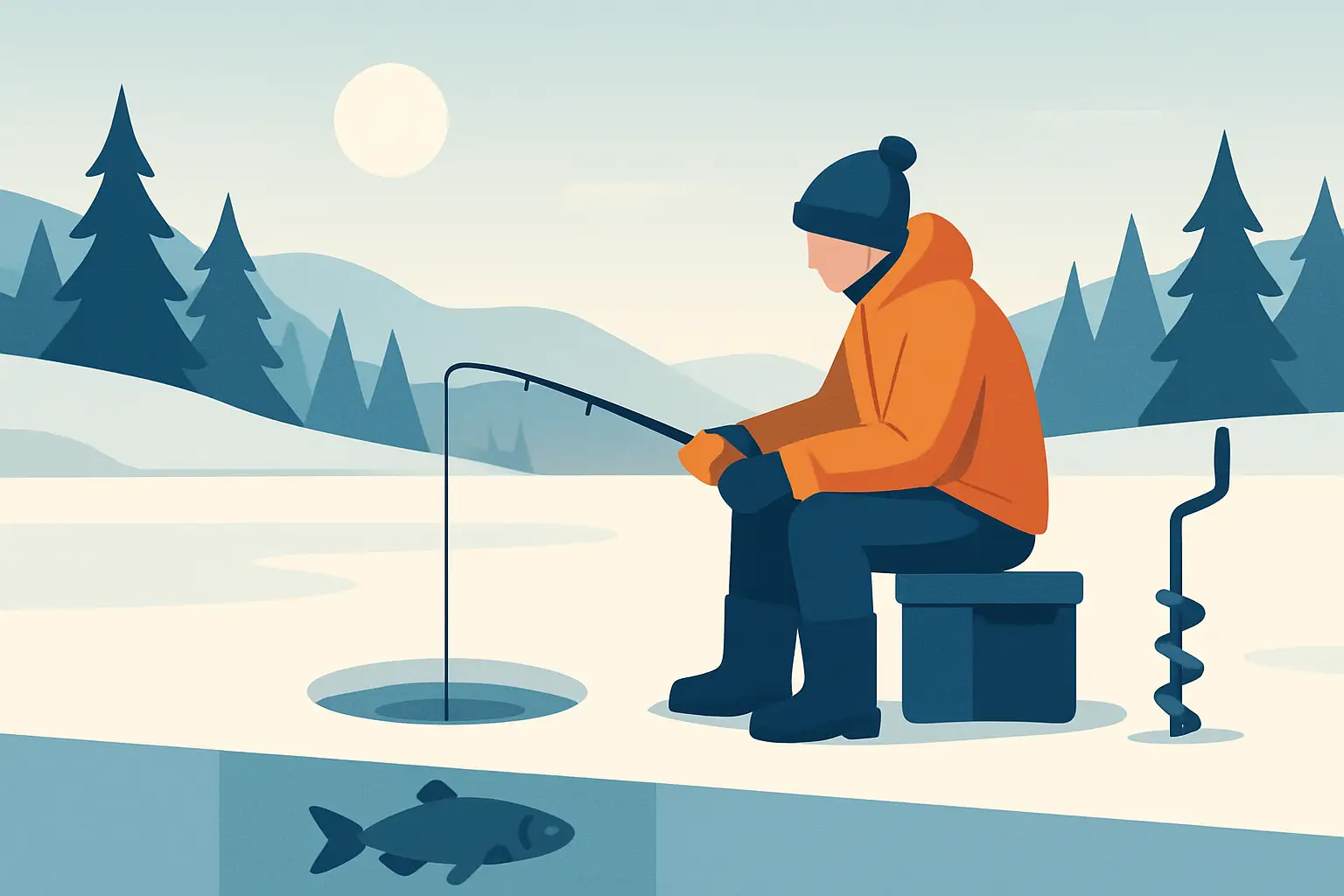
You step off the minibus and the sound drops away. No traffic, no chatter from the city – just cold air that feels clean enough to drink. Ahead is a wide, white lake edged with pines, the kind of silence that makes you lower your voice without thinking. This is the moment most people don’t picture when they book Lapland. They imagine huskies and Northern Lights. Then they try ice fishing and realise it’s the most quietly addictive thing they’ve done all week.
An ice fishing tour Rovaniemi isn’t about hauling up a monster fish every five minutes. It’s about learning a true Arctic skill, warming your hands on a hot drink, and watching the winter landscape do its thing while your line disappears into dark water under a metre of ice. If you like experiences that feel real – not staged, not rushed – this one lands.
What an ice fishing tour in Rovaniemi actually feels like
Ice fishing in Finnish Lapland is simple in the best way. Your guide brings you onto a frozen lake or river, checks the ice conditions, and sets you up with the essentials. You drill a hole through the ice, drop a line, and wait. That “wait” is where the magic sits.
On a good day the light turns pastel across the snow. On a cloudy day the world looks black and white, like you’ve walked into a photograph. Either way, the experience is hands-on and grounded. You’re not watching from the side – you’re learning the method and doing it yourself.
Some tours keep it purely focused on fishing. Others blend it with a cosy fire and a simple wilderness snack. The best ones keep group sizes small so you’re not queued up at a single hole like it’s a theme park. If you want that calm, nature-first feeling, you’ll feel the difference straight away.
Why ice fishing is a proper Lapland experience
People often ask if ice fishing is “worth it” when they could spend the day on a snowmobile or chasing aurora. It depends on what you want from your holiday.
If you want speed, noise, and adrenaline, ice fishing will feel slow. If you want a story that sounds like real Arctic life – drilling into a frozen lake, reading the conditions, learning a technique locals have relied on for generations – ice fishing wins. It’s one of the few winter activities that still feels like a skill rather than a spectacle.
And there’s another reason it belongs on a Rovaniemi itinerary: it’s beautifully flexible. Couples love it because it’s peaceful and a bit romantic in a rugged way. Families like it because it’s interactive and surprisingly child-friendly with the right guiding. Solo travellers like it because it’s easy to join a small group and instantly have something to talk about.
What you’ll do on the day (and what you won’t)
Most trips start with collection from Rovaniemi and a short drive out of town. The point is to leave the streetlights behind and get onto quieter waters. Your guide will talk through safety, show you how the equipment works, then help you drill your first hole.
Drilling is part of the fun – it’s physical for a minute or two, then you’re straight into the calm. You’ll bait the hook or set up a small lure, lower the line, and learn how to feel for bites. If you catch something, your guide will show you how to handle it respectfully and legally.
What you won’t get (on a good, honest tour) is a promise of guaranteed fish. Fish are wild. Some days are generous, some days are stubborn. A quality tour is judged less by the size of the catch and more by the guiding – the location choice, the atmosphere, the warmth, the confidence in the ice, and how much you learn.
What you might catch in Lapland waters
In the Rovaniemi region, catches depend on the water and the season. You might hook perch, roach, or pike, and occasionally other local species depending on where your guide takes you.
If your dream is a specific fish, say so before you book. A good operator will be straight with you: targeting something particular can mean driving further, picking a different style of water, or accepting that results vary. If you’re happy with “whatever bites”, you’ll relax faster and enjoy the whole rhythm of the day.
What to wear so you stay warm enough to enjoy it
Ice fishing is stationary, which means you feel the cold more than you would on a fast-moving activity. The trick is not one thick layer, but smart layers you can adjust.
Start with a proper thermal base layer. Add an insulating mid-layer like fleece or wool. Then wear an outer layer that blocks wind. Warm socks matter more than you think, and two thinner pairs can beat one bulky pair if your boots start to feel tight. Mittens are often warmer than gloves, but you need some finger movement for knots and bait – a thin liner glove under a mitten is a strong combo.
If your tour provides winter overalls and boots, brilliant – take them. If it doesn’t, plan like you’re going to be outside for hours with minimal movement, because you are. The aim isn’t to survive it. The aim is to be comfortable enough to notice how stunning the place is.
How long should you book: short taster or half-day escape?
A shorter trip is perfect if you’re squeezing ice fishing between Santa’s Village and an evening aurora hunt. You’ll get the core experience: the lake, the drilling, the technique, the chance of a catch.
A longer tour gives you time to settle into it. The first 20 minutes often go on learning and set-up. After that, you start reading the tiny signals – how the line behaves, how often to try a different depth, when to switch lure. Longer trips also tend to include a fire break and something warm to eat, which turns the day into a true wilderness hangout rather than a quick activity.
If you’re travelling as a couple and want that quiet, movie-scene feeling, go longer. If you’re travelling with kids and you’re not sure about attention spans, a shorter tour can be the smarter call.
Choosing a guide: small details that change everything
Rovaniemi has plenty of options, and not all ice fishing tours feel the same. Look for a provider that talks clearly about group size, locations, and what’s included. “We’ll take you ice fishing” is vague. “Small groups, wilderness locations, hands-on guiding” tells you what you’re paying for.
Pay attention to how they describe the day. If it sounds like they rush through five activities in one outing, the fishing can become an afterthought. If it’s focused, it’s usually better. Ice fishing is not a box to tick – it’s a mood.
It’s also worth deciding whether you want a private trip. Private costs more, but it changes the energy. Your guide can tailor the pacing, spend more time teaching, and choose spots based on your interests rather than the average of a group. For photographers, a private option can be gold: you can pause for light and landscapes without feeling like you’re holding anyone up.
If you want a tour that leans into “The Real” – small groups, personal attention, and that nature-first pace – you’ll feel at home with local guides who live for winter days on the ice. That’s exactly the kind of experience we build at ArKtictopia, where guiding isn’t a side hustle. Adventure is the job.
When to go ice fishing in Rovaniemi
Peak season sits in the heart of winter when ice is solid and days are properly snowy. Earlier and later in the season can still be excellent, but conditions vary more and your guide’s judgement matters even more.
Daylight is a real factor. Midwinter days are short, which adds to the atmosphere but can compress schedules. If you’re also doing an evening Northern Lights hunt, plan your timing so you’re not sprinting from one experience to the next. Ice fishing works best when you let it breathe.
Wind matters too. A bright, calm day feels dramatically warmer than a windy one, even at the same temperature. If you can be flexible, keep an eye on the forecast and book a day that looks still and clear.
Is ice fishing safe? Yes, if it’s guided properly
Walking onto a frozen lake is one of those things that sounds wild to anyone who hasn’t done it. Safety comes down to local knowledge and doing it properly: checking ice thickness, knowing currents and inlets, and choosing proven locations.
A good guide doesn’t just lead you out. They read the conditions, carry the right safety equipment, and keep the group managed. If an operator feels casual about ice safety, don’t book them. Lapland is friendly, but it’s not forgiving.
Pairing ice fishing with the rest of your Lapland trip
Ice fishing fits beautifully into a week that also includes huskies, reindeer, and aurora. It’s the calm counterbalance to the high-energy days, and it gives you a different relationship with the landscape.
If you’re building a short break, consider placing it mid-trip. That way you arrive with excitement, burn some energy on your first big activities, then slow down and really take the place in. If you’re travelling with friends, it’s also a surprisingly good bonding day. People talk more around a hole in the ice than they do on anything loud.
The best part is that you don’t need experience. You just need curiosity, a willingness to be outside, and a bit of patience. The fish might bite or they might not, but Lapland still shows up – in the silence, the cold, the light, and that feeling that you’ve done something genuinely Arctic.
You’ll head back to Rovaniemi with rosy cheeks, a new skill, and the kind of calm that follows a few hours in real winter wilderness – the sort that makes you look up at the sky later that night and hope it decides to put on a Northern Lights show just for you.