The first time you hear a team of huskies before a run, it can catch you off guard. They bark, bounce, pull at their lines and look almost impossibly eager to go. For travellers asking are husky tours ethical, that moment matters – because the answer is rarely found in the snow-covered postcard version of Lapland. It is found in the dogs, the kennel, the people running it, and whether the whole experience is built around animal welfare rather than tourist demand.
Are husky tours ethical in Lapland?
Sometimes yes, sometimes no. That is the honest answer.
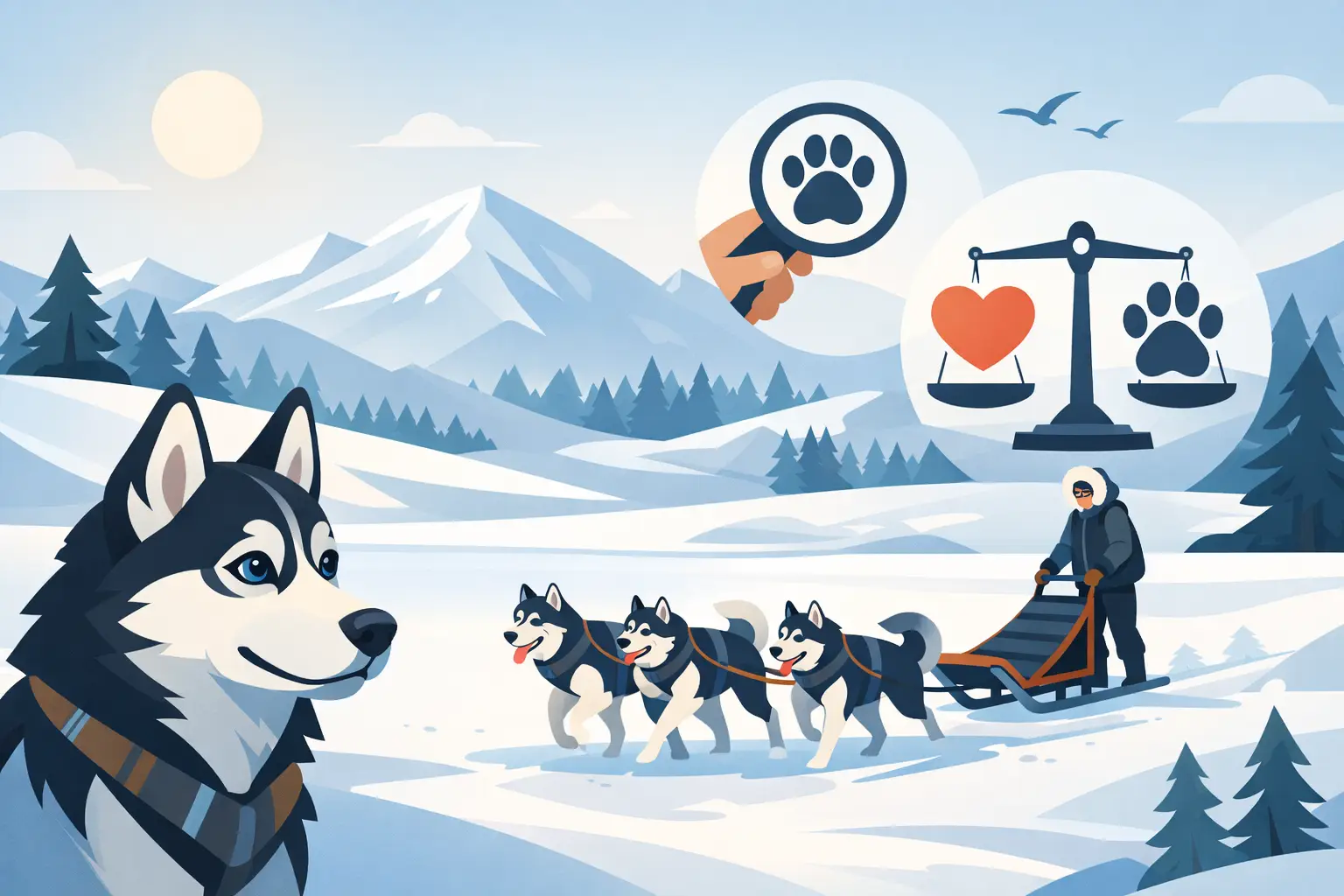
A well-run husky tour can be ethical. Sled dogs are working dogs, bred and trained for endurance, cold conditions and pulling. Many genuinely love to run. In a responsible kennel, that energy is channelled into a routine that includes exercise, veterinary care, rest, good nutrition and handling by people who know every dog as an individual.
But not every tour deserves your money. Some operations are built around volume, fast turnover and the fact that most visitors only see the exciting ten minutes before the sled moves. If welfare standards are weak, if dogs are treated like props, or if the business avoids basic questions, the experience becomes much harder to justify.
The key point is this: husky sledding is not automatically ethical because it is traditional, and it is not automatically unethical because the dogs work. It depends on how the animals live, train and recover across the whole season.
What makes a husky tour ethical?
The strongest sign is simple. The dogs come first, even when that makes the business less convenient.
That means tours are matched to weather and trail conditions, not pushed through because guests have arrived. It means dogs are rotated properly rather than run again and again. It means puppies, older dogs and injured dogs are not forced into work because a schedule needs filling. Good kennels also pay attention to the less glamorous side of care – shelter, clean water, quality food, paw checks, harness fit, recovery time and regular health monitoring.
You can often feel the difference straight away. Ethical kennels tend to be calm, transparent places. Staff are happy to explain how the dogs are trained, how long they run, how many teams go out per day and what happens outside peak winter. They do not act irritated when asked about retirement or vet care. They expect those questions.
Another good sign is realistic tour design. If a company promises endless speed, oversized sled loads or back-to-back departures all day, that should raise an eyebrow. Responsible operators know that a magical experience does not need to be excessive. In fact, smaller groups and carefully planned departures usually create a better day for both guests and dogs.
The questions travellers should actually ask
Most people ask how long the ride is. Fewer ask how the dogs live.
If you want to choose well, ask how many runs each dog does in a day and in a week. Ask how teams are selected and rotated. Ask what happens when temperatures swing, trails turn icy or a dog seems off form. Ask whether there is access to veterinary care and how retired dogs are handled.
The answers matter, but so does the way they are given. A thoughtful, specific answer is reassuring. A vague one packed with buzzwords is not.
You do not need a lecture in canine physiology before booking a tour. You just need enough transparency to see that welfare is part of the operation, not just part of the marketing. If someone cannot clearly explain rest days, feeding, retirement or seasonal workload, keep looking.
Are the dogs enjoying it, or are they stressed?
This is where travellers can get confused. Huskies are not quiet lap dogs. Excitement can look chaotic.
A lot of healthy sled dogs become extremely vocal before a run because they are anticipating it. They know the routine. They want to move. Once on the trail, many settle into focused, steady work. That visible drive is one reason people who spend real time around sled dogs often reject the idea that all pulling is cruel by default.
Still, enthusiasm is not a free pass. Stress can also show up in repetitive behaviour, poor body condition, fearfulness around handlers, untreated injuries or obvious exhaustion. Most guests will not be qualified to assess every detail, but you can notice basics. Do the dogs look fit? Are they alert? Do handlers interact with them confidently and respectfully? Is the kennel clean and organised? Do things feel controlled, or rushed and rough?
Trust your instincts, but do not rely only on the pre-ride noise level. The ethical picture is much bigger than whether the dogs are loud.
The grey areas people often miss
The hard part of this conversation is that not every concern has a neat yes-or-no answer.
For example, chain lines are common in some kennels and can be upsetting for visitors who have never seen working-dog setups before. In poor conditions, they can absolutely be part of a welfare problem. In better-run kennels, they may be used within a wider system that includes regular exercise, social contact, monitoring and safe spacing between high-energy dogs. You may still dislike the look of it, and that is fair, but context matters.
Summer and shoulder season are another important test. Anyone can present a cheerful winter scene when snow, guests and income are flowing. The better question is what happens all year round. Dogs still need structured care, exercise and attention when the sleds are not running. An ethical kennel plans for the dogs’ whole lives, not only the photogenic months.
Breeding is worth thinking about too. Responsible breeding focuses on health, temperament and working suitability, with proper limits. Poor breeding can create welfare issues long before a tourist arrives. Most visitors will not get a full view into that side of the business, but operators who care about quality are usually open about where their dogs come from and how they manage their lines.
How to spot a tour built for tourists, not dogs
If the whole experience feels like a production line, pause.
Large groups, minimal briefing, very short rides sold at premium prices, rushed photo stops and little opportunity to ask questions can all point to an operation designed around throughput. That does not automatically mean poor welfare, but it often means the dogs are one moving part in a high-volume business.
By contrast, the best experiences tend to feel more personal and grounded. You learn something. You meet people who know their dogs. The route, pace and group size make sense. There is no need to oversell because the experience stands on its own.
That is one reason many travellers now favour smaller, more carefully curated Arctic experiences. Operators such as ArKtictopia have built their reputation around the idea that the real Lapland experience should feel personal, not mass-produced. That mindset matters when animal activities are involved.
Is it better not to do a husky tour at all?
For some travellers, yes. If you are uncomfortable with animals working for tourism in any form, skipping it is the right call. There are plenty of unforgettable Arctic experiences that do not involve sled dogs, from snowshoeing and ice fishing to wildlife visits and Northern Lights hunting.
But if your concern is specifically welfare rather than the concept of working dogs, then a carefully chosen husky tour can still be a meaningful and responsible part of your trip. You are not only buying an activity. You are backing a way of running it. Good operators deserve to be supported precisely because poor ones exist.
That is often how standards improve in tourism. Travellers ask sharper questions, reward transparency and stop treating every snowy activity as interchangeable.
A better way to decide
If you are still wondering are husky tours ethical, stop looking for a blanket answer and start judging the details. Look for operators who are open about kennel life, realistic about workload and visibly committed to the dogs beyond the moments guests see. Choose quality over convenience, and authenticity over spectacle.
Lapland can feel magical. It should. But the best Arctic memories are not built on fantasy. They are built on real places, real people and real care – including care for the animals that make some of these experiences possible.
If a husky tour is done well, you should come away not only thrilled by the ride, but confident that the dogs mattered just as much as your holiday photos.