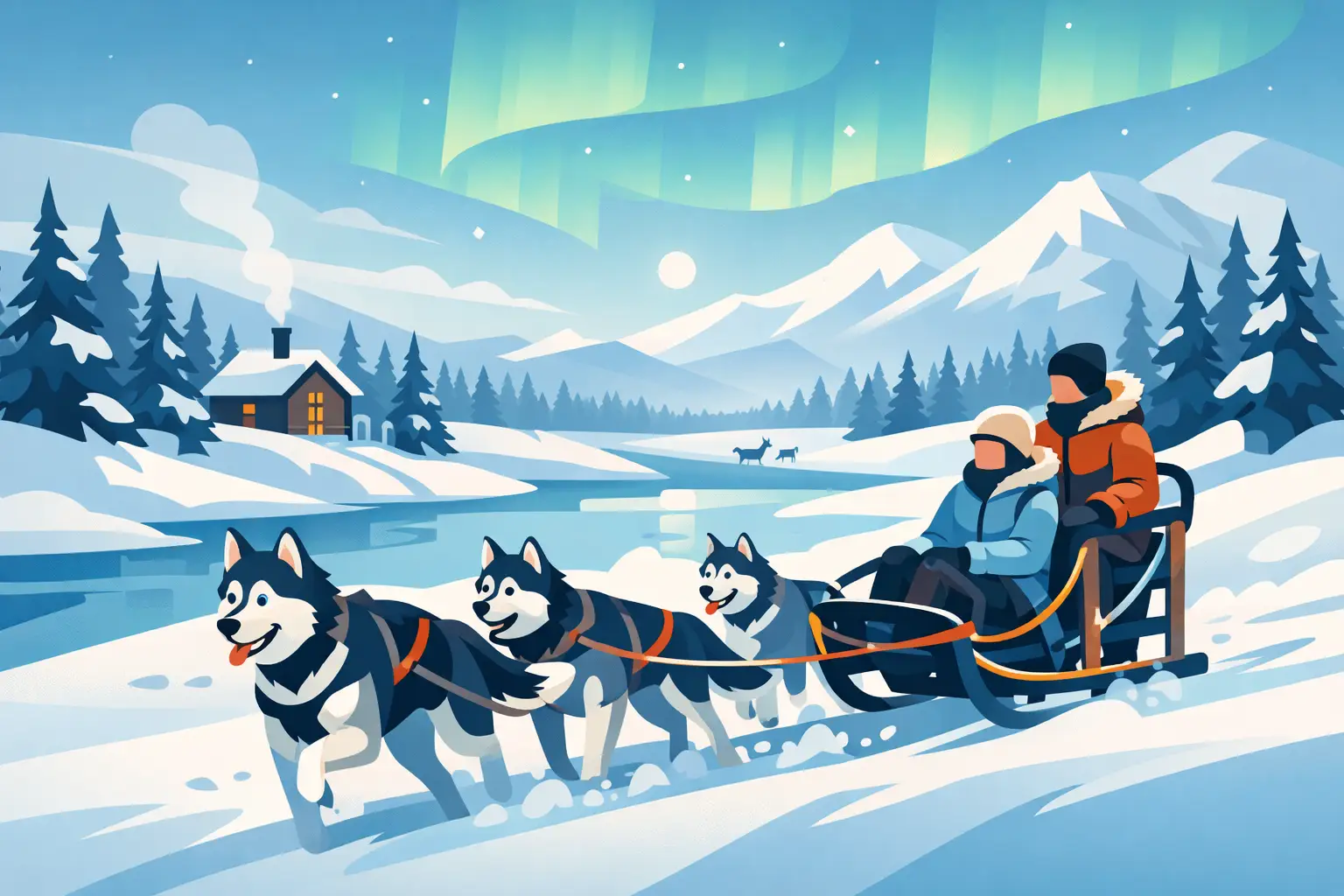
The first thing you notice is the sound. Not silence, not at all. A proper husky yard near Rovaniemi is full of impatient energy – barking, bouncing, harnesses rattling, paws scrabbling in snow. Then the sled starts moving, the noise drops away, and suddenly you are gliding through the forest in that strange Lapland stillness people never quite manage to describe properly.
That contrast is exactly why a husky safari in Rovaniemi ends up being the highlight of so many winter trips. It is not just a box to tick between Santa Claus Village and an aurora tour. Done well, it feels wild, personal and genuinely Arctic. This is Lapland at ground level, with cold air on your face and a team of dogs pulling you through snow-covered pines.
Why a husky safari Rovaniemi experience is so popular
Rovaniemi works brilliantly for first-time Lapland travellers because it is easy to reach, simple to navigate and packed with winter experiences. But among all the options, husky sledding has a special pull. It gives you movement, scenery and that immediate feeling of stepping into a real Arctic landscape rather than simply looking at one.
For couples, it is romantic in a very unpolished way. For families, it is exciting without needing previous experience. For solo travellers, it is one of those activities where being in a small guided group feels natural from the start. You do not need to know anything about mushing, trails or winter conditions. You just need to turn up dressed properly and ready for the cold.
There is also a reason this activity sticks in the memory more than some others. Reindeer safaris are calm and cultural. Snowmobiling is fast and noisy. A husky ride sits somewhere in the middle. It feels adventurous, but it is also intimate. You are close to the dogs, close to the snow and close to the landscape.
What actually happens on the day
Most husky tours from Rovaniemi begin with a transfer out of the city to a kennel or trail area. The drive is usually part of the experience, as the scenery starts shifting from town edges to open snowy forest. Once you arrive, guides normally explain how the ride works, how to sit safely in the sled and, if your tour includes self-driving, how to handle the sled on corners and gentle descents.
Then comes the moment people remember. The dogs are fired up before departure, full of noise and expectation. It can feel chaotic for a minute. As soon as the team gets the signal and sets off, everything changes. The barking stops, the sled smooths out, and you start to notice the small details – breath hanging in the air, snow dust lifting behind the runners, low winter light between the trees.
Depending on the tour, you may sit as a passenger for the full route or take turns driving. That is one of the biggest differences between products, and it matters. If you want to focus on the scenery, photographs and the feeling of the ride itself, a passenger-led safari is ideal. If you want a more hands-on Arctic adventure, self-driving gives you more involvement but also more responsibility.
Many tours finish with time to meet the dogs, warm up indoors and hear a little about husky life and training. That quieter part is worth more than people expect. Once the adrenaline drops, the experience becomes less about speed and more about connection.
Choosing the right husky safari in Rovaniemi
Not every safari is the same, even if the photos look similar. Some are short, designed for travellers who want a taste of husky sledding alongside other activities. Others are longer and feel far more immersive. The right choice depends on what kind of day you want.
A shorter ride can work well if you are on a packed weekend break or travelling with younger children. You still get the excitement, the dogs and the scenery, but without committing half a day. The trade-off is simple: it can feel over too quickly. If husky sledding is high on your wish list, many travellers leave short rides wishing they had booked longer.
A longer safari usually gives you more trail time and more of that real forest feeling. You settle into the rhythm, get further from busy visitor areas and come away feeling as though you actually did something, rather than simply sampled it. For many adults travelling from the UK or elsewhere in Europe for a once-in-a-lifetime winter break, that extra depth is worth it.
Small-group touring makes a difference too. It means less hanging about, clearer guiding and a more relaxed atmosphere around the dogs and the trail. If personal attention matters to you, or if you are nervous about Arctic conditions, that style of tour is often the better fit.
What to wear for a husky ride
People usually underestimate one thing in Lapland: how cold it feels when you are sitting still on a moving sled. Even if you walk around the city comfortably enough, a husky safari is different because you are exposed to wind and low temperatures for a sustained period.
Start with proper thermal base layers, add a warm mid-layer like fleece or wool, then finish with a good winter outer layer. Thick socks, insulated boots, gloves or mittens, and a hat that covers your ears are non-negotiable. If the operator provides thermal overalls and boots, use them. There is no prize for pretending you do not need the extra layer.
If you wear glasses, expect them to fog a bit. If you plan to take photos, keep your phone or camera battery warm inside your jacket when you are not using it. And if you are prone to cold hands or feet, pack hand warmers. That small decision can rescue the whole experience.
Is it ethical?
This is one of the most sensible questions to ask before booking a husky safari Rovaniemi tour. Good travellers should ask it, and good operators should be ready to answer.
Healthy sled dogs are not reluctant workers being dragged onto a trail. They are bred and trained for running, and anyone who has stood beside an eager team before departure can see that plainly enough. But that does not mean all standards are equal. You should look for tours that prioritise dog welfare, knowledgeable handlers, sensible group sizes and a clear respect for the animals rather than treating them as props.
A well-run experience lets you see that the dogs are athletes with routines, care and distinct personalities. If the whole thing feels rushed, overly commercial or strangely detached from the kennel side of the operation, trust your instinct. The best safaris feel authentic because they are.
When to go
The core season usually runs through the snowy winter months, and conditions can vary a lot. Early winter often brings fresh excitement, festive atmosphere and beautiful blue light, though snowfall and trail conditions are still building. Deep winter gives you the classic Lapland look people imagine – thick snow, dark forests and a stronger sense of full Arctic conditions.
If your goal is to combine husky sledding with Northern Lights hunting, midwinter can be particularly appealing because nights are long. If you are travelling with children or want slightly gentler temperatures and more daylight for photos, late winter can be a sweet spot. There is no single perfect month. It depends on whether you prioritise atmosphere, daylight, temperature or combining multiple activities.
Making it part of a bigger Lapland trip
A husky ride rarely stays a standalone memory. It tends to work best as part of a well-balanced Rovaniemi itinerary. One day might be your sledding adventure, another your Northern Lights hunt, and another could bring reindeer, snowshoeing or a wildlife-focused outing. That mix matters because Lapland is not one-note. It is magical, yes, but the magic changes depending on how you experience it.
If you want the trip to feel smooth rather than pieced together, guided planning helps. That is especially true in winter, when distances, timing and weather all matter more than they might on a city break. Operators such as ArKtictopia build trips around real conditions, small groups and personal support, which can take a lot of stress out of choosing what fits where.
The best version of Rovaniemi is not frantic. It is curated well enough that you still have room to feel the place.
Is it worth it?
If you are after a cheap thrill, perhaps not. Husky safaris are one of the premium Lapland experiences, and the better ones cost accordingly. But value is not just about minutes on a sled. It is about the quality of guiding, the welfare standards, the trail, the group size and whether the experience feels genuine once you are out in the snow.
For most travellers, the answer is yes – absolutely, if you choose carefully. A good husky safari in Rovaniemi gives you more than photographs. It gives you a feeling that stays oddly vivid long after the trip ends: the sudden quiet of the trail, the power of the dogs, and that rare sense that winter is not something to endure but something to chase.
If Lapland is calling, this is one of the clearest ways to meet it properly.