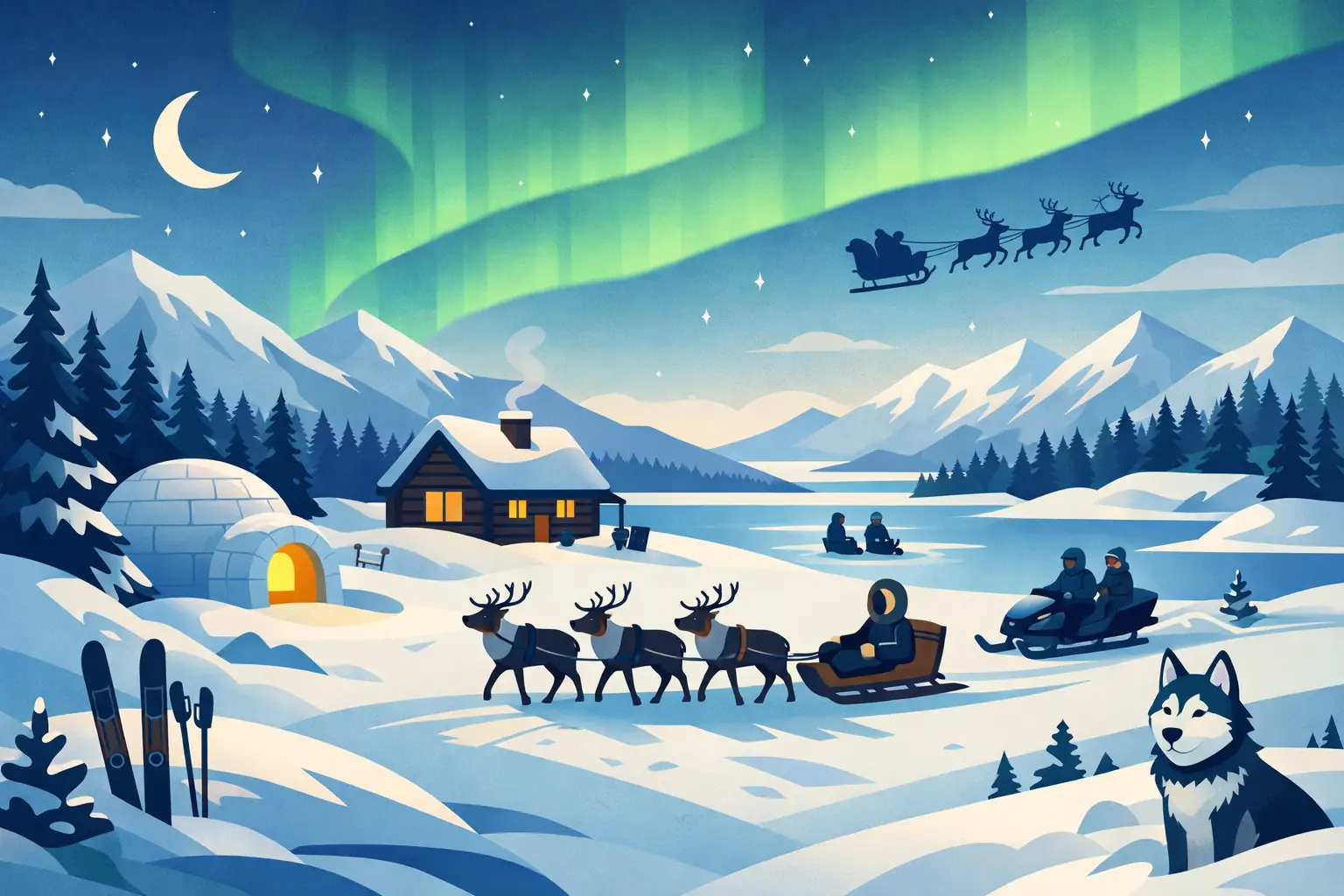
Lapland holidays are not about ticking off a snowy selfie beside a Christmas tree. They are about the moment your boots crunch into fresh snow, the forest falls silent, and a green ribbon suddenly moves across a black Arctic sky. Rovaniemi gives you the easy arrival and famous festive magic, but the real feeling begins when you travel beyond the bright lights with a guide who knows the weather, the roads and where wilderness still has room to breathe.
For couples, families and friends planning a winter escape, Lapland can deliver several once-in-a-lifetime experiences in a single trip. The key is not trying to do everything at once. Give each day a purpose, leave space for the weather, and choose activities that take you properly into the landscape.
What makes Lapland holidays so special?
Finnish Lapland is a place of beautiful contrasts. You can meet Santa in the morning, ride behind a husky team in the afternoon and stand beneath the Northern Lights late that night. Yet its magic is rarely in the busiest places. It is in the cold air on your cheeks, a wood fire after time outside, and the huge sense of space when the road disappears into snow-covered forest.
Rovaniemi is an excellent base because it combines straightforward connections with access to wild country. You do not need Arctic driving experience, specialist equipment or a complicated route plan to get out there. A well-organised guided tour handles pick-up, safety briefings and the practical details, leaving you free to enjoy the adventure.
This matters particularly on a short break. If you have three or four nights, every hour counts. A local guide can read changing cloud cover, assess conditions and decide whether a promising sky lies 30 minutes away or much farther into the wilderness. That knowledge is more valuable than simply waiting outside your hotel and hoping.
Choose the right time for your winter break
Lapland’s winter season is long, but each part has its own character. December is made for fairy-tale atmosphere: deep snow, festive lights and long dark evenings. It is a popular time for families and anyone who wants the full Christmas feeling, so booking early makes a real difference.
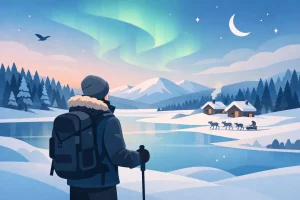
January and February are usually the coldest months. The air can be sharp enough to make exposed skin tingle within minutes, but the snow often feels at its most crisp and pristine. These are brilliant months for husky sledding, snowmobiling, snowshoeing and a properly wild Arctic mood. Daylight is limited, though the soft blue light around midday can be extraordinary.
March brings longer days, more light for photography and often more comfortable temperatures. It suits travellers who want full days outside, whether that means ice fishing on a frozen lake or a longer snowshoe route through the forest. Northern Lights hunting remains possible as long as the nights are dark enough and the sky is clear.
No month can promise the aurora. The Northern Lights depend on solar activity and clear skies, two things nobody can control. What you can choose is an outcome-focused hunt with guides prepared to move, monitor forecasts and keep searching rather than staying fixed at one convenient viewpoint.
Build your trip around one unforgettable night
The Northern Lights are often the reason people book Lapland in the first place, so treat the hunt as more than an evening add-on. Give it a dedicated night, ideally early in your stay. If conditions are poor, you may have another chance later in the trip.
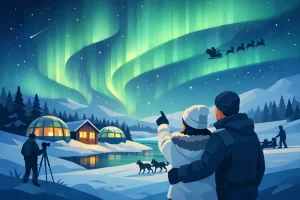
A proper aurora hunt is a moving adventure. Your guide may take you across the Rovaniemi region, following clearer skies and leaving artificial light behind. Some nights involve a short drive to a quiet lakeside spot; others call for patience, warm drinks and a longer route in pursuit of a break in the clouds. That uncertainty is part of the experience. When the sky opens, it feels earned.
Choose the format that suits your group. A small-group hunt offers company and good value, while a Private Hunt gives your party more flexibility. Photography-focused tours are worth considering if you want help with camera settings or portraits beneath the aurora. If seeing the Lights is your priority, an extended or multi-night format gives you more opportunities than a single fixed excursion.
Do not judge a hunt by how much time is spent standing outside. The best guides make thoughtful calls, explain what they are seeing in the forecast and keep the experience enjoyable even during a quiet sky. Honest guidance beats false promises every time.
Add Arctic activities with different rhythms
A memorable itinerary balances high-energy experiences with slower ones. Husky sledding brings pace, noise and pure excitement. Once the team begins running, the sound of the sled fading over snow is something people remember for years. Reindeer safaris are calmer, more traditional and wonderfully suited to families or couples looking for a gentler ride through the forest.
Snowmobiling gives you distance and a sense of freedom, but it is not the only way to reach the wilderness. Snowshoeing is slower and more intimate. You notice animal tracks, snow-laden branches and the changing texture of the forest. Ice fishing asks even more of your patience, which is exactly the point. Drilling through a frozen lake and waiting in the stillness creates a completely different connection to Lapland.
For a wildlife-focused day, Ranua Arctic Zoo can be a strong addition, especially for families or travellers who want to see Arctic animals in a northern setting. It works best as one part of a varied break rather than a substitute for time outside in the open wilderness.
You may be tempted to book huskies, reindeer, snowmobiles and a long aurora hunt on consecutive days. It can work, but leave breathing room. A slower morning after a late night makes the whole holiday feel better, and cold weather is more tiring than many first-time visitors expect.
What to wear when the temperature drops
Arctic clothing does not need to look fashionable to work well. Warmth comes from layering and avoiding dampness, not from putting on one enormous jumper. Begin with a close-fitting thermal base layer, add fleece or wool in the middle, then wear an insulated outer layer that blocks wind and snow.
Your extremities deserve the most attention. Thick socks, proper winter boots, insulated gloves or mittens, a warm hat and a neck gaiter are essentials. Mittens are usually warmer than gloves, although gloves can be useful for operating a camera. Keep your mobile phone close to your body when you are outside, as batteries drain quickly in severe cold.
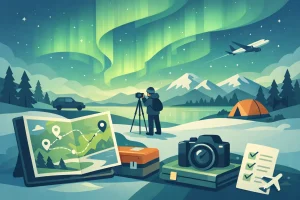
Most quality activity tours provide thermal overalls and boots, but check the inclusions before packing. Even with supplied gear, bring your own base layers, gloves and warm socks. It is far easier to remove a layer after an energetic snowmobile ride than to warm up once you are cold on an aurora hunt.
Stay in Rovaniemi, but look beyond the city lights
Rovaniemi is practical, lively and full of choice. It suits first-time visitors who want restaurants, shops and easy access to Santa Claus Village alongside guided excursions. Staying in the city does not mean missing the wilderness, provided your tours are designed to take you out of the built-up area.
If you have more time, consider a multi-day route that continues north or west towards Norway. The journey from Finnish Lapland towards Kirkenes, Tromsø or Lofoten changes the scenery and makes the holiday feel like a wider Arctic expedition. This is best for travellers with at least five or six nights and an appetite for road time, changing landscapes and weather-led plans.
For a shorter holiday, one reliable base is usually the smarter choice. Fewer hotel changes mean more rest, easier logistics and less time spent repacking thermal layers. ArKtictopia’s guided experiences are built around this idea: maximise the time in nature, while the practical work stays in experienced hands.
A simple way to plan your days
For a three-night break, arrive, settle in and keep the first evening flexible. Make your main Northern Lights hunt your first full night. Use the next day for huskies or snowmobiling, then choose a calmer activity such as reindeer sledding, ice fishing or snowshoeing before your second aurora opportunity.
With four or five nights, add a wildlife day, a private experience or more time for a second hunt. Families may prefer shorter activity durations and a relaxed visit to Santa’s Village. Couples and groups of friends often enjoy pairing a thrilling daytime ride with a late-night search for the aurora. There is no single perfect itinerary – the right mix depends on your energy, budget and how much you value quiet wilderness over packed days.
Book your core experiences ahead, especially around Christmas and New Year, but do not over-schedule every hour. Lapland rewards flexibility. Clouds may change your Northern Lights plan, a particularly beautiful snowy morning may make you want an extra walk, and the best stories often begin when the itinerary leaves room for wonder.
Pack warm layers, arrive curious and let your guide take you beyond the obvious. The Arctic does not perform on demand, but when you meet it on its own terms, it has a way of making an ordinary winter holiday feel truly unforgettable.