
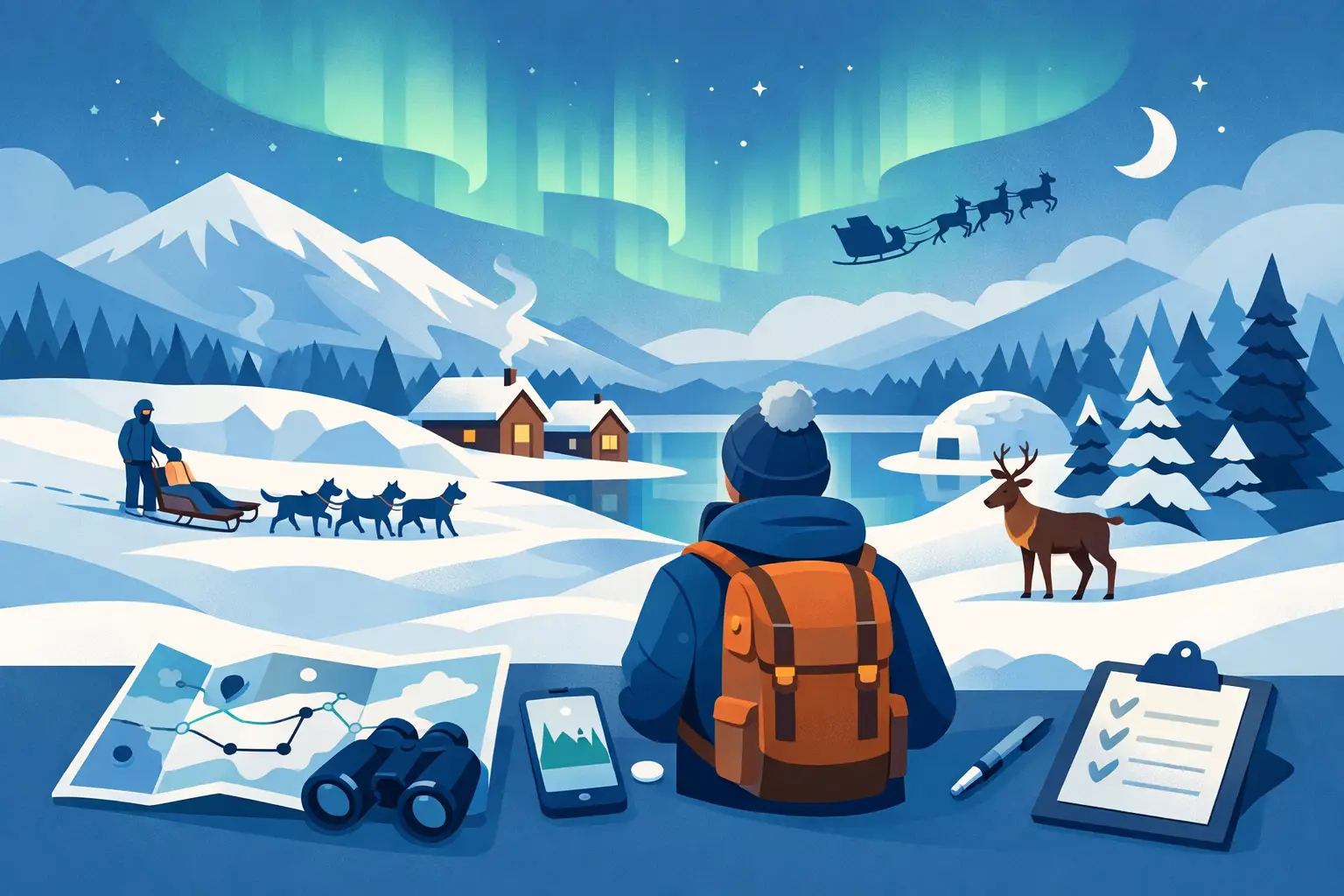
The biggest mistake people make with Lapland is trying to cram it into two frantic days and hoping the Northern Lights will simply appear on cue. They might. They also might hide behind clouds for 48 hours while you race between sleigh rides, snowmobiles and Santa stops with no breathing space at all. A better plan is to give Lapland time to work its magic.
This multi-day Lapland itinerary guide is built for travellers who want the real experience – proper winter days, small-group adventures, enough flexibility for weather, and a genuine shot at seeing the aurora without turning the trip into a checklist. If you are flying into Rovaniemi and want a holiday that feels unforgettable rather than overpacked, seven days is the sweet spot.
Why a multi-day Lapland itinerary guide matters
Lapland rewards patience. Snow conditions change, daylight is short in midwinter, and the Northern Lights are never something any honest guide should promise on demand. That is exactly why multi-day planning matters.
When you spread activities across several days, you stop competing with the Arctic and start working with it. One day can be for huskies, another for reindeer or wildlife, another for a long aurora hunt if the forecast looks promising. You also leave room for rest, which sounds unglamorous until you realise Arctic travel is tiring in the best possible way. Cold air, outdoor excursions and late nights under the sky add up quickly.
Rovaniemi works especially well as a base because it gives you easy access to classic Lapland experiences while keeping transfers manageable. It is also a strong jumping-off point if you want to extend your trip deeper into Finnish Lapland or even onwards into Norway.
The best 7-day winter plan for Lapland
Day 1 – Arrive and keep it light
Land in Rovaniemi, settle into your accommodation and resist the urge to schedule something huge immediately. If your flight has been early and you still have energy, use the afternoon for a gentle first taste of the Arctic – a walk through snowy forest trails, a visit into town, or a relaxed evening meal.
If conditions are right, this is a good night for a Northern Lights tour. The first evening always carries a bit of excitement, and joining a guided hunt means you start the trip with local insight straight away. Good guides read cloud maps, solar activity and road conditions, then make real-time decisions instead of simply taking everyone to the nearest lay-by and hoping for the best.
Day 2 – Huskies and your first full Arctic day
A husky safari is one of those Lapland experiences that lives up to the hype. It is fast, cold, loud, exhilarating and far more connected to the landscape than people expect. You are not just sitting on a sled for a photo. You are moving through forest and open snow with a team of dogs that genuinely want to run.
This is a strong second-day activity because it gets you straight into the spirit of the trip. If you were out late hunting aurora on your first night, keep the evening flexible. You do not need to chase every single night, especially if the forecast is poor.
Day 3 – Reindeer, heritage and a slower rhythm
After the adrenaline of huskies, a reindeer safari or heritage-focused day gives the itinerary balance. Reindeer experiences tend to be quieter and more reflective. They lean into the cultural side of Lapland and suit families, couples and anyone who wants something more grounded than pure speed.
This is also a good day to include Santa Claus Village if that matters to your trip. For some travellers it is essential, for others it feels too polished. That is one of the main trade-offs in Lapland planning: iconic attractions are easy and memorable, but wilderness experiences usually feel more personal. If you can, do both – just do them on different days so neither feels rushed.
Day 4 – Snowshoeing or ice fishing
By the middle of the week, it helps to choose an activity that puts you back into the quiet. Snowshoeing is brilliant for that. It strips things back and reminds you why people come north in the first place – silent forests, frosted trees, blue light over the snow, and that feeling of being very small in a very beautiful place.
Ice fishing offers a different kind of calm. It is less about the catch and more about the ritual – drilling through the ice, waiting in the stillness, warming up with hot drinks, and learning how people have lived with winter here for generations. If you are travelling with impatient young children, snowshoeing may be easier. If you want a slower, more traditional day, ice fishing often wins.
Day 5 – Wildlife day or Ranua Arctic Zoo
Not every day needs to be high-energy. Ranua Arctic Zoo is a practical choice if you want to see Arctic animals and prefer a structured daytime outing. It works well for families and for travellers who enjoy wildlife but do not necessarily want a full wilderness expedition.
If your priority is nature in a more immersive sense, you might prefer another guided outdoor day instead. This is where small-group planning helps. Some people want variety and comfort, others want maximum time outside in the snow. A good itinerary does not pretend those are the same thing.
Day 6 – Your big aurora night
If you have one evening to protect at all costs, make it this one. By now you have settled into the rhythm of Lapland, and you have likely had a few days to watch the forecast. This is the moment for a serious Northern Lights hunt – the kind that gives the sky time, covers distance if needed, and is built around visibility rather than convenience.
This is where guided touring really earns its keep. The aurora is not a theatre show with a fixed start time. Some nights demand patience, relocation and a bit of stubborn optimism. The best experiences often happen far from town lights, with a guide who knows when to wait and when to move. If photography matters to you, this is the night to book a photo-focused option rather than trying to sort camera settings with frozen hands in the dark.
Day 7 – A soft landing before departure
Your last day should not feel like a sprint. Leave room for souvenir shopping, a relaxed lunch, one final walk through the snow, or a sauna if your accommodation has one. If you have a late departure and the weather is glorious, you can still fit in something gentle, but avoid planning a major excursion that leaves you stressed about airport timing.
Lapland is at its best when it feels spacious. Ending with a little margin keeps the holiday magical right to the finish.
How to tailor this multi-day Lapland itinerary guide to your travel style
Not every traveller wants the same version of Lapland, and forcing one formula usually backfires. Couples often want a romantic mix of action and quiet, with at least two aurora opportunities and time for long dinners or a sauna. Families usually do better with shorter excursions, less late-night pressure and at least one easy day in the middle. Friend groups often lean towards bigger adventure days, while solo travellers tend to get the most from guided small-group tours where logistics are handled and the experience stays social.
The month matters too. December brings that fairy-tale feeling everyone imagines – deep snow, festive atmosphere and very little daylight. January and February are colder, often quieter after the Christmas rush, and excellent for proper winter activities. March gives you longer daylight and often fantastic snow conditions, which many travellers end up preferring once they realise they want to see the landscape as well as the night sky.
Common planning mistakes to avoid
The first is booking every activity back-to-back with no recovery time. On paper it looks efficient. In reality, it makes the trip feel like admin in thermals.
The second is assuming the Northern Lights should happen on the first clear evening and then feeling disappointed if they do not. Aurora travel is about increasing your chances, not controlling the sky. Build in multiple possible nights and you will enjoy the whole holiday more.
The third is choosing size over quality. Massive coach-style experiences can be cheaper, but they rarely feel personal and they are not always designed around the best outcome. Smaller guided groups usually move faster, adapt better and feel far more real.
That is exactly why many travellers choose specialist operators such as ArKtictopia – not just to fill a timetable, but to shape a trip around authentic winter experiences, practical routing and serious aurora chances from Rovaniemi and beyond.
How many days do you really need?
If you only want one or two marquee activities, four days can work. If your dream Lapland holiday includes huskies, reindeer, wildlife, quiet time in nature and a proper Northern Lights strategy, seven days is the stronger call. It gives the Arctic room to surprise you.
And that is the whole point. The best Lapland trips are not the ones where every minute is squeezed dry. They are the ones where you step outside into blue twilight, hear snow crunch beneath your boots, look up, and realise the plan gave wonder enough space to arrive.