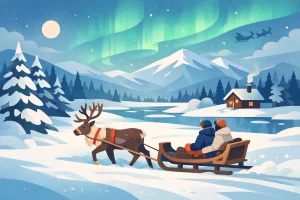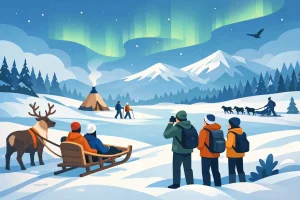
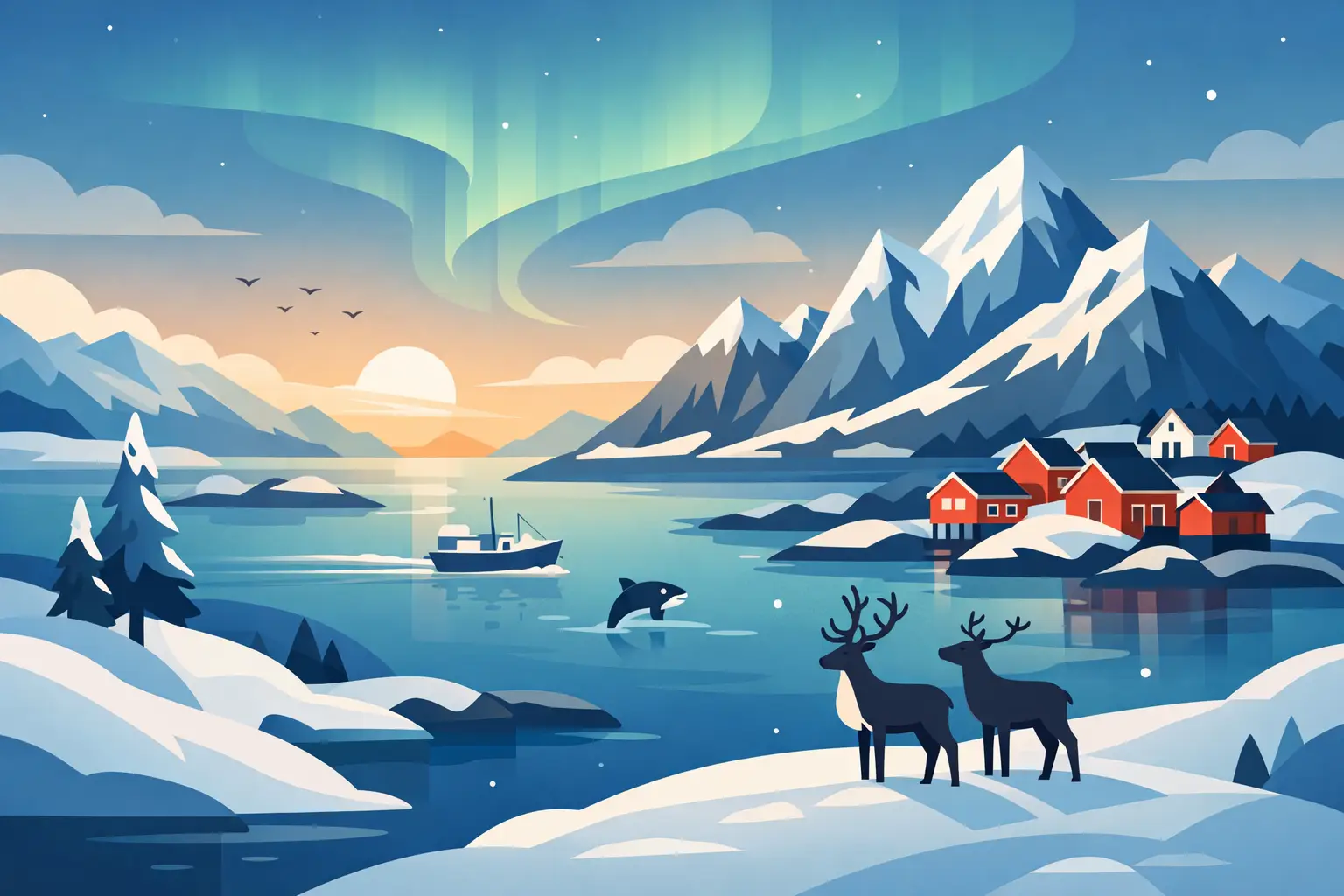
If you are already coming to Finnish Lapland, adding a northern Norway extension from Lapland can turn a brilliant winter break into something far bigger – more coastline, more dramatic scenery, and a completely different side of the Arctic. One day you are in snow-covered forest around Rovaniemi, chasing the Northern Lights through quiet taiga. A little later, you can be standing above a dark fjord, watching the same sky flicker over the sea.
That contrast is the real reason travellers add Norway. Lapland gives you the classic winter wonderland – huskies, reindeer, snowy trees, frozen lakes, Santa season magic, and easy access to guided activities. Northern Norway changes the mood. It feels wilder, more open, and often more cinematic, with sharp mountains, fishing villages, Arctic roads and the sea always somewhere in the picture. If your holiday is about collecting different Arctic moments rather than staying in one base, this extension makes a lot of sense.
Why choose a northern Norway extension from Lapland?
For many GB travellers, Lapland is the starting point because it is easy to understand and easy to enjoy. You can fly in, settle quickly, and step into a well-organised programme without needing specialist winter skills. That matters, especially if you want the adventure without spending the whole trip worrying about weather, driving conditions or what to wear.
Adding Norway works best when you want a second chapter rather than more of the same. Finnish Lapland is forested, peaceful and activity-led. Northern Norway is more route-led. The drive itself becomes part of the experience, and the landscapes change constantly. You are not just booking another excursion. You are moving through the Arctic.
There is also a practical upside. If seeing the aurora matters to you, spending time across different regions can improve your overall chances, because weather patterns vary. Clear skies in one place do not guarantee clear skies in another, but the option to move can be valuable. That said, nobody honest should pretend Norway is a magic fix. Some nights are clouded out everywhere. The smart approach is to see the extension as adding depth and variety first, with aurora chances as a strong bonus.
Which part of northern Norway suits your trip?
Not all northern Norway extensions feel the same, and that is where planning pays off.
Tromsø
Tromsø is the easiest choice for travellers who want energy, comfort and a lively Arctic city at the end of their Lapland stay. You get restaurants, cafés, hotels, museums and organised winter activities, but you are still surrounded by mountains, islands and aurora country. It suits couples, solo travellers and friends who want a mix of scenery and social atmosphere.
The trade-off is that Tromsø feels more urban than the quieter parts of Lapland. If your dream is total wilderness and very little development, this may not be the right finale. But if you want your trip to end with a little buzz after days in the forest, it works beautifully.
Kirkenes
Kirkenes is a strong option if you want the far-north feeling without the bigger city pace. It is closer in mood to a frontier Arctic experience – snowy, remote and deeply connected to the borderland character of the region. Travellers often choose it for king crab experiences, snow hotels and a sense of being at the edge of Europe.
This route can feel especially natural from Finnish Lapland because the geography flows well. It is less about dramatic fjord scenery than Lofoten or Tromsø, and more about atmosphere, remoteness and unusual Arctic experiences.
Lofoten
Lofoten is the showstopper. If your idea of northern Norway is steep peaks rising straight from the sea, red cabins, white beaches under winter light and photographs that look almost unreal, this is the place. It is one of the most visually striking extensions you can add to a Lapland itinerary.
The catch is distance and pace. Lofoten is not the quick add-on. To do it properly, you need time, and winter road conditions can shape the route. It suits travellers building a longer Arctic holiday rather than those trying to squeeze everything into a short break.
How many days should you allow?
This is where many plans go wrong. People see the map, spot that everything is in the north, and assume it is all close together. In Arctic travel, distances are deceptive and winter conditions matter.
For Tromsø or Kirkenes, a two to four day extension can work well if the logistics are handled properly. That gives you enough time to travel, settle in and actually enjoy where you are, instead of spending the whole add-on in transit. If you only have one spare day, it will usually feel rushed.
For Lofoten, think more generously. Four to six days is far more realistic if you want the route to feel exciting rather than exhausting. This is especially true in winter, when weather can reshape plans. A tight schedule might look efficient on paper but feel stressful on the ground.
The best Arctic itineraries leave room for conditions. Snowfall, wind, road speeds and daylight all affect how a journey feels. A good extension is not about ticking off Norway. It is about giving yourself time to absorb it.
What the journey actually adds to your holiday
A northern Norway extension from Lapland is not just a change of postcode. It changes the rhythm of the whole trip.
In Lapland, days often revolve around specific experiences – husky rides, reindeer safaris, snowmobiling, ice fishing, family activities, zoo visits, aurora hunts. It is immersive and wonderfully easy to build a holiday around. Norway adds more movement and more visual drama. The transitions become memorable too: leaving dense snowy forest, crossing wide open plateaus, and arriving at the coast where the air feels different and the horizon opens up.
That variety is ideal for travellers who want the full Arctic picture. It is also useful if you are travelling as a couple or group with mixed interests. One person may love the classic Lapland activity side, while another is drawn to landscapes, road journeys and photography. Combining both can keep the whole trip feeling balanced.
Should you self-drive or book a guided route?
It depends on your confidence, your winter driving experience and how much mental effort you want on holiday.
Self-driving gives freedom, and some travellers love that. You can stop for views, shape your own timing and travel independently. But Arctic winter driving is not a novelty. Roads can be icy, daylight is limited, and conditions change fast. If you are used to British roads and have little or no snow-driving experience, a long cross-border journey may not feel as carefree as it sounds.
A guided extension removes that pressure. You get local judgement on weather, routing and timing, and you can stay focused on the experience instead of the mechanics. For many travellers, especially those already booking guided Lapland activities, this is the difference between an adventurous trip and a tiring one. ArKtictopia’s style of small-group Arctic travel fits this kind of route particularly well, because the point is not to rush you through a checklist. It is to help you actually enjoy the north.
When is the best time to go?
For a winter extension, the sweet spot usually runs from late November to March, but the feel changes a lot across the season.
December gives you peak fairy-tale atmosphere, especially if your Lapland base includes Christmas magic and deep snow. It is ideal for travellers who want that storybook winter mood. The downside is that it is busy, and daylight is very short.
January and February often bring proper Arctic winter conditions and excellent snow cover. These months suit travellers who want crisp landscapes and strong Northern Lights potential. March gives you longer daylight, beautiful colours and a more relaxed feel for photography and scenic travel. If you prefer a sense of space and visibility on the road, March can be a very smart choice.
Is it worth it for a first Arctic trip?
Yes – but only if the extension matches the length and style of your holiday. If you have four nights in total, staying focused on Lapland is usually the better call. You can have an unforgettable trip without trying to cross borders just for the sake of it.
If you have a week or more, Norway starts to become genuinely worth considering. That extra time lets the trip breathe. You get the magic of Lapland and the grandeur of coastal Arctic Norway without feeling that you have spent the entire holiday packing and unpacking.
The best version of this trip is not the busiest one. It is the one that gives you two distinct Arctic worlds and enough time to feel both of them.
If Lapland is the place that pulls you into the Arctic, northern Norway is often the part that stays in your head afterwards – the long road, the fjord light, the sense that the north just kept getting bigger.