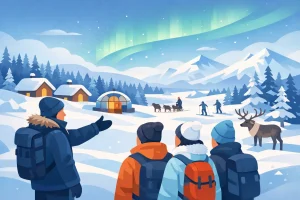
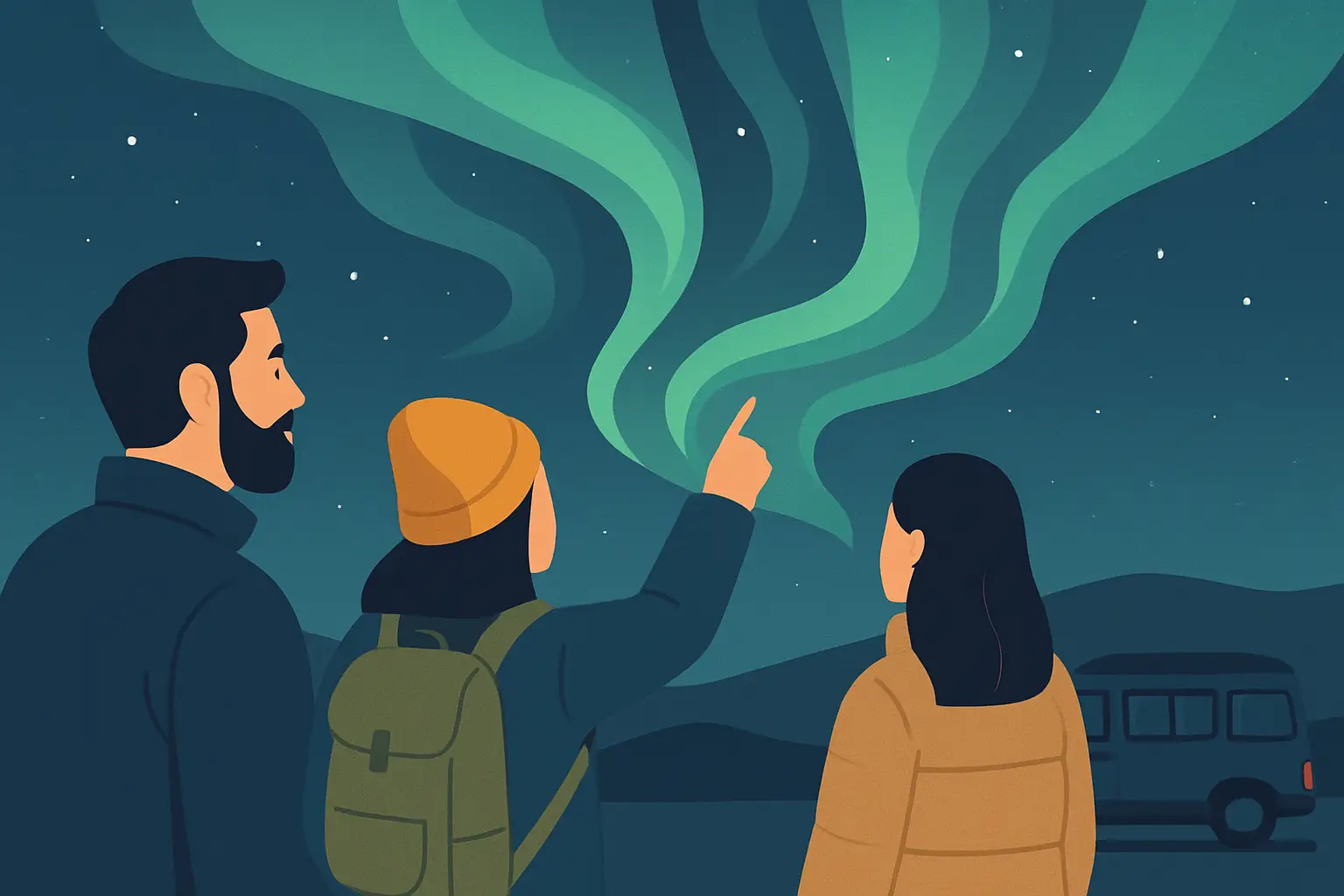
You are standing on a frozen lake outside Rovaniemi. The snow squeaks under your boots, the air is so crisp it feels new, and someone quietly kills the torch so your eyes can adjust. No coach doors slamming, no crowd jostling for the same photo. Just a handful of people, a guide who actually knows the sky, and the kind of silence that makes the first green arc feel unreal.
That is the real reason travellers choose a small group northern lights tour. Not because it sounds fancy, but because aurora hunting is a game of timing, terrain, and decision-making – and small groups simply move better.
Why a small group northern lights tour changes the odds
The Northern Lights are wild. They do not care about your anniversary, your three-night break, or the fact you have wanted this since you were a kid. You cannot control the aurora, but you can control everything around it: where you go, how quickly you can pivot, how long you stay, and whether the experience feels like wilderness or a queue.
With a small group, the guide can be decisive. If the forecast shifts, you can switch direction without losing an hour corralling people. If one spot clouds over, you can relocate before the moment passes. And if the lights start building behind you, your guide can stop safely and get everyone out fast.
The other advantage is attention. In a small group, you can ask the questions you actually have – what am I looking at, why is it faint at first, how long will it last, what camera settings won’t ruin my night vision? In a large group, guides often end up managing logistics and expectations instead of guiding.
What “small group” should really mean
Lots of operators use the phrase because it sells. The experience, however, depends on what the company counts as small and how they run the night.
A true small group northern lights tour feels personal from the first message to the final drop-off. You are not a booking reference on a clipboard. You are a traveller who might be nervous about -20°C, unsure what to wear, and secretly worried you will miss the moment while fiddling with gloves.
In practice, small group should mean enough people to keep the vibe sociable, but few enough that you can hear your guide without leaning in. It should mean your guide knows names, checks on comfort, and can adapt the plan without the night collapsing into admin.
The guiding style that makes the difference
Aurora hunting is not just driving into darkness and hoping. The best guides treat it like a living weather puzzle.
They are reading cloud maps, wind direction, and local micro-conditions – the way river valleys collect mist, how coastal weather can push inland, where street lighting will flatten the sky. They also know the unglamorous details: where you can stop legally and safely, which tracks are drivable after fresh snow, and which viewpoints have the cleanest horizons.
There is also the human side. A great guide sets expectations early. The Lights can be a faint, ghostly glow before they explode into movement. Sometimes the show is subtle but beautiful, and sometimes it is straight-up fireworks. Your guide’s job is to keep you patient and present so you do not give up five minutes before the sky wakes up.
What happens on a typical small group Northern Lights night
Most evenings start with a pick-up in Rovaniemi and a quick check-in about clothing and comfort. The atmosphere matters. If you feel looked after, you relax – and relaxed people stay outside longer, which genuinely helps.
From there, the route depends on conditions. Some nights are a short drive to escape light pollution. Other nights call for a longer push, chasing a clear pocket of sky. The best tours feel like an expedition, not a commute: a few well-chosen stops, time to settle in, and decisions made with purpose.
Many small group tours include a warm-up moment – a fire, hot drinks, maybe a simple snack. It is not about luxury. It is about keeping you comfortable enough to keep watching. Cold makes people rush, and rushing is how you miss the delicate first phase when the aurora starts to form.
Trade-offs: when a small group tour might not be for you
Small group does not automatically mean perfect for every traveller.
If you want a very controlled, schedule-driven evening with minimal waiting outdoors, you might prefer a more staged experience. Aurora hunting includes downtime. The sky does not perform on command, and the best nights often involve quiet stretches where nothing happens – until it does.
If you are travelling with very young children, consider whether they can cope with late hours and cold. Some families love it and make it a core memory. Others have a better time booking private, so bedtime can win without guilt.
And if you are the type who wants constant social energy, a tiny group can feel calm rather than party-like. That calm is part of the magic for most people, but it is worth being honest about your travel style.
How to choose the right small group northern lights tour
The fastest way to sort good from average is to look past the marketing and check how the operator talks about outcomes.
A serious aurora-focused company will be clear about how they plan routes, how long the hunt lasts, and what they do when conditions change. They will talk about cloud cover, light pollution, and flexibility – not just “magical skies”. They will also be upfront that the aurora is never guaranteed by nature, even if they run a product that is structured to maximise your chances.
Look for details that signal real guiding rather than a scripted drive: small group size stated plainly, a focus on moving to clearer skies, and practical support for cameras and clothing. Reviews help too, but read them for patterns. Do people mention the guide’s decisions, patience, and effort? Or do they only say “nice trip”?
If you want a night built around results and real Lapland atmosphere, choose an operator whose whole identity is the small-group, nature-first approach – the kind of promise we build trips around at ArKtictopia.
Photography: what you can realistically capture
You do not need a professional camera to have an unforgettable night. Your eyes will do the job, and your mobile phone might surprise you if it has a night mode. But if you are bringing a camera, a small group helps massively because you will have time and space to set up properly.
The reality: aurora photography is a balance between exposure and movement. Long exposures make the green brighter, but they can blur fast-moving curtains. A guide who understands this can save you from taking 200 identical shots that do not match what you felt.
Bring spare batteries if you can. Cold drains them quickly. Also, keep your gear simple. The best photo is the one you can take without turning the night into a technical battle.
What to wear so the night stays fun
People from GB often underestimate how different Arctic cold feels. It is not just “a bit nippy”. It is the kind of cold that sneaks into gaps: wrists, ankles, neck.
Layering wins. Base layers close to the skin, an insulating mid-layer, and a windproof outer layer. Warm socks matter more than most people realise, and so do proper boots with space for your toes to move. Mittens are usually warmer than gloves, but you may want thin liners underneath so you can handle a camera or mobile phone without exposing your skin.
Also, do not ignore comfort details. A small group tour usually means more time outside, and that is exactly what you want for aurora – as long as you are not counting minutes until you can get back in the vehicle.
Timing your Lapland trip for better chances
If you are planning a winter break, aim for dark nights and a few attempts. The lights can appear any time it is dark, but longer nights give you a wider window, and multiple nights give you breathing room.
If your schedule allows, book your aurora hunt early in your trip. That way, if weather blocks one night, you have another chance. It also takes the pressure off. When the first night is “the only night”, people watch the forecast like it is a life-or-death sport.
Moonlight is another “it depends”. A bright moon can wash out faint aurora, but it also makes snowy landscapes glow, which can be stunning when the lights are strong. The best tours work with whatever the sky gives you.
The feeling you are really paying for
Yes, you want the Northern Lights. But the reason a small group northern lights tour gets shared in group chats and relived over dinner is the whole atmosphere around it.
It is being far enough from town that the darkness feels honest. It is hearing your guide call the first hint of activity before you can see it yourself. It is watching strangers fall quiet together. It is realising you are not just ticking a box – you are having a once-in-a-lifetime night in the Arctic.
If you are coming to Lapland for that kind of memory, choose the tour style that matches the moment. Small group is not a buzzword. It is a practical advantage, and it turns aurora hunting into something that feels personal, not processed.
Book the night, dress properly, trust the guide, and let the sky take its time. The best part is not controlling the outcome – it is being out there when it happens.