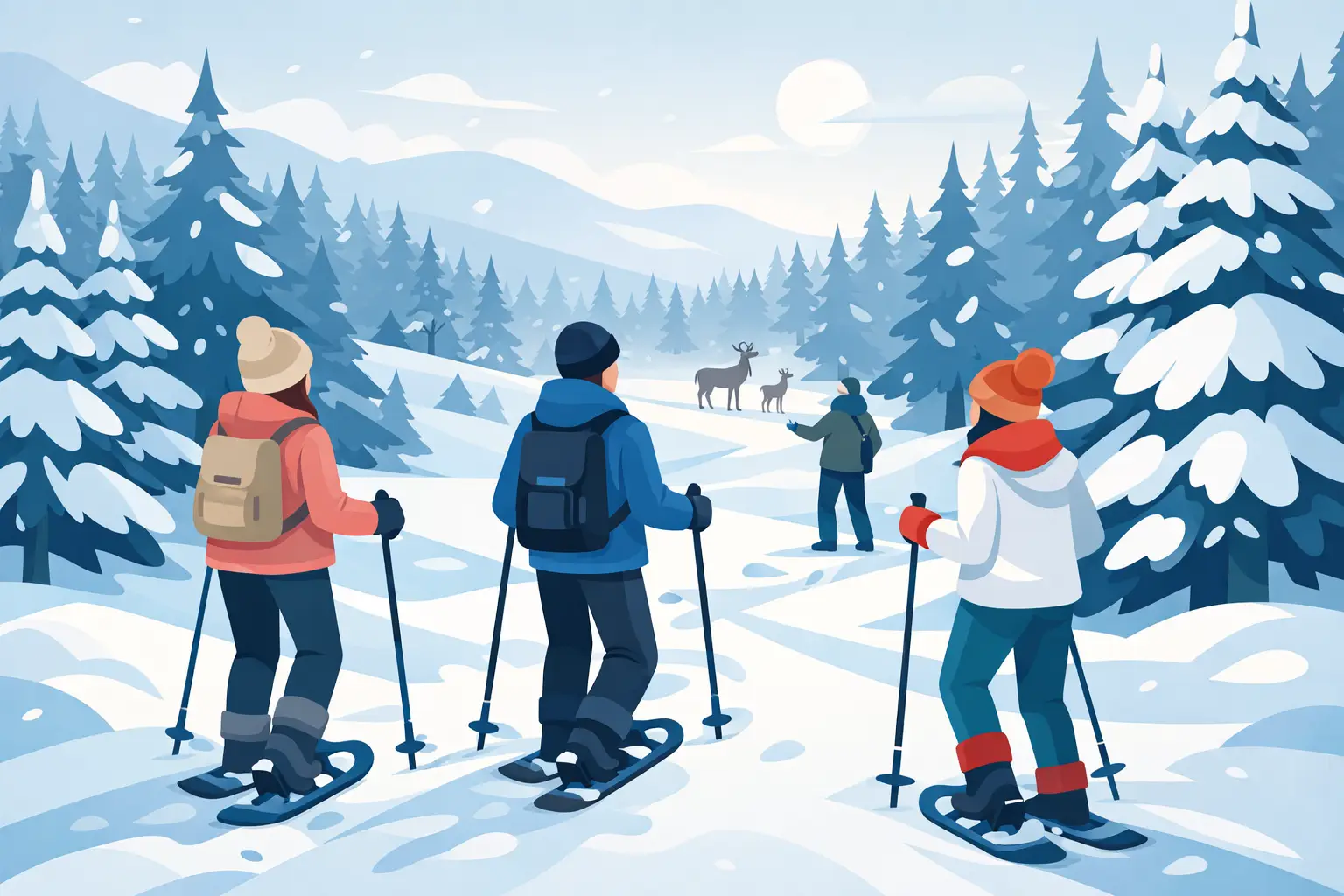
A snowshoeing forest tour Rovaniemi small group experience begins where the noise of the city falls away. One moment, you are being collected from your accommodation; soon after, you are stepping into a white forest of snow-heavy spruce, following a guide into the kind of silence that makes Lapland feel wonderfully wild.
This is not a race, a technical expedition, or an activity reserved for seasoned hikers. Snowshoeing is one of the most direct ways to enter the winter landscape. With a small group, there is time to settle into the rhythm, ask questions, stop for photographs, and notice the details that larger tours can miss: animal tracks crossing fresh snow, low winter light between the trees, and the soft crunch beneath your feet.
Why a small-group forest tour feels different
Lapland is at its best when it has room to breathe. On a small-group snowshoeing tour, you are not following a long line of strangers through a crowded attraction. The guide can choose a pace that works for the people in front of them, offer practical help when needed, and share the local knowledge that turns a beautiful walk into a real Arctic experience.
That personal attention matters, particularly if this is your first time in proper winter conditions. Snowshoes are simple to use, but deep snow can feel unfamiliar at first. A good guide will show you how to walk with a slightly wider stance, how to handle a gentle slope, and how to stay comfortable as temperatures drop. Within minutes, most guests find their stride.
Small groups also make the forest feel more peaceful. There is space for couples to walk together, for families to keep close, and for solo travellers to feel included without being lost in a crowd. The atmosphere is sociable when you want it to be, quiet when the landscape asks for it.
What snowshoeing in Rovaniemi is really like
Forget the idea of battling through waist-deep snow for hours. A guided forest snowshoe walk is usually a relaxed, accessible outing through terrain selected for the conditions and the group. Trails can include packed paths, soft open snow, gentle rises and frozen clearings. The route is never completely identical from one day to the next because snowfall, temperature and forest conditions shape the experience.
The forest around Rovaniemi has a fairy-tale quality in the heart of winter. Trees bend beneath thick layers of snow, the air is dry and clear, and daylight often brings pastel shades of blue, pink and gold. In the coldest periods, the snow can sparkle under a low sun. Later in the season, longer days create a brighter, more energetic feel.
You will work a little harder than on a normal walk, especially in fresh snow, but that is part of the fun. Snowshoes spread your weight across the surface, helping you stay afloat rather than sinking at every step. The pace should leave you warm, alert and able to enjoy your surroundings – not gasping for breath.
Is it suitable for beginners?
For most travellers with a reasonable level of mobility, yes. You do not need previous snowshoeing experience, special outdoor skills, or a mountaineering background. Guides provide instruction before setting off and adapt the walk to the group where possible.
It is worth being honest about fitness. If you rarely walk, have a knee concern, or are travelling with very young children, choose a shorter and gentler option rather than assuming every snowshoe tour is the same. Arctic adventures are more enjoyable when the route suits your energy level. Families should also check the activity’s age and height guidance before booking, as deep snow and cold weather can be tiring for little legs.
How to dress for the forest
The secret to a brilliant snowshoeing day is not toughness. It is layers. Arctic temperatures can change how your body feels quickly: you may be chilly while standing still, then warm once you start walking. Dressing properly means you can enjoy both moments.
Start with a moisture-wicking base layer, add warm mid-layers, and finish with an insulated outer layer that blocks wind. Warm socks, gloves or mittens, and a hat are essential. Proper winter boots make a huge difference, as does keeping your neck covered with a buff or scarf. Avoid cotton where possible, because it holds moisture and can make you cold.
Many guided tours supply key winter equipment such as snowshoes and poles, and some include thermal overalls and boots. Confirm exactly what is included before you book, especially if you are visiting from the UK and do not own specialist Arctic clothing. Bring your camera or mobile phone in an inside pocket when possible – batteries lose power faster in extreme cold.
When should you go snowshoeing in Rovaniemi?
Snowshoeing season generally follows the snow, with the deepest winter conditions often arriving between December and March. The best time depends on the experience you want from your Lapland holiday.
December is wonderfully atmospheric. The forest is dark, festive and often dressed in fresh snow, making it ideal for travellers combining wilderness experiences with Santa’s Village, reindeer rides or husky sledding. Daylight is limited, but the blue-hour glow can be unforgettable.
January and February usually bring colder temperatures and reliable winter scenery. This is the moment for travellers who want the full Arctic feeling: crisp air, deep snow and a landscape that looks almost unreal. March is often brighter, with longer daylight hours and a little more warmth from the sun. It can be a particularly good choice for guests who prefer clearer visibility and a more relaxed outdoor pace.
Weather always has the final word. Heavy snowfall can make a forest even more magical, while colder days may require extra layers and a shorter stop. An experienced local guide reads the conditions rather than forcing the same plan every day.
A snowshoeing forest tour in Rovaniemi: small group, big memory
The activity itself is simple, but the feeling stays with you. You may pause in a clearing for a warm drink, listen as the guide explains how animals survive the winter, or stand still long enough to hear snow settling from a branch. These are not staged moments. They are the real Lapland, and they are exactly why leaving the busy sights behind is worthwhile.
A daytime snowshoeing tour also fits beautifully into a varied Rovaniemi itinerary. Book it after a long journey when you want to stretch your legs and reset in nature, or pair it with a husky safari for a day of Arctic action. If the Northern Lights are high on your list, a forest walk can be the perfect calm counterpoint to an evening hunt. You do not have to choose between excitement and stillness on a Lapland break.
ArKtictopia keeps groups small because a forest should not feel like a queue. The aim is personal guiding, carefully chosen routes and enough time to enjoy the adventure rather than simply tick it off.
What to look for before booking
Not every snowshoe outing offers the same experience. Look beyond the headline price and consider the group size, transfer arrangements, route length, clothing and equipment included, and whether the pace is designed for beginners. A clear description is a good sign: you should know what the day involves, where you will be picked up, and what you need to bring.
A shorter tour can be ideal if snowshoeing is one part of a packed first visit to Lapland. A longer route may suit active travellers who want more time away from town. Private guiding is worth considering for a family, a couple celebrating something special, or anyone who wants more flexibility around pace and photographs.
Most of all, choose a tour that treats the forest as more than a backdrop. The best guides do not rush you through it. They help you feel at home in it, even if only for a few snow-covered kilometres.
When you return to Rovaniemi with rosy cheeks and snow on your boots, you will have more than a set of photographs. You will carry that rare memory of walking through a silent Arctic forest, exactly as winter intended.