You hear them before you see them.
A husky yard on a cold morning isn’t quiet wilderness – it’s pure anticipation. Dogs talking over each other, tails sweeping snow into the air, that crackle of energy that makes you grin even if your eyelashes are already freezing. Then you step out into the taiga and the sound drops away. The sled runners hiss. Pines stand like dark pillars. Your breath becomes the only rhythm you notice. That contrast is exactly why husky sledding Rovaniemi taiga forest days land so hard in your memory.
This is Lapland at full volume, then suddenly at zero. And if you’re coming from the UK for a winter break, it’s one of the most reliable ways to get straight into real Arctic nature without needing any specialist skill.
Why the taiga forest is the place for huskies
The taiga around Rovaniemi is a working wilderness. It’s not alpine drama – it’s endless boreal forest stitched together with frozen marsh, narrow rivers and snow-covered tracks that locals use all winter. For huskies, it’s ideal terrain.
The routes are usually gently rolling rather than steep, so you get a smooth run and enough pace to feel the thrill without it becoming a white-knuckle ride. The forest also blocks a lot of wind, which matters more than people expect. At -15°C, a breeze can turn “crisp and fun” into “why can’t I feel my cheeks?” very quickly. In the trees, the cold is still – but it’s calmer.
There’s also something quietly cinematic about taiga light. On clear days the snow throws back a blue glow; on overcast days everything softens into a black-and-white world where you start spotting details – fox tracks, a frozen feather, the way frost clings to spruce branches like sugar.
What the experience actually feels like
Most first-timers expect a fast ride and a lot of shouting. The reality is more layered.
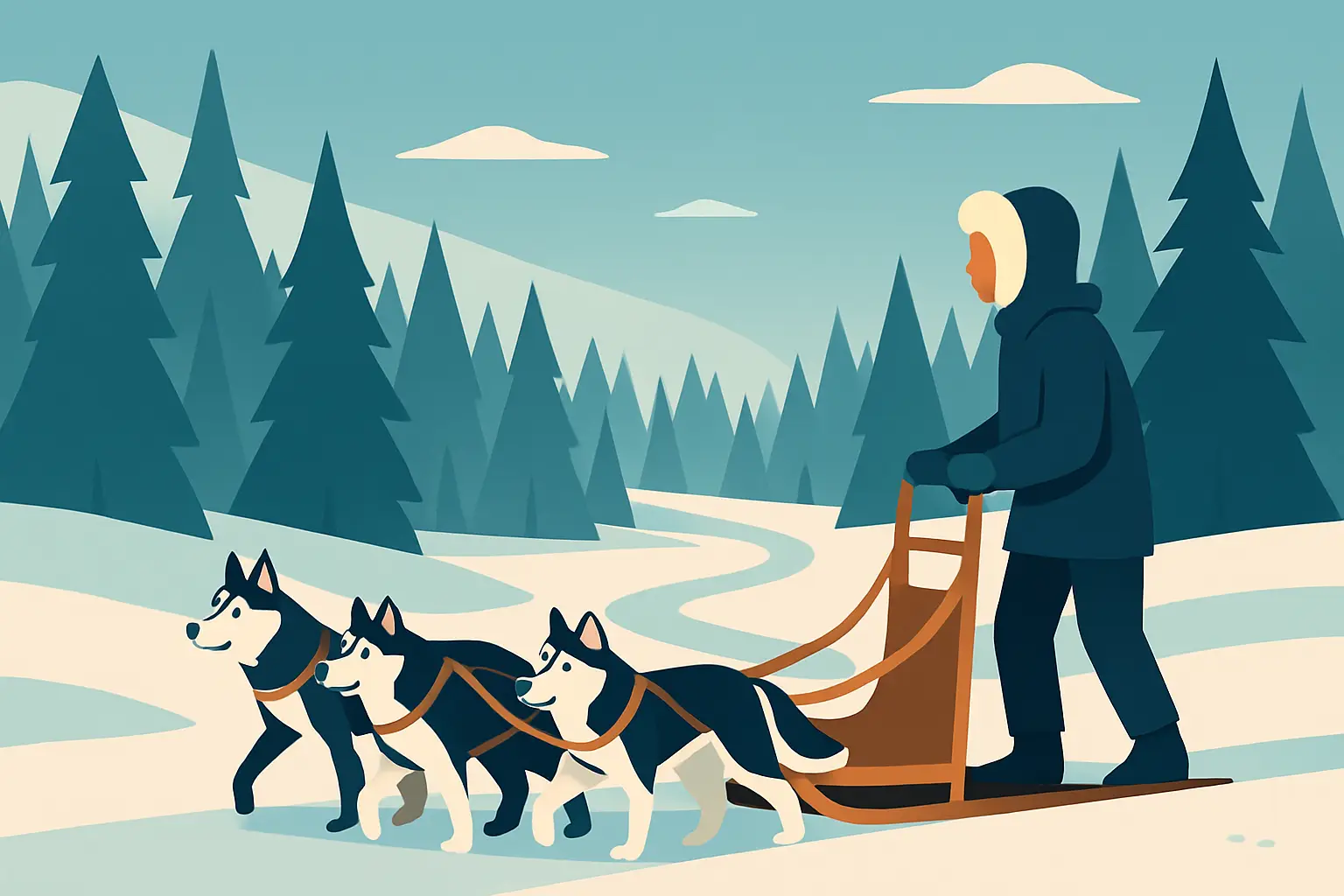
At the start, it’s lively. Huskies are built to run and they know the routine. Once the team settles, the noise fades and the sled glides. You feel tiny vibrations through the handlebar, you learn to lean with turns, and you start reading the trail the way the dogs do – anticipating a bend, a dip, a stretch where they’ll naturally pick up speed.
It’s also more physical than people think, but not in a gym way. You might need to help by stepping off and running a few paces on an uphill section, especially if the snow is soft. That’s normal and it’s part of the fun – you’re not a passenger, you’re part of the team.
And yes, it can be properly cold. The movement creates wind chill, so even if you’re comfortable standing still at the kennel, you might feel it on the trail. The good news is that cold is manageable with the right kit and a guide who actually pays attention to how you’re doing.
Choosing the right husky tour in Rovaniemi (it depends)
Not all husky rides are the same, and this is where people often get caught out. You’ll see everything from short “taste of huskies” experiences to longer safaris deep into the forest. None are automatically better – it depends on what you want from the day.
If you’re travelling with young kids or you’re squeezing huskies into a packed itinerary with Santa’s Village and a Northern Lights hunt, a shorter ride can be perfect. You still get the magic, you still meet the dogs, and you keep the day relaxed.
If you’re the type who came to Lapland for wilderness first and photos second, go longer. The longer the run, the more time you get in that sweet spot where everything becomes quiet and you stop thinking about your phone.
Also check whether you’re actually driving. Some tours are “sit in the sled” only, which is great for anyone who prefers to wrap up and watch the forest go by. Others are self-driving, often with two guests sharing a sled and swapping halfway. If you’re a couple, agree in advance who’s happy to drive – it’s common for one person to love it and the other to prefer the cosy seat.
Finally, group size matters. In a small group you get more coaching, a calmer pace at the kennel, and fewer “wait here while the big group reorganises” moments. That’s the difference between ticking a box and feeling like the day was built around you.
Ethical husky sledding: what to look for
Let’s be direct: you should feel good about the dogs you’re running with.
A responsible kennel will be proud to show you how the dogs live and how they’re cared for. The dogs should look fit and keen – not stressed, not shut down. You should see fresh water available, clean spaces, and staff who know the dogs by name and handle them with calm confidence.
Ask simple questions and notice the vibe. How often do the dogs run? What happens in the off-season? Do they rehome dogs when they retire? You don’t need a lecture on husky genetics – you’re checking whether the operation treats the dogs as athletes and companions, not as machines.
One more nuance: excited barking at the start is normal. Huskies are vocal and they’ve learned that noise equals action. What you don’t want is panic, rough handling, or dogs that seem fearful of people.
What to wear for husky sledding in the taiga
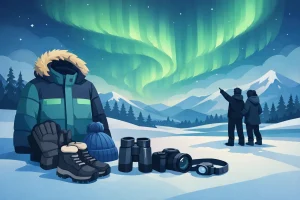
You don’t need expensive gear, but you do need the right layers. Cold problems usually come from three things: cotton, exposed skin, and feet that get damp.
Start with a proper base layer (wool or synthetic), add a warm mid-layer (fleece or wool), then your insulated outer layer. Most operators provide an overalls set and winter boots, which helps massively, but don’t rely on it as your only plan.
For hands, mittens beat gloves for warmth. If you’re driving, your hands are out in the wind and gripping the bar, so bring something that keeps heat in. A thin liner glove underneath can help when you need to adjust a buckle or use your phone without baring skin.
For your face, a buff or balaclava is the unsung hero. If the temperature drops or the trail is breezy, you’ll be glad you can cover your cheeks quickly.
And for feet, go for thermal socks but don’t overstuff your boots. Tight boots reduce circulation and make you colder, not warmer.
Safety and confidence on the sled
If the idea of steering a dog team makes you nervous, that’s normal – and it’s exactly why guiding matters.
You’ll be shown how to brake, how to keep distance between sleds, and how to handle corners without tipping. The key is to listen and to keep it smooth. Most accidents happen when someone panics and yanks the brake hard, or they get too close to the team ahead.
Expect to stand on the runners most of the time if you’re driving, knees slightly bent for balance. If you have a back issue or a knee concern, mention it before you set off so the guide can advise whether you should drive or ride.
Families often ask whether husky sledding is safe for children. In general, yes – but the exact age and height rules vary by operator and by conditions. If you’ve got little ones, choose a tour designed for families, where the pace and set-up match.
When to go: timing your taiga run
Rovaniemi’s husky season usually runs from early winter into spring, depending on snow. The heart of the season is mid-winter when the landscape is fully frozen and the trails are at their most reliable.
If you want that deep, blue twilight and powdery forest feel, aim for December to February. If you prefer a bit more daylight and slightly kinder temperatures, March can be a sweet spot – still winter, but with brighter skies and often excellent trail conditions.
Morning tours tend to feel sharper and quieter. Afternoon can bring softer light for photos. Either way, build in breathing space around the activity. Rushing from a husky ride straight into another pick-up can make the day feel like logistics rather than Lapland.
Making it part of a bigger Lapland trip
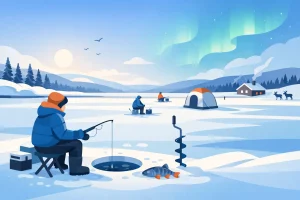
Husky sledding pairs beautifully with other wilderness experiences because it gives you movement and adrenaline, while activities like snowshoeing and ice fishing slow everything down.
If Northern Lights are on your list, don’t try to stack a long husky day with a late-night aurora chase unless you know you recover well on little sleep. It’s doable – and it can be epic – but it’s a trade-off. Some travellers love the full-throttle schedule; others enjoy Lapland more when they keep one big highlight per day.
If you want your trip built around small groups, strong guiding and that “real Lapland” feel from the first message to the last drop-off, have a look at ArKtictopia and choose a style of day tour that matches your energy.
The little moments people don’t expect
The photos are great, but the moments that stay with you are smaller.
It’s the quiet when the team settles into a steady pull.
It’s the way the forest seems to absorb sound so completely that you can hear your own breathing.
It’s meeting a dog who leans into a scratch like they’ve known you for years, then bolts back into “work mode” the second the harness comes out.
And it’s the strange satisfaction of learning something new fast – how to trust the sled, how to read the trail, how to stay calm when the cold bites and the world looks endless.
If you go in expecting a theme-park ride, you’ll enjoy it. If you go in ready to be part of it – even just for a couple of hours – the taiga gives you something rarer: a feeling of belonging in a winter landscape that normally sits just outside everyday life.
Leave a little space afterwards. Not for shopping or rushing to the next stop – just space to let the silence follow you back to town. That’s when Lapland really sinks in.