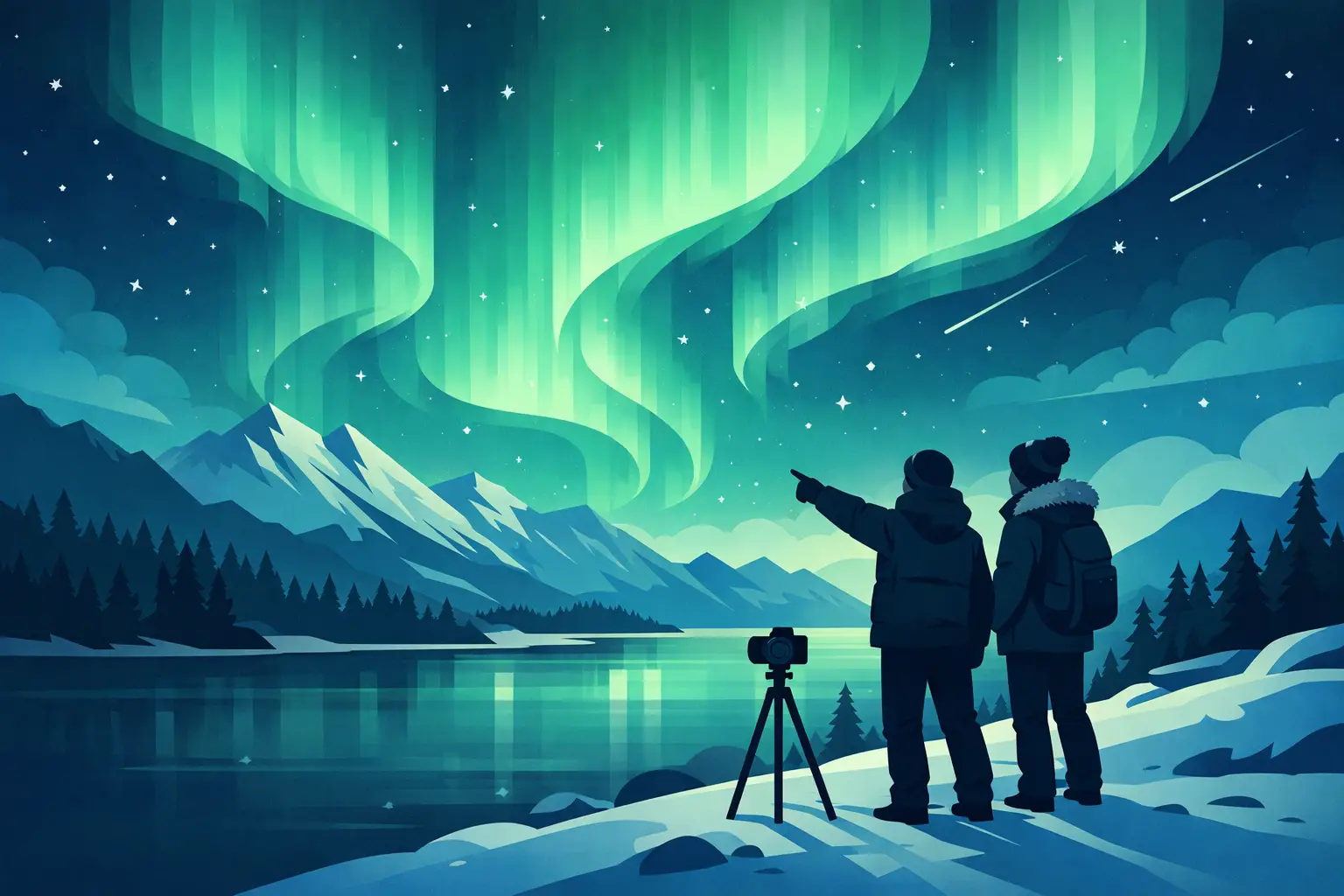
The moment the sky begins to move, it rarely looks like the postcards. At first, it may be a pale green thread above a dark forest, almost uncertain. Then your guide stops the minibus, asks everyone to switch off their torches, and that faint line gathers strength. A real northern lights chase experience is not about being parked at one scenic spot and hoping for a miracle. It is about being ready to go where the clear sky is.
In Finnish Lapland, the aurora is wild. That is exactly why seeing it feels so magical. No operator can command the solar wind or sweep clouds away, but the right guides, the right route and enough time outside can make a huge difference to your chances. This is the difference between an evening tour and a genuine hunt.
What makes a Northern Lights chase real?
A real chase starts long before pick-up. Guides check cloud cover, wind direction, local forecasts and aurora activity, then keep reading the conditions as the night develops. The plan can change quickly. One area may be covered in low cloud while a road an hour away opens onto a clear, star-filled sky.
That flexibility matters. Rovaniemi is a brilliant base for a Lapland holiday, but it is not a private stage built for the Northern Lights. Sometimes the best viewing conditions are close to town. On another night, the hunt may lead across quiet snowy roads, past frozen lakes and into deeper wilderness. The destination is never the point. The clear sky is.
A proper chase also gives the evening room to breathe. You need time to travel, wait, move if needed, warm up and look again. A short excursion with a fixed campsite can be lovely, especially for families wanting a relaxed campfire experience. But if your priority is maximising your chance of seeing the aurora, choose a tour designed to chase conditions rather than follow a single itinerary.
The chase begins with an honest forecast
There is a lot of confusing aurora advice online. A high activity number does not guarantee a display over Lapland, and a modest forecast does not mean you should stay indoors. Clear skies are usually the first requirement. A quiet night with no cloud can deliver a beautiful show, while strong activity above thick cloud remains invisible from the ground.
Experienced guides balance both factors. They watch satellite images, compare several weather models and use their knowledge of local microclimates. A frozen lake can offer an open horizon when forest roads are cloudy. A border region may have a different weather window from Rovaniemi. This is local knowledge in action, not a scripted speech beside a fire.
The honest part is just as valuable. Some nights are difficult. Conditions can change after departure, forecasts can be wrong, and the aurora may remain faint. A guide who explains what is happening, keeps looking for better options and treats the group with care still gives you a meaningful Arctic night. You are not buying a green sky on demand. You are joining the best possible attempt to find it.
Small groups change the whole experience
When the sky suddenly clears, nobody wants to spend twenty minutes gathering a coach full of people. Small groups are faster to move, easier to look after and quieter once you arrive. That means less light, less noise and more space to absorb the landscape.
It also makes the evening personal. Your guide can help you understand what you are seeing, adjust your camera settings and make sure everyone is warm enough to enjoy the wait. Couples can have a moment away from crowds. Families can get practical support with children and layers. Solo travellers are never left standing alone in the snow wondering what happens next.
At ArKtictopia, this personal attention is part of The Real approach. The guides are there to lead an adventure, not simply drive you to a location and count the minutes until departure.
Dress for the wait, not just the photograph
Aurora hunting can involve standing still for long periods, and that feels much colder than walking through town. Finnish winter temperatures can drop sharply after dark, particularly on open lakes or in exposed areas. Your outer layers may look impressive in photos, but warmth starts with what sits underneath.
Wear a warm base layer, insulating mid-layer and windproof outer layer. Wool socks, proper winter boots, insulated gloves, a hat and a neck warmer are essential. Avoid tight footwear or socks that restrict circulation. Bring hand warmers if you like them, but do not rely on them instead of good layers.
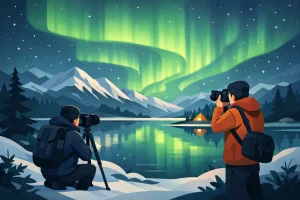
Your phone will also feel the cold. Keep it in an inside pocket when you are not using it, and carry a power bank. If photography matters to you, a dedicated photo hunting tour can be worth considering. You will have more guidance on manual settings, tripod use and how to capture an aurora that may be much fainter to the camera than to your eyes.
Choose the hunt that suits your holiday
There is no single best format for every traveller. A shared chase is ideal if you want expert guidance, a social atmosphere and a more accessible price. It suits couples, friends and independent travellers who want to spend a full evening searching for the sky together.
A private hunt gives you greater flexibility. It can be a strong choice for a family with younger children, a couple planning a special occasion or photographers who want to move at their own pace. You can focus on your group, take breaks when needed and shape the evening around your priorities.
If the Northern Lights are the main reason for your Lapland trip, give the chase more than one night. This is one of the smartest decisions you can make. Weather is variable, and consecutive nights create more opportunities for a clear window. Plan the hunt early in your stay where possible, so there is time to try again if conditions are not on your side.
A chase is more than a tick-box sighting
People remember the Northern Lights, of course. They also remember the quiet before they appeared: boots crunching over snow, breath turning to frost, a hot drink held in gloved hands, stars so sharp they feel close enough to touch. The Arctic gives you a different kind of darkness, one that makes ordinary noise fall away.
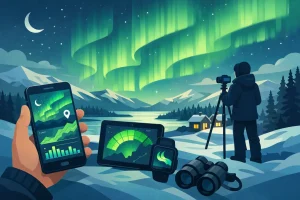
That is why the right mindset matters. Come hopeful, prepared and patient. Do not spend the whole evening refreshing an app or expecting the sky to perform on a timetable. Listen to your guide, look up often and let your eyes adjust. Aurora can build slowly, disappear and return stronger, sometimes when everyone has just decided to warm their hands.
How to make your chances count
Book a hunt rather than a static viewing trip if visibility is your priority, and avoid placing it on your final night. Keep your plans flexible around the tour, especially during a short break. An early start the following morning is manageable, but you will enjoy the chase more if you are not watching the clock.
Be ready at pick-up, wear every layer you need and tell your guide if you have concerns about mobility, children, dietary needs or photography. The more they know, the better they can look after you. Most importantly, choose an operator that speaks plainly about conditions and is prepared to travel for the best opportunity.
The Northern Lights cannot be promised, and that uncertainty is part of their power. But when you stand beneath a clear Lapland sky with a guide who knows where to look, you have given yourself more than a chance at a photograph. You have made space for an unforgettable night to find you.