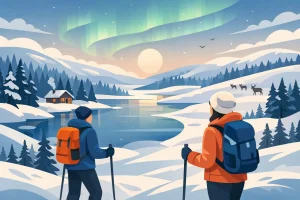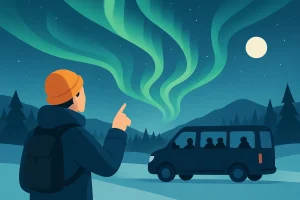
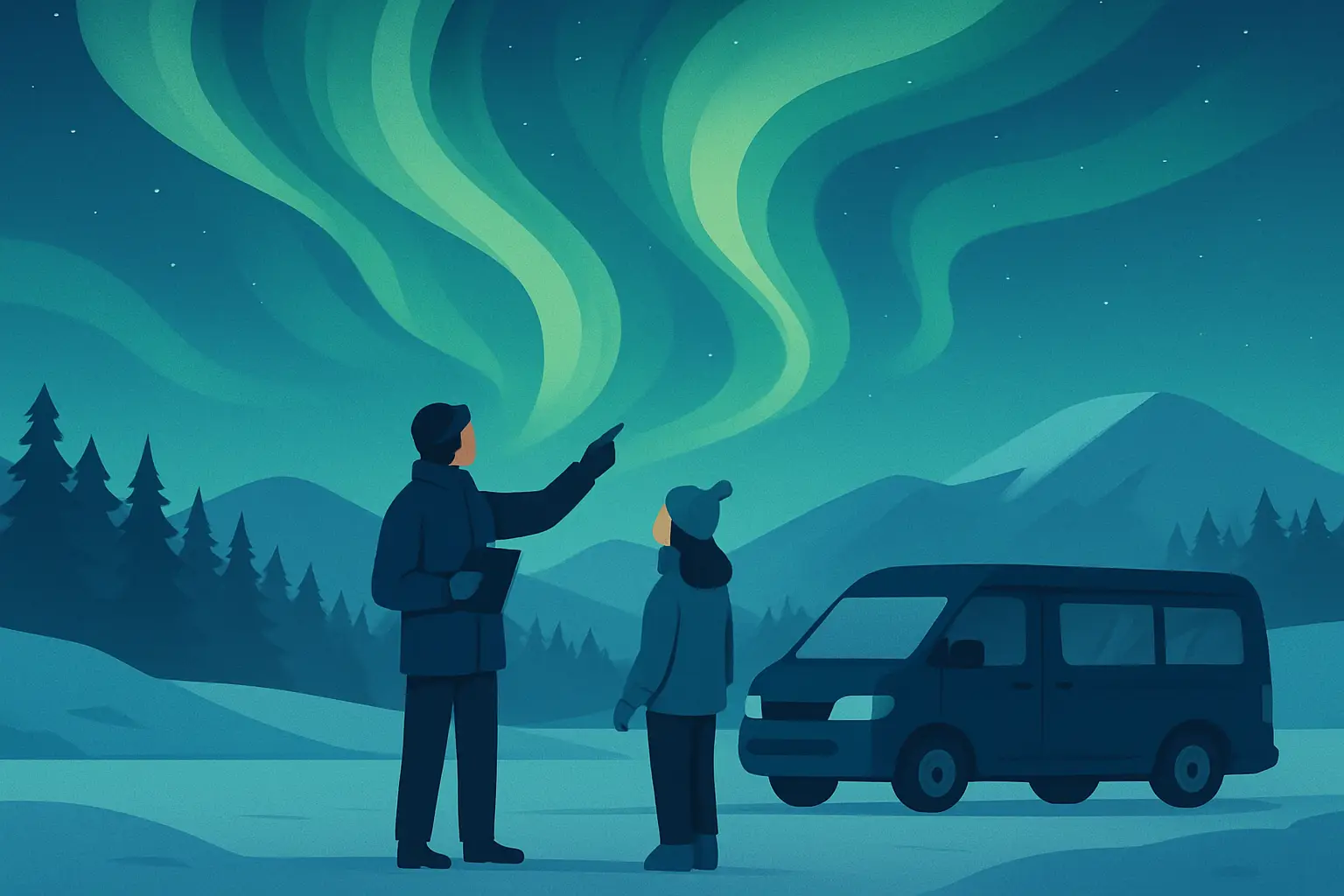
You are in Rovaniemi, zipped up to the chin, breath turning to frost, and the forest is so quiet it feels staged. Then someone points – not at a mobile phone screen, but at the sky itself. That moment is why people come to Lapland.
But it is also why a northern lights tour Rovaniemi can feel like a high-stakes decision. You are spending precious holiday time (and usually a fair bit of money) on something that is never guaranteed by nature. The good news is this: while no one controls the aurora, the right way of hunting massively improves your odds and your enjoyment – even when the sky decides to be stubborn.
What a northern lights tour in Rovaniemi really is
Forget the idea of a single “aurora spot” where the lights always appear. A proper aurora tour is a moving, decision-led operation. Your guide is reading cloud cover, solar activity, local microclimates, road conditions, and timing – then choosing where to be and when. Some nights that means a short drive to escape city glow; other nights it means pushing further into darker, clearer areas.
Rovaniemi is a strong base because it gives you options. You can head in several directions quickly, and you are already close to vast stretches of forest and lakes where light pollution drops off fast. That flexibility is the real advantage of starting here.
What it is not: a promise that you will see neon curtains on cue at 9pm. The aurora does not perform on a timetable, and anyone pretending it does is selling you a story, not an experience.
The three things that decide your chances
1) Darkness (the season matters more than you think)
In Lapland, the aurora season is essentially the dark half of the year. Late August can work, and so can early April, but the prime months for a classic winter trip are roughly September to March. Deep winter gives you long nights – and with long nights comes more opportunity.
The trade-off is obvious: the “most winter” months can be the coldest. If you are travelling with kids, or you know you do not enjoy standing around when it is -20°C, aim for the shoulders of the season rather than the coldest weeks.
2) Clear skies (cloud is the real enemy)
People obsess over solar forecasts, but cloud cover is usually what makes or breaks the night. Clear sky in the right direction can be enough for a great show even on moderate activity. Heavy cloud can ruin even the strongest forecast.
This is where tour style matters. A stationary campfire experience is lovely, but it can also mean you are committed to one location. A hunt-style tour keeps you mobile, which is exactly what you want when weather is changing hour by hour.
3) Distance from light pollution (you do not need “the middle of nowhere”, but close)
Rovaniemi itself has light. Step outside a hotel and your eyes never fully adapt. Ten minutes later in a darker area, the sky becomes a different place.
That does not mean you must drive two hours every night. Sometimes the best move is simply to get beyond the glow, find a safe open view over a frozen lake or clearing, and wait with intention.
Choosing the right tour style: it depends on how you travel
Not all aurora tours are built for the same person. The best choice depends on your group, your budget, and what you want the night to feel like.
Small-group hunting: the best balance for most travellers
For couples, friends, and solo travellers who want that “we did it for real” feeling, small-group hunts hit the sweet spot. You get a guide who can react fast, help with cameras, and keep the vibe warm and social without it turning into a coach-trip.
The big win is decision-making. When the group is small, you can move quickly. Fewer people to wrangle means more time under the sky.
Private hunts: maximum flexibility, calmer pacing
If you are travelling as a family, celebrating something, or you simply want the most controlled experience, private is hard to beat. You set the tone. Want to start earlier, avoid late nights, take more breaks, or stay longer once the lights appear? You can.
The trade-off is cost, but if your trip is short and the aurora is your headline experience, that extra flexibility can be the difference between “nice night out” and “unforgettable”.
Photography-focused tours: for people who actually care about the shot
Mobile phone photos have got better, but aurora photography still rewards a little know-how. A photography-led tour is not just about camera settings – it is about finding foregrounds, managing headlights, positioning the group so torches do not ruin exposures, and knowing when the aurora is building.
If you have a proper camera and you want images you would frame, this style is worth it. If you just want the experience, you may prefer a hunt that keeps things simple.
What a good Rovaniemi aurora guide does (behind the scenes)
A great guide is not just a driver who knows a dark lay-by. They are a calm problem-solver. They will track conditions before pickup, choose routes that keep options open, and have backup locations ready.
They will also do the unglamorous parts well: keeping you safe on icy ground, managing time so you are not standing still for hours, explaining what you are seeing without turning the night into a lecture, and making sure everyone gets their moment – not just the loudest person in the group.
And yes, they should be honest. Sometimes the most professional thing a guide can say is: “Tonight is tough. We will still do everything we can.” That honesty is part of “The Real” experience.
If you want that kind of outcome-focused, small-group aurora hunting from the Rovaniemi hub, ArKtictopia builds its programmes around exactly that principle.
What to wear (so you enjoy the wait)
Aurora hunting is a mix of driving and standing outside. You want warmth without sweating in the vehicle.
Start with layers: a thermal base, a warm mid-layer, then a proper winter coat and insulated trousers. Add thick socks, winter boots with grip, and gloves that let you use your mobile phone or camera without taking everything off. A hat that covers your ears matters more than you think.
If you are prone to getting cold, bring hand warmers. They are tiny, cheap, and on a long night they feel like a secret weapon.
How the night usually flows
Most tours begin with pickup in Rovaniemi and a quick check-in from your guide about the plan. Then you drive out to darker areas. Expect several stops rather than one “final destination”, especially if the sky is patchy.
When the aurora appears, it can start as a pale, milky band. People often miss the early stages because they are expecting bright green straight away. Your guide will help you spot it, and once your eyes adjust you will see movement – that slow, alive shimmer that makes the whole thing feel unreal.
Some nights the show is brief. Other nights it builds, fades, then comes back again. Patience is part of it, but good pacing is the difference between patient and miserable.
Common mistakes that quietly ruin aurora nights
The biggest one is over-planning the rest of your day. If you book a husky safari, a zoo visit, Santa’s Village, and then expect to be sharp for an aurora hunt that runs late, you are setting yourself up to feel exhausted at the exact moment you wanted to feel wonder.
Another is choosing the cheapest option without checking group size. A packed vehicle can mean less flexibility and less sky time. It can also mean you spend the night waiting for people to get in and out, rather than actually hunting.
And finally: staring at your mobile phone. Yes, take photos. But also give yourself five minutes where you do nothing except look up. The memory you keep is not the camera roll – it is the feeling.
Making your trip aurora-smart (without becoming obsessive)
If the Northern Lights are your main reason for coming, give yourself more than one night. Two is good, three is even better. Think of it like a weather window: you are buying chances.
If your schedule allows, book an aurora tour earlier in your stay. That way, if the night is cloudy, you still have time to try again. This is such a simple move, and it saves so much disappointment.
Also, be realistic about timing. The aurora can appear early, but it often gets better later. If you know you cannot handle late nights, choose a tour that matches your rhythm, or go private so you can control the pace.
The last thing: keep your expectations ambitious but not rigid. When the lights explode across the sky, it is beyond anything you can plan. When they do not, you are still out in a silent Arctic landscape most people only ever see in films. That is not a consolation prize – it is part of why you came.
If you want the best shot at that sky-filling moment, pick a hunt-style northern lights tour in Rovaniemi that stays flexible, keeps groups small, and treats the night like an adventure rather than a timetable. Then let Lapland do what it does.