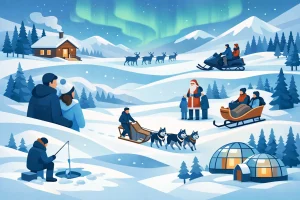

The cold in Lapland feels different the moment you step outside. It is clean, dry, bright and magical, but it does not care whether you packed properly. If you are wondering how to dress for Lapland, the short answer is this: layers, proper winter boots, and no shortcuts. Get it right and you can enjoy the fairy-tale forests, aurora hunts and snow-filled adventures for hours. Get it wrong and even the most unforgettable trip starts to feel very long, very quickly.
How to dress for Lapland without freezing
The biggest mistake travellers make is assuming one very thick coat will do all the work. In Lapland, warmth comes from layering well, not from wearing one giant jacket over everyday clothes. You need to trap heat, keep moisture away from your skin and protect yourself from wind and snow.
Start with a base layer that sits close to the skin. Merino wool is the gold standard because it stays warm, breathes well and does not feel clammy if you heat up during an activity. Synthetic thermal layers also work. Cotton does not. A cotton T-shirt under your winter gear might feel fine in the hotel, but once it gets damp it turns cold fast.
Your middle layer is where insulation happens. Fleece, wool jumpers or a light insulated jacket all work well here. On colder days, especially if you are standing still for long periods while waiting for the Northern Lights, two mid-layers can make sense. That said, there is a trade-off. If you pile on too much for active excursions like snowshoeing, you may sweat, and sweat is the enemy in Arctic conditions.
The outer layer should block wind and snow. A proper winter jacket and insulated trousers are ideal. Ski wear can work well, but only if it is genuinely warm rather than just waterproof. Lapland winter is often less about wet weather and more about deep cold, so insulation matters as much as weather protection.
Your Lapland clothing system, layer by layer
Think about your clothing in terms of a system rather than individual pieces. That makes packing easier and helps you adapt to different excursions.
Base layers
Pack at least two sets of thermal tops and bottoms, ideally more if you are staying several days. Merino wool is worth the investment if you feel the cold or are planning long evenings outside. Thermal leggings under trousers are not glamorous, but they make a huge difference when temperatures drop well below freezing.
Mid-layers
A fleece or wool jumper is your everyday hero in Lapland. For extra-cold evenings, an additional insulated layer can help, especially for aurora hunting, reindeer safaris or ice fishing where you may spend a lot of time standing still. If you are joining guided adventures, your guide may advise adjusting layers by activity, because what works for a husky ride is not always the same as what works for a forest walk.
Outer layers
Insulated outerwear matters most. A stylish city coat usually is not enough, even if it felt warm at home. You want a jacket with room underneath for layers, plus insulated trousers or salopettes that keep your legs warm in snowmobiles, sledges and open landscapes. Tight clothes are a bad idea because they restrict circulation, and circulation is part of staying warm.
Boots, socks, gloves and the pieces people forget
Bad footwear can ruin a Lapland holiday faster than almost anything else. Trainers are out of the question. What you need are insulated winter boots with solid grip, enough room for thick socks and a proper sole between your feet and the frozen ground. If your boots are too snug, your toes will get colder, not warmer.
For socks, wool or thermal socks are best. One good pair is usually better than doubling up on thin socks that bunch and squeeze your feet. Bring extras, because fresh dry socks after a day in the snow feel glorious.
Hands need more thought than many travellers expect. Gloves are fine for mild winter days at home, but Lapland often calls for insulated gloves or mittens. Mittens are usually warmer because your fingers share heat. If you want to take photos, glove liners under mittens are a smart move, giving you quick access to your camera or phone without exposing bare skin for long.
A warm hat is non-negotiable. Choose one that covers your ears properly. Add a neck warmer or buff rather than relying on a loose scarf, which can be fiddly in active settings. If the wind picks up, especially on a frozen lake or an aurora stop in open terrain, that extra protection matters.
How to dress for Lapland activities
Not every day in Lapland feels the same. That is why the best packing strategy is flexible rather than extreme.
For Northern Lights hunting, dress warmer than you think you need. You may spend time driving between locations, but the best moments often happen while standing still under the sky, waiting for the magic to begin. That means warm boots, extra layers, insulated trousers and proper hand protection. Evening cold has a habit of creeping in slowly.
For husky rides and reindeer safaris, warmth again comes first. You are not doing intense exercise, so you will not generate much body heat. Sitting in a sleigh or riding through snowy forest can feel wonderfully peaceful, but it is still cold air hitting your face and hands. Extra insulation is rarely a mistake here.
For snowshoeing or more active walks, it depends on pace and temperature. You still need thermal layers, but you may want slightly lighter mid-layers to avoid overheating. This is where breathable fabrics earn their place in your suitcase.
For town visits, Santa attractions or relaxed sightseeing around Rovaniemi, you can often dress a bit lighter than on wilderness excursions. But lighter in Lapland still means winter-ready. This is not the trip for jeans, ankle boots and hoping for the best.
Should you buy everything before you go?
Not necessarily. Many travellers imagine they need to spend a fortune on specialist Arctic gear before setting foot in Finland. Sometimes that is true, especially if you plan to travel north often or already know you feel the cold badly. But for a short Lapland break, it can be more practical to bring solid basics and use thermal outer gear provided for specific excursions where available.
This is often the sweet spot. Bring your own thermal base layers, mid-layers, socks, hat and gloves, then use activity-specific outerwear when it is included. It saves suitcase space and means you are dressed for the real conditions rather than guessing from your sofa in Britain.
The key is not to rely entirely on borrowed gear without checking what is and is not covered. Boots, mittens and suits may be available on some tours, but that varies. Always know what you need to bring yourself.
Common mistakes when dressing for Lapland
The first is underestimating the cold because the forecast number does not look terrifying. A dry -10°C in Lapland can still feel much colder if you are stationary at night. The second is wearing fashion winter clothing rather than proper winter clothing. They are not the same thing.
Another common error is forgetting the lower half of the body. Travellers focus on jackets, then arrive with ordinary trousers and wonder why they are freezing. Legs and feet need just as much attention as your upper body.
Then there is overpacking the wrong things. You do not need five jumpers if none of them layer well. You do not need several pairs of jeans. You do need practical pieces you can combine easily for changing conditions.
What to pack for a typical Lapland trip
For most winter travellers, a sensible packing plan includes thermal tops and bottoms, a few fleeces or wool layers, one warm winter jacket, insulated trousers, proper snow boots, wool socks, a hat, mittens or gloves, glove liners and a neck warmer. If you are staying for several days, bring enough base layers to rotate comfortably.
Add sunglasses too. It catches people by surprise, but bright snow and low winter sun can be intense during the day. A small backpack is useful as well, especially for carrying spare gloves, extra layers or snacks on longer outings.
If you are travelling with children, go even more practical. Kids often enjoy the cold brilliantly when dressed well and unravel very quickly when they are not. Waterproof mittens, spare socks and easy-to-adjust layers are worth their weight in gold.
Lapland is one of those rare places that really does feel otherworldly. The forests glow, the snow crunches underfoot, and on the right night the sky puts on a show you will remember for the rest of your life. Dress properly and you give yourself the freedom to enjoy all of it – the silence, the speed, the stillness, the wonder – without spending the whole trip thinking about your toes. If you are planning your Arctic escape with ArKtictopia, that is exactly how it should feel: real adventure, minus the rookie mistakes.