You do not come to Lapland hoping for an ordinary day out. You come for the kind of moments that feel slightly unreal – frost clinging to pine branches, silent white forests, and the sudden thrill of seeing Arctic animals in a landscape that actually makes sense for them. That is exactly why a Ranua Arctic Zoo day trip from Rovaniemi earns a place in so many winter itineraries.
If your Lapland break already includes huskies, reindeer or a Northern Lights hunt, Ranua adds something different. It gives you a close look at northern wildlife without feeling like a staged attraction dropped into the snow. The setting matters here. Ranua is around an hour south of Rovaniemi by road, and the journey itself starts to shift you out of city mode and into deeper Lapland.
Is a Ranua Arctic Zoo day trip from Rovaniemi worth it?
For most travellers, yes – especially if you want variety in your trip and you are travelling with children, wildlife lovers, or anyone who wants a slower-paced day between more adrenaline-fuelled activities.
Ranua Arctic Zoo is known for Arctic and northern species, and the atmosphere is very different from a typical urban zoo. The animals live in spacious outdoor enclosures surrounded by forest, which makes the visit feel more grounded in the real North. You are not rushing between indoor exhibits. You are walking a snowy route through the trees, stopping to spot animals that are built for this climate.
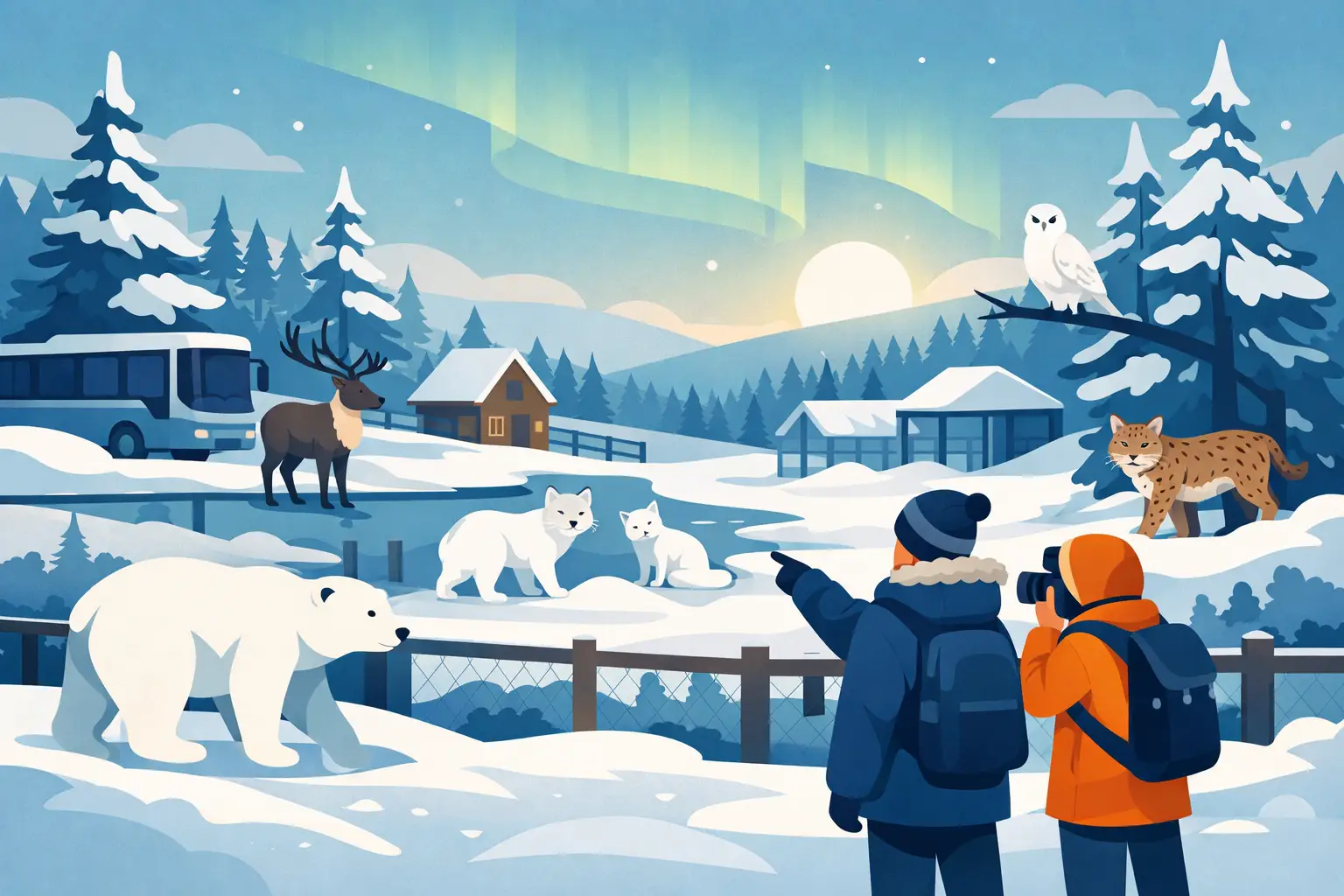
The biggest draw, of course, is the polar bear. For many visitors, that is the headline moment. But the wider appeal is in seeing species such as lynx, wolves, wolverines, Arctic foxes, owls and moose in one place, all while experiencing a proper winter day in Lapland.
That said, it depends what kind of trip you want. If your priority is high-energy adventure from morning to night, Ranua may feel gentler than a snowmobile safari or a long husky ride. If your dream Lapland holiday includes wildlife, photography and a more relaxed rhythm, it fits beautifully.
What the day usually looks like
A typical Ranua Arctic Zoo day trip from Rovaniemi starts with collection in the morning, followed by the drive through snowy countryside. This is one of those journeys where looking out of the window is part of the experience. On a good winter day, the trees are heavy with snow and the light has that blue-white glow that makes Lapland feel almost fairy-tale.
Once you arrive, the zoo visit is built around a walking route of roughly 2.5 to 3 kilometres. In winter, you should expect compacted snow and icy sections underfoot, so proper boots matter. The pace is usually easy enough for most visitors, but it is still an outdoor walk in cold conditions, not a quick indoor attraction.
You move from enclosure to enclosure through the forest, which gives the day a calm, spacious feel. There is no need to march through it. In fact, it is better when you do not. Arctic animals are not performers. Sometimes they are active and visible, and sometimes they keep to themselves. That unpredictability is part of the real experience.
Most trips also leave time for lunch, warming up indoors, and often a quick look at the local souvenir or chocolate shops nearby. Families tend to appreciate that balance. Couples often enjoy it too, because the day never feels rushed.
Which animals can you actually expect to see?
The honest answer is not all of them, all the time. This is one of the trade-offs that makes Ranua feel more authentic than polished. The enclosures are large, the animals have room to move, and visibility can depend on weather, timing and the animal’s mood.
Still, there are some strong favourites. Polar bear sightings are the big one people ask about, and many visitors do get a memorable view. Arctic foxes, snowy owls and lynx are also high on the wish list. Wolves and wolverines can be especially exciting if you catch them on the move. Moose tend to deliver that classic Lapland feeling – massive, calm, and somehow perfectly suited to the stillness of the forest.
If you are into photography, keep your expectations realistic. You can get wonderful shots, particularly in fresh snow and soft winter light, but this is not a controlled photo session. Animals may be resting, hidden, or backlit. Patience pays off.
How long does it take and how much effort is involved?
This matters more than some travellers expect. Ranua is easy to add to a Rovaniemi itinerary, but it still takes up most of a day once transfers, walking time and breaks are included. It is not the kind of excursion you squeeze in between lunch and an evening aurora tour without feeling stretched.
Physically, it is moderate rather than demanding. The route is manageable for most adults and families, but cold weather changes everything. Walking 3 kilometres in sub-zero temperatures feels different from doing it at home on a mild afternoon. Layers, gloves and proper winter footwear make a huge difference to how much you enjoy the day.
If you are travelling with very young children, a pram is not always ideal in snowy conditions, so check what setup works best. If you are travelling with older relatives or anyone with limited mobility, the day can still be possible, but it is worth planning with care rather than assuming it will be effortless.
Why guided transport makes the day better
You can arrange your own visit, but for many travellers, guided transport from Rovaniemi removes exactly the kind of friction that can chip away at a winter holiday. You do not need to think about winter roads, parking, timing or whether your connections line up in the dark and cold.
More importantly, a guided day trip turns a transfer into part of the experience. Local guides add context to the landscapes, help set expectations about the animals, and keep the day flowing smoothly. That matters in Lapland, where conditions can change quickly and where the best experiences usually come from having someone who actually knows the region rather than simply following a map.
This is especially true if your holiday is short. Most visitors only have a few days in Rovaniemi and want every one of them to count. Small-group touring tends to feel more personal, less hectic, and much more in tune with the atmosphere people travel here for in the first place.
What to wear for Ranua in winter
This is not the day for casual city layers and fashion-first boots. Dress for standing still as much as for walking. That usually means a thermal base layer, a warm mid layer such as fleece or wool, and an insulated outer layer that handles snow and wind.
Your feet matter most. Thick socks and insulated waterproof boots are worth more than an extra jumper. Add a hat that covers your ears, warm gloves or mittens, and a neck warmer or scarf. If temperatures drop properly, hand warmers are not overkill.
The mistake many first-time Lapland travellers make is thinking the zoo walk itself will keep them warm. Sometimes it does. Sometimes you stop for ten minutes watching an owl or waiting for a glimpse of a lynx, and that is when the cold gets in.
Who should add Ranua to their Lapland itinerary?
It works brilliantly for families, but it is not only for families. Couples often love it because it offers a quieter, more reflective side of Lapland between the bigger signature activities. Friend groups enjoy it when they want a shared day that does not require everyone to be sporty. Solo travellers often appreciate the ease of joining a guided group and having the logistics handled.
If your trip is only two days long and your top priorities are a husky safari and aurora hunting, Ranua might not make the final cut. If you have three days or more and want your holiday to feel rounded rather than rushed, it is a strong addition.
For travellers who want that mix of magic and ease, booking through a trusted local operator such as ArKtictopia can make the day feel simple from the start.
Lapland is at its best when you leave room for different kinds of wonder. One day it is speed and snow. Another, it is the quiet thrill of seeing a polar bear in a frozen forest and realising this is exactly why you came.