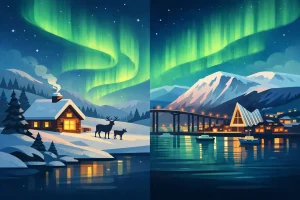
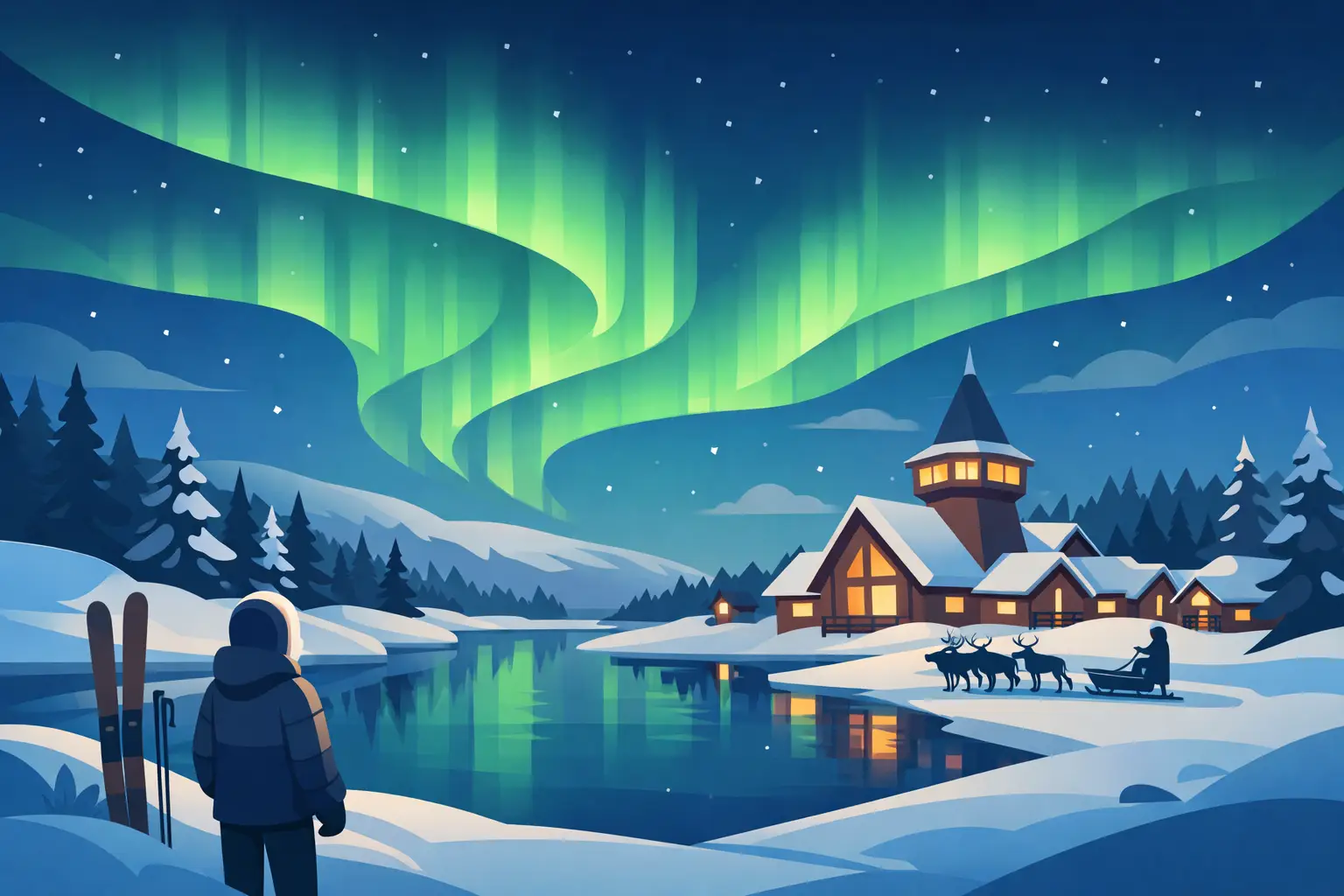
Rovaniemi can give you that moment people talk about for years – black forest, silent snow, and suddenly a green ribbon moving above the trees. It can also give you three nights of cloud, hotel-window checking, and wondering if you picked the wrong week. That is the honest starting point. If you want to know how to see aurora Rovaniemi, the real answer is not luck alone. It is timing, conditions, distance from city glow, and making smart choices while you are here.
The good news is that Rovaniemi is one of the best gateways to the Northern Lights in Finnish Lapland. It is easy to reach, well set up for winter travel, and surrounded by wilderness. Better still, you do not need to be an Arctic expert to give yourself a proper chance. You just need to understand what actually matters.
How to see aurora Rovaniemi without guessing
The first thing to know is that the aurora is never guaranteed on demand. Anyone who tells you otherwise is selling fantasy. What you can do is stack the odds heavily in your favour.
You need darkness, reasonably clear skies, and solar activity strong enough to produce visible aurora. In Rovaniemi, the season usually runs from late August to early April, but for most winter travellers the sweet spot is from September to March. Mid-winter gives you long, dark nights and a proper Lapland atmosphere, though the cold is sharper and cloud can still ruin a forecast.
There is always a trade-off. Early autumn can bring milder temperatures and open water reflections, but less snow. Deep winter brings the full fairy-tale look people dream of, but visibility still depends on the sky. If your whole trip is built around seeing the lights, staying more than one night is one of the smartest decisions you can make.
The best time of night to look
Many visitors imagine the aurora only appears around midnight. Sometimes it does, but not always. In Rovaniemi, you can see activity from early evening through the small hours. A common working window is roughly 20:00 to 01:00, though displays can start earlier or kick off later.
That matters because waiting in one fixed spot all evening is not always the best plan. On some nights the lights are faint at first and strengthen later. On others they flare quickly and disappear. This is exactly why guided hunts can make such a difference. Good guides are not just taking you somewhere scenic. They are reading forecasts, cloud maps, local conditions, road access, and years of pattern recognition.
If you are serious, do not rely on a casual glance after dinner. Dress properly, commit the evening, and be ready to stay out.
Weather matters more than most people think
Solar forecasts get a lot of attention, but cloud is often the bigger issue. You can have strong aurora activity above Rovaniemi and still see absolutely nothing if the sky is blocked. This catches people out all the time.
That is why staying mobile is such an advantage. A static viewpoint can be magical on a clear night, but if low cloud sits over the city, the better option may be to drive out towards areas with clearer breaks. Sometimes the winning move is not a huge distance. Sometimes it is. It depends on the weather pattern that evening.
This is also why a dedicated aurora-hunting tour generally beats trying to sort it all yourself with a hire car, especially on a short break. You are not spending precious holiday hours learning local routes, second-guessing road conditions, or trying to work out whether a patch on the weather map is actually reachable.
Where to go around Rovaniemi
If your question is how to see aurora Rovaniemi, location is really about escaping light pollution and finding open sky. The city itself can produce sightings, especially during stronger displays, but your chances improve once you get away from built-up areas.
Good viewing spots usually have three things in common: dark surroundings, a broad view of the sky, and safe access in winter. Lakes, riverbanks, hilltops, and forest clearings can all work beautifully. The exact best place changes night by night because the sky changes night by night.
This is where people often make the mistake of chasing a famous photo spot instead of chasing conditions. A picturesque location under full cloud is still a bad aurora location. A less glamorous roadside stop under a clear gap may give you the show of the trip.
Guided tour or go independently?
Both can work, but they are not equal for every traveller.
If you are confident driving in Arctic winter, understand the limits of forecasts, and have several nights to play with, an independent plan can work. It gives you flexibility and a sense of adventure. The downside is that you carry all the risk. You choose the wrong direction, misread the cloud, or give up too early, and that is your evening gone.
A guided hunt is the stronger option for most visitors, especially couples, families, and anyone on a two- or three-night Lapland break. You get local decision-making, transport, warm clothing guidance, and a route built around one goal – seeing the sky at its best. Small groups matter here. They make the night feel personal, not like a coach stop. They also make it easier to adapt quickly when the conditions change.
If photography matters to you, choose a photography-focused hunt rather than a standard sightseeing tour. Camera settings, tripod use, and exposure in freezing dark conditions are a different skill from simply watching the lights.
What to wear and bring
A brilliant aurora night can become miserable fast if you are cold. Standing still in Lapland feels much colder than a brisk walk through town. Dress in layers and take the cold seriously.
Start with thermal base layers, then an insulating mid-layer such as fleece or wool, and a proper winter outer layer. Warm boots, thick socks, hat, neck warmer, and insulated gloves are not optional. If you are using your mobile phone or camera, glove liners help because you can manage buttons without exposing your hands for long.
Bring patience as well. That sounds obvious, but it matters. The aurora rarely performs to a timetable made for social media. Some of the best nights begin quietly.
How long should you stay in Rovaniemi?
If seeing the Northern Lights is a major reason for your trip, two nights is the bare minimum and three to four nights is far better. More nights mean more weather opportunities, and weather is often the deciding factor.
This also takes the pressure off. One of the joys of Lapland is that your trip should still feel magical even if the sky keeps its secrets for a night or two. Husky rides, snowshoeing, reindeer experiences, frozen forests, and peaceful days in the snow all belong to the same winter story. The aurora is the headline, but it should not be the only page.
How to see aurora in Rovaniemi and actually enjoy the night
People sometimes get so focused on ticking off a sighting that they forget to experience where they are. The best aurora nights are not just about proof on a mobile phone screen. They are about stepping into the dark, hearing the crunch of snow under your boots, and feeling that strange stillness Lapland does so well.
Yes, take photos if you want them. But look up with your own eyes too. Some displays are faint and elegant, more of a soft glow than a dramatic explosion. Others arrive fast and wild, moving across the sky in waves. Both count. Both are real. And both are unforgettable when you are in the right place at the right time.
For travellers who want the strongest chance without the stress, booking a well-run hunt is usually the smartest move. At ArKtictopia, the focus is on real small-group aurora experiences designed around conditions, not fixed viewpoints for the sake of it. That kind of flexibility matters in the Arctic.
If you come to Rovaniemi expecting certainty, the North may humble you a little. If you come ready for the chase, with enough time, proper layers, and a plan built around the weather, your chances become very real. And when the sky finally switches on, you will know it was worth every frozen minute.