Standing under an open Lapland sky at midnight sounds magical – until cold starts creeping through your jeans, your boots, and the gap between your gloves and sleeves. If you are searching for northern lights tour what to wear, the short answer is this: dress for standing still in deep winter, not for a brisk walk through town. Aurora hunting often means waiting, watching, and spending long stretches outdoors when temperatures can drop fast.
That catches people out. Many travellers imagine the hard part is getting to the right spot. In reality, the harder part is staying warm enough to enjoy it once you are there. The Northern Lights can be unforgettable, but only if you are not distracted by frozen toes and numb fingers.
Northern lights tour what to wear in Lapland
The best approach is simple – wear layers, keep moisture away from your skin, trap heat in the middle, and block wind and snow on the outside. It sounds straightforward, but the difference between a comfortable night and a miserable one usually comes down to getting each layer right.
Start with a proper base layer. This sits next to your skin, so its job is to manage moisture. Merino wool is excellent because it stays warm even if you perspire slightly, and it feels comfortable over long periods. Good synthetic thermal layers can also work well. What you want to avoid is cotton. Cotton absorbs moisture, dries slowly, and gets cold quickly. A cotton T-shirt under winter gear can ruin the whole system.
Over that, wear an insulating middle layer. Fleece, wool, or a light down or synthetic insulated jacket all do the job. On especially cold evenings, two mid-layers can make perfect sense. That is one of the big Arctic truths travellers learn quickly – more than one “warm layer” is often better than one thick jumper.
Your outer layer should protect you from wind, light snow, and damp. A winter jacket with insulation is ideal, but a shell over strong insulating layers can also work. Trousers matter just as much. Thermal leggings or merino long johns under insulated ski trousers are far better than ordinary trousers or denim. Jeans are one of the worst choices for an aurora tour. They are cold, restrictive, and hopeless if they get wet.
The layers that matter most
If you tend to run cold, focus less on fashion and more on coverage. Gaps are the enemy. Cold air finds the opening at your waist, your wrists, your neck, and your ankles.
A well-fitted thermal top tucked into your base layer bottoms helps. Mid-layers should not be skin-tight because trapped air adds warmth, but they should still sit neatly under outerwear. Your jacket should close fully around the neck without feeling restrictive. If you are constantly adjusting your clothes, you are probably missing either the right fit or the right combination of layers.
There is also a trade-off to keep in mind. If you pile on too many bulky clothes and then walk through snow, you may overheat and become damp. That is why smart materials and balanced layering beat simply wearing everything you own. On a northern lights hunt, activity levels vary. You may spend time in a vehicle, walk a little, stand outside for photographs, then move again. Clothing needs to cope with all of that.
Base layers
Choose long-sleeved thermal tops and full-length thermal bottoms. Merino is a favourite for good reason, but quality synthetics are often a solid option if you want something more budget-friendly. The key is warmth without sweat build-up.
Mid-layers
Think fleece jackets, wool jumpers, insulated gilets, or light puffer jackets. For legs, fleece-lined trousers or thermal leggings under snow trousers are a reliable combination.
Outer layers
Insulated winter jackets and weather-resistant ski trousers are ideal. If your tour provider offers thermal overalls, use them. They make a huge difference when temperatures plunge and you are outside for extended periods.
Don’t underestimate boots, socks, gloves and hats
People obsess over jackets and forget the extremities. That is usually where the misery starts.
Boots should be insulated, waterproof, and roomy enough for warm socks without cutting off circulation. Tight boots make feet colder, not warmer. Thick soles help because frozen ground and packed snow draw heat away quickly. Standard fashion boots might look winter-ready in a city, but many are not built for standing on snow for an hour while watching the sky.
Wear one good pair of thermal or wool socks, or at most two if your boots still fit comfortably. Too many socks can compress your feet and reduce warmth. Again, it depends on fit. The right boot-and-sock combination is better than trying to fix poor footwear with endless layers.
For hands, mittens are generally warmer than gloves because your fingers share heat. If you plan to take photos, use liner gloves underneath and bring insulated mittens over the top. That way, you can remove the outer mitten briefly without exposing bare skin. It is a small trick, but on a long, cold evening it feels like genius.
A warm hat that covers your ears is non-negotiable. Add a neck warmer or buff as well. Scarves can work, but neck gaiters are often easier in windy or snowy conditions. The goal is simple – no exposed skin if you can help it.
What to wear on a northern lights tour if you want photos
Photo nights need a slightly different mindset. If you are planning tripod shots, portraits under the aurora, or even just lots of phone use, you will spend more time standing still with your hands out. That means you should dress warmer than you think necessary.
This is where insulated overalls, proper snow boots, hand warmers, and glove liners really shine. Phone batteries also drain faster in the cold, so keep your mobile in an inside pocket close to your body when you are not using it. Comfort matters for photography because patience matters. The better prepared you are, the longer you can enjoy the moment instead of rushing back into the vehicle.
Common mistakes travellers make
The first mistake is dressing for the forecast instead of the experience. Minus 8 in a city can feel manageable when you are walking between shops. Minus 8 on an aurora stop, surrounded by snow and standing still under open sky, feels very different.
The second is assuming a thick coat solves everything. It does not. Cold legs, wet socks, and unprotected hands will still make you miserable.
The third is wearing stylish winter clothes that are fine for dinner in Rovaniemi but not for a proper night outside. If your outfit looks better suited to a Christmas market than a snowy forest edge, rethink it.
The fourth is forgetting that children and colder-natured adults often need more insulation than they expect. If one person in the group gets chilled early, the whole experience changes.
Do you need to buy everything?
Not always. That depends on how often you travel in proper winter conditions and what your tour includes. Some guided experiences provide thermal suits and boots, which takes a lot of pressure off your packing list. If that is available, use it. It is designed for local conditions, and it is often far warmer than what visitors bring from home.
If you are building your own outfit, prioritise the pieces that matter most: base layers, insulated footwear, gloves or mittens, and weather-ready outerwear. You do not need an expedition wardrobe, but you do need clothing that works together.
For many travellers coming to Finnish Lapland, renting or borrowing a few key Arctic items makes more sense than buying expensive specialist gear for one trip. Practical beats perfect every time.
A realistic Lapland outfit that works
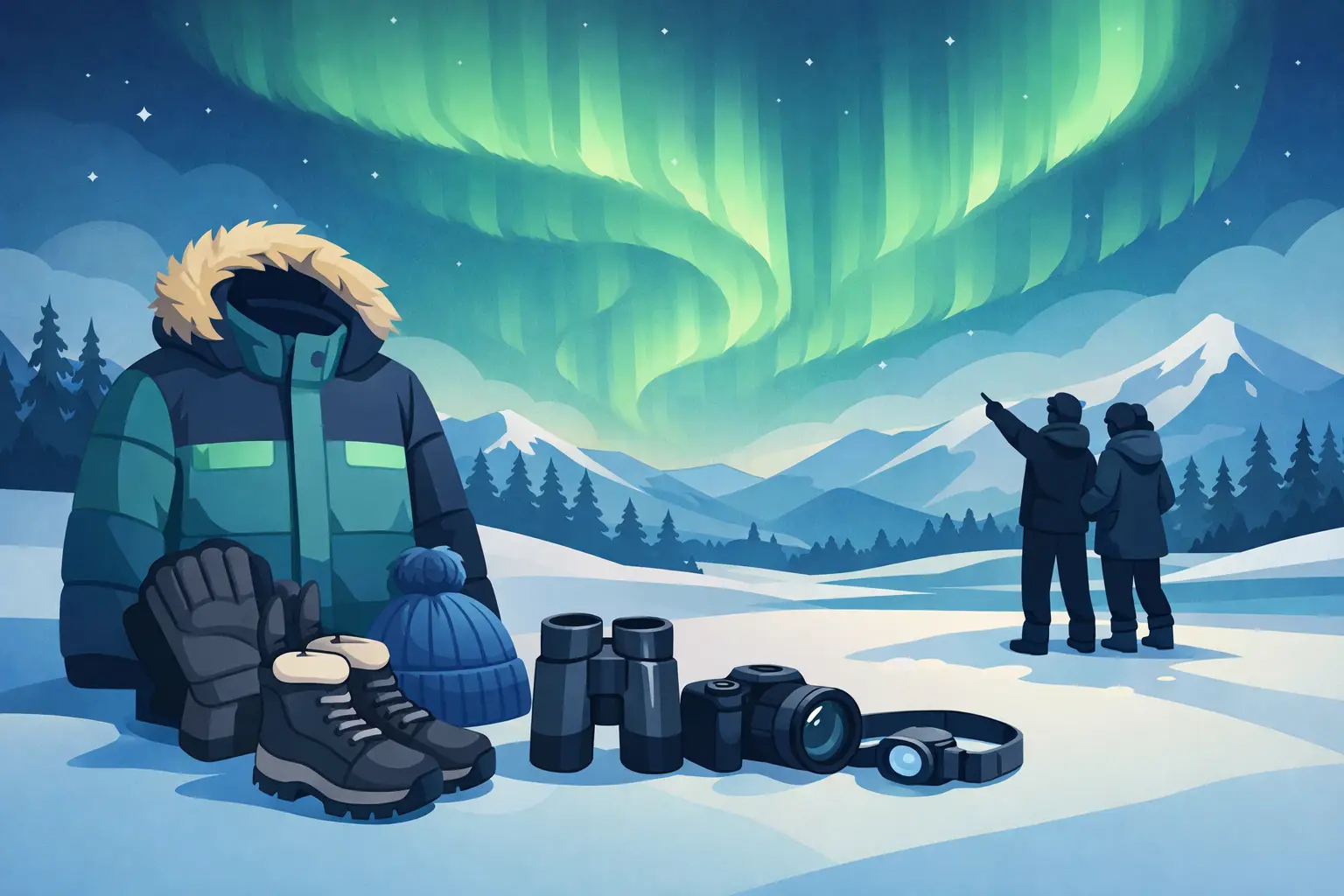
A strong setup for most winter aurora tours looks like this: merino or thermal base layers, a fleece or wool mid-layer, insulated ski trousers, a proper winter jacket, wool socks, insulated boots, liner gloves with mittens, and a hat with a neck warmer. On colder nights, add another insulating layer or wear thermal overalls over your clothes if provided.
That may sound like a lot, but in real Arctic conditions it feels normal very quickly. The aim is not to prove you can handle the cold. The aim is to forget about the cold and look up.
That is when the night gets good. The road quietens, the snow reflects every scrap of moonlight, and the sky begins to shift from dark to something electric and unreal. On tours run by operators like ArKtictopia, the whole experience is built around maximising those moments – but your clothing still decides whether you enjoy them fully.
Pack for stillness, not just the journey. If you stay warm, the night stays magical for longer.