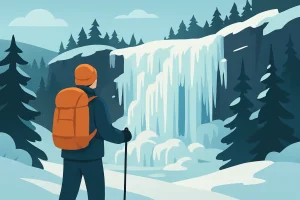
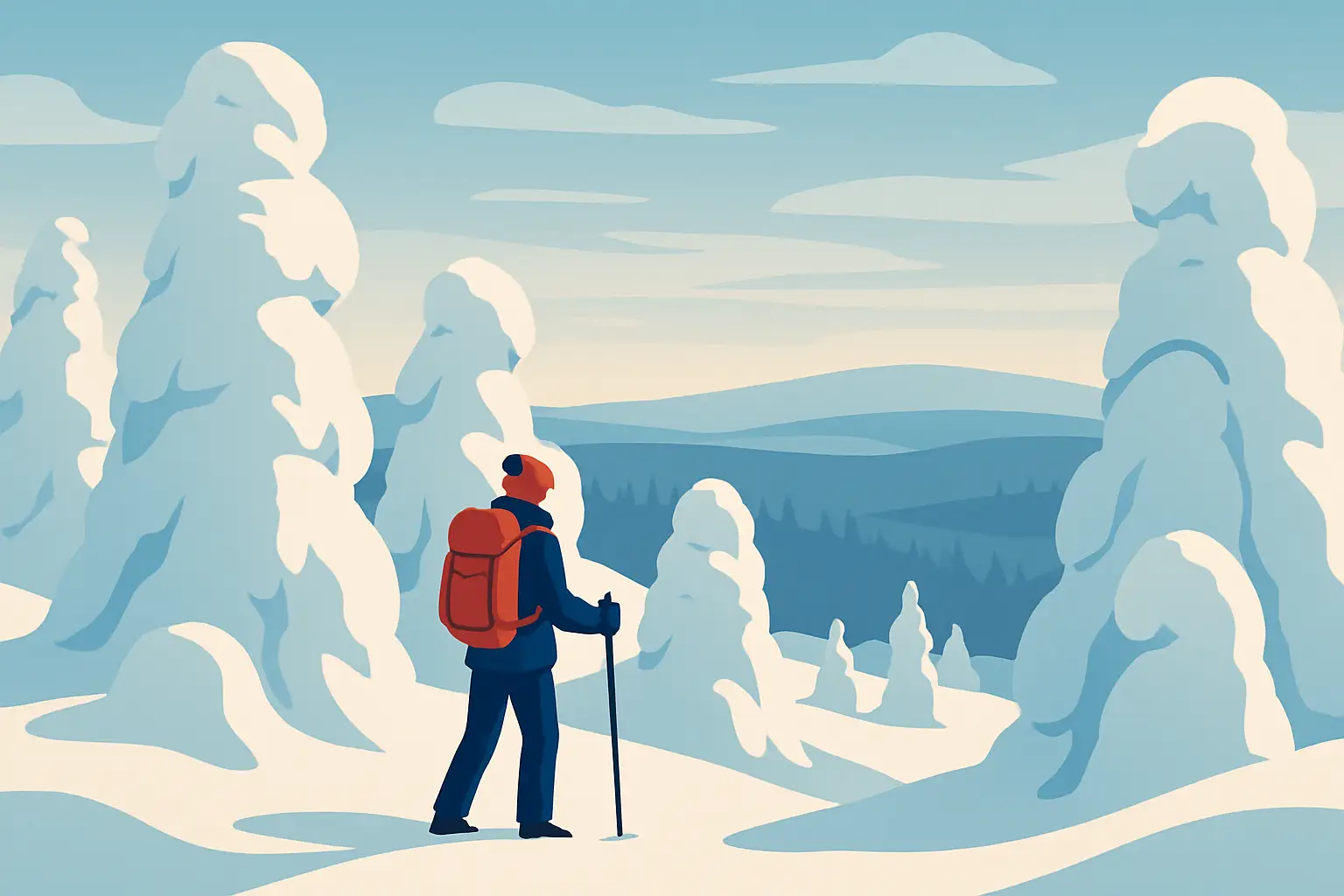
You know that moment when a winter landscape looks too perfect to be real – trees bowed under thick snow, a pale sun barely lifting above the horizon, and silence so complete you can hear your own breath? That is Riisitunturi in mid-winter. It’s one of those places that turns even non-hikers into people who suddenly talk about “views” and “trail conditions” like they’ve done this for years.
A Riisitunturi National Park winter hike isn’t technical mountaineering, but it is proper Arctic walking. You’re out on fell tops where weather changes quickly, daylight is short, and your comfort depends on smart layers and pacing. Done well, it feels like stepping into a fairy-tale – the famous “snow monsters” (trees sculpted by wind and rime) lining the trail like a frozen crowd.
Why Riisitunturi in winter hits differently
Riisitunturi National Park sits near Posio, east of Rovaniemi, and it’s built for big-sky drama. The park’s fells aren’t huge by Alpine standards, but in Lapland you don’t need altitude to get that wide, open, cinematic feeling. Winter brings the main character energy: rime builds on spruce branches, snow piles up into rounded shapes, and the whole forest becomes a white sculpture garden.
The trade-off is straightforward. Winter gives you the iconic look, but it also adds effort. Soft snow can turn a short distance into a workout. Cold makes snack breaks shorter and decisions more important. If you’re coming from the UK and your winter walking is mostly muddy hills and a café stop, this will feel like a different sport – in the best way.
Choosing the right route for your day
Most visitors are here for a day hike, and that’s the sweet spot. You can get the signature scenery without committing to anything extreme, as long as you choose a route that matches your group.
The classic winter options tend to fall into two categories: a shorter loop that keeps things manageable for families and first-timers, and a longer loop that gives more ridge time and more viewpoints. On paper the difference looks small. On snowshoes, that gap can feel bigger – especially if the trail hasn’t been freshly packed or if you’re stopping for photos every five minutes (you will).
If you’re travelling as a couple or small group with reasonable fitness, aim for a route that gets you onto the fell top and keeps you there long enough to enjoy the panorama. If you’re travelling with children or someone who runs cold quickly, prioritise a shorter loop with frequent shelter options and a clear turning point. In Arctic conditions, the best route is the one you finish feeling proud, not wrecked.
The real winter “timing” question: daylight and weather
People fixate on temperature, but daylight is the real organiser of your day in Lapland.
From December to early January, you’re working with a short window of usable light. You can still hike, but you’ll want an early start, and you’ll want to keep your breaks efficient. In February and March, everything gets easier – longer days, often more stable weather, and a bit more warmth. That’s when Riisitunturi can feel almost luxurious, especially on a clear day when the low sun paints the snow in soft gold.
Weather decides the mood. A bluebird day gives you those crisp horizon lines and far-reaching views. A snowy day turns the forest into a muffled dream. Wind on the fell can be the difference between “bracing” and “we’re going down now”. It depends on your experience and your kit, but as a rule: if the treeline is calm, don’t assume the fell top will be.
What you actually need to wear (and what people get wrong)
The goal is simple: stay warm while moving, and avoid getting damp from sweat. That balance is where most first-time winter hikers slip up.
Start with a proper base layer (thermal top and bottoms) that moves moisture away from your skin. Add a warm mid-layer like fleece or wool. Your outer layer should block wind and shed snow. Then bring an extra insulated layer in your bag – something you can throw on the moment you stop. That “stop layer” is the difference between enjoying the view and counting seconds until you can move again.
Hands and feet deserve respect here. Mittens are often warmer than gloves, but they’re clumsier for photos. Some people bring both: gloves for fiddly tasks, mittens for walking. Socks should be warm but not tight – tight socks cut circulation and make feet colder. Boots need room for toe wiggle.
The mistake we see again and again is overdressing at the start. If you’re toasty in the car park, you’ll be sweating within ten minutes, and sweat is what makes you cold later. Start slightly cool. Your body will catch up.
Snowshoes, spikes, and what the trail feels like
A Riisitunturi National Park winter hike usually means snowshoes. Sometimes the trail is packed enough that sturdy winter boots with grip are fine, but that changes fast after fresh snowfall.
Snowshoes spread your weight, stop you sinking, and make climbing steadier. They also change your gait, which is why a “short” hike can feel surprisingly leggy. If you’ve never used them, expect the first fifteen minutes to feel awkward – then it clicks.
Traction spikes can still be useful on packed or icy sections, especially around viewpoints and boardwalk-style areas that get polished by foot traffic. If you’re choosing just one, snowshoes are usually the smarter call for the full winter experience.
Safety and comfort: the small decisions that matter
Riisitunturi is popular, and that’s comforting. You’re not alone out there, and trails are generally well-used. Still, winter wilderness has a way of punishing casual assumptions.
Keep water accessible so you actually drink. Insulated bottles help, but even then water can get slushy in deep cold. Bring snacks you can eat when they’re cold and hard – chocolate can turn into a brick, and protein bars can become a jaw workout. Sandwiches, nuts, and soft sweets often behave better.
Pace is everything. Go slower than you think at the start, especially on climbs. Once you’re sweaty, you’re managing moisture for the rest of the hike. Take short breaks rather than long ones. If someone in your group starts to cool down, don’t wait for them to say it twice – add a layer, keep moving, and choose the sensible turnaround.
If you’re driving, remember that the road conditions can be the hardest part of the day. Arctic roads are well maintained, but weather changes quickly and daylight fades early. If that feels like extra stress on top of a winter hike, that’s a sign you might prefer a guided day where someone else owns the logistics.
Making it feel like a Lapland highlight, not just a walk
Riisitunturi can be “just a hike” if you rush it. Give it room to be a proper experience.
Start by treating the trailhead like the beginning of a story, not a box to tick. Adjust your layers before you set off. Make sure everyone’s snowshoes feel right. Then walk the first section quietly. The forest atmosphere is part of why you came.
On the fell top, don’t only chase the viewpoint. The best moments are often slightly off-centre: a single snow-laden spruce with a perfect curve, the sound of wind moving across rime, the way your breath hangs in the air when you stop.
If photography matters to you, plan for it. Cold drains batteries quickly, so keep spares warm in an inner pocket. Touchscreens hate gloves, so decide whether you’re going to suffer for the shot or keep it simple and stay warm. Both are valid. It depends on whether you’re here to create a gallery or to feel the place in your bones.
Is it worth doing with a guide?
If you’re confident with winter clothing, comfortable driving in Arctic conditions, and happy navigating a trail in low light, you can absolutely do Riisitunturi independently.
Guiding becomes valuable when you want the day to be lighter – mentally and logistically. A good guide doesn’t just walk in front. They manage pacing, keep the group warm, read the weather, and choose the best timing for viewpoints. They also turn “we’re in a snowy forest” into “this is why these trees look like that”, and they know when to change plan before conditions force you.
If you want Riisitunturi as part of a bigger Lapland week from Rovaniemi – mixing snowshoeing with Northern Lights hunting, huskies, or wildlife stops – it’s the kind of day that fits beautifully into an itinerary built for outcomes rather than guesswork. That is exactly the style we run at ArKtictopia: small groups, personal attention, and winter days designed to feel real, not rushed.
Common “it depends” scenarios for UK travellers
If you’re wondering whether Riisitunturi is right for your trip, here are the honest variables.
If your holiday is short and you care most about the Northern Lights, you may not want to spend your best evening energy on a long day hike. In that case, choose a shorter Riisitunturi route and keep your night free for aurora chasing.
If you’re travelling in early winter, the scenery can already be stunning, but snow depth and trail packing vary. Some days feel effortless. Others feel like a gym session in a white wonderland.
If you’re travelling with children, it can be magical – but only if you keep it playful. Shorter distance, more snack breaks, warmer mittens than you think they need.
The closing thought
Riisitunturi is at its best when you stop trying to “complete” it. Walk far enough to earn the view, warm your hands, and let the silence do what it does in Lapland – it recalibrates you, quietly, while the snow monsters stand guard.