The difference between a magical aurora night and a frustrating one often comes down to three things – darkness, movement, and timing. If you are travelling to Lapland or northern Norway with a camera bag and high hopes, choosing the best northern lights tours for photographers matters far more than picking the cheapest seat in a minibus.
A good photography tour is not just transport to a dark place. It is route planning based on cloud cover, local knowledge of microclimates, enough time on location to actually work a scene, and a guide who understands that photographers do not want to be rushed back into the vehicle just when the sky starts to wake up. That is where the real difference lies.
What makes the best northern lights tours for photographers?
The best tours are built around outcomes, not box-ticking. That means small groups, flexible routing, late departures when conditions require it, and guides who know the balance between chasing clear skies and staying in landscapes that photograph beautifully.
For photographers, the ideal tour has a different rhythm from a standard aurora excursion. Casual travellers may be happy with one quick stop, a portrait under the lights, and a warm drink by the fire. If you are carrying a tripod, fast lens, spare batteries and a shot list, you need more. You need time to compose, test settings, adjust for changing aurora strength, and wait through quiet spells.
The strongest tours usually share a few traits. Group size stays small enough that you are not fighting for foreground space. The guide understands both weather and camera basics. Transport is comfortable enough to keep gear safe and passengers warm between stops. Just as importantly, the operator is honest about conditions. No one can promise aurora on demand. What a serious company can do is maximise your odds.
Not all aurora tours are designed for camera users
This is where many travellers get caught out. A tour labelled as a Northern Lights trip is not automatically a photography tour.
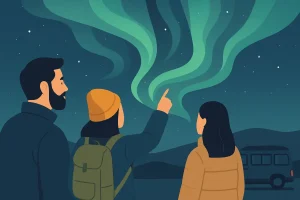
Large coach tours can work for first-time visitors who simply want to see the lights once. They are often cheaper and easy to book, but they come with trade-offs. Big groups move slowly, stop in more accessible spots, and rarely give photographers the space or silence needed to work properly. If twenty people are standing in the same snowbank taking phone snaps, you will feel it.
General small-group aurora hunts are a better step up. They tend to be more agile and can react to weather faster. For some travellers, this is enough, especially if photography is a secondary goal. But if capturing the aurora is one of the main reasons for the trip, a photo-focused option is usually worth it.
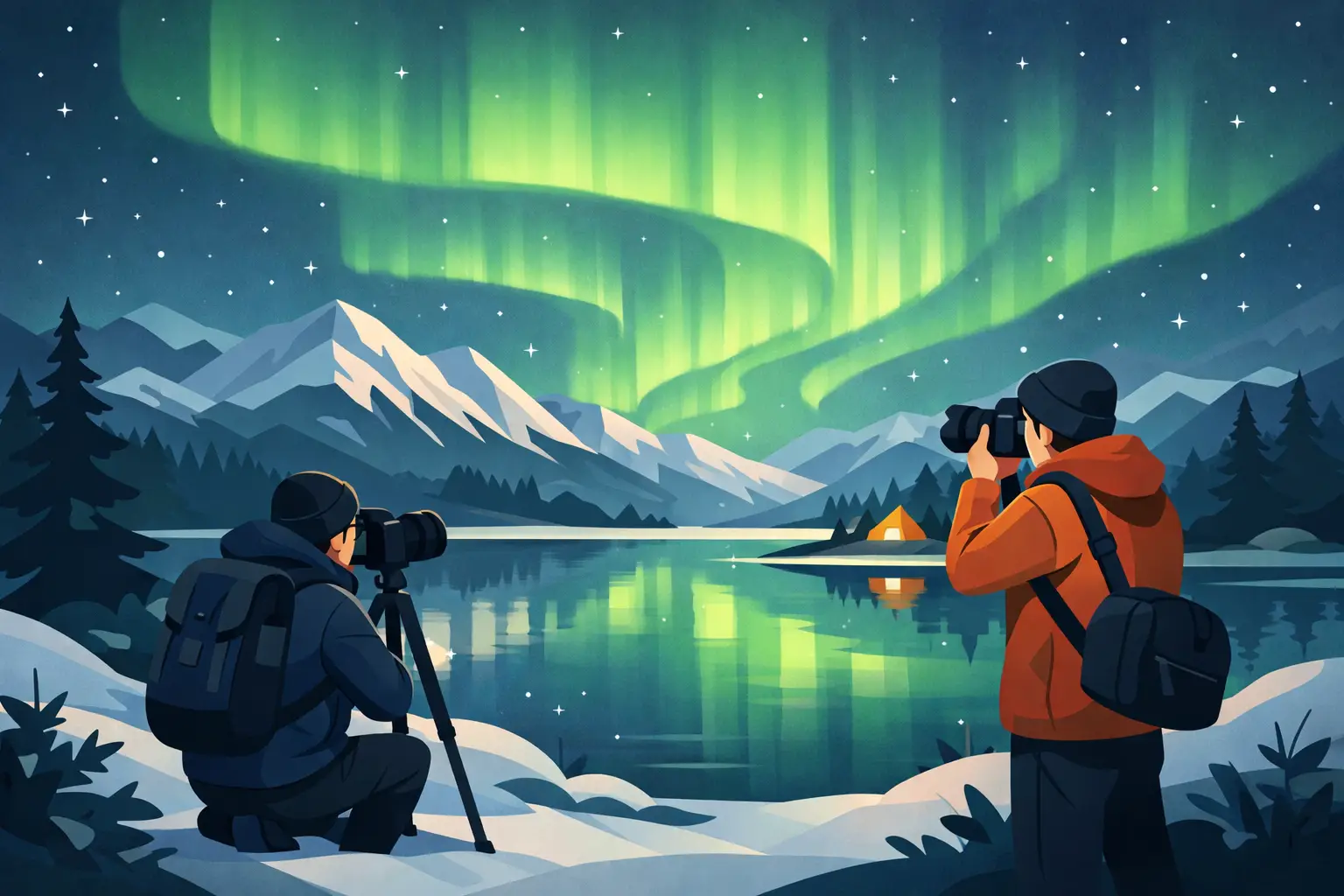
A dedicated photo hunting tour is built differently. The pace is calmer. Stops are chosen for clean horizons, reflections, tree lines, frozen lakes or open fell landscapes. Guides are more likely to help with basic settings, headlamp etiquette and positioning for portrait shots. You are not just hunting the lights. You are hunting the right scene.
The tour formats that work best
There is no single winner for everyone because the best format depends on how you shoot.
Small-group photo tours
For most travellers, this is the sweet spot. A small-group photography tour gives you flexibility without the cost of going fully private. You benefit from shared local knowledge, easier weather chasing, and a more personal guiding style. In Finnish Lapland, especially around Rovaniemi, this format works brilliantly because road access allows guides to change direction quickly when cloud builds in one area.
This is the best choice if you want strong chances, camera-friendly stops, and a social atmosphere without the chaos of a big bus.
Private northern lights tours
If photography is the priority of your whole trip, private can be outstanding. It is particularly good for couples, friends travelling together, or serious amateurs who want complete freedom over stop length and shooting style.
The advantage is obvious. You are not working around anyone else. If the aurora strengthens over a frozen lake and you want another forty minutes there, you stay. If you want to try portraits first and landscapes later, the evening bends around you. The trade-off is price, but for travellers carrying high-end kit or planning a once-in-a-lifetime Arctic break, the value can be very real.
Multi-day aurora itineraries
Photographers who really want results should think beyond one night. A single tour can be spectacular, but multi-day itineraries raise your chances dramatically. Weather is the biggest variable in aurora travel, and the simplest way to beat it is to give yourself more nights.
This approach also opens up more varied images. One night may give you pine forest silhouettes near Rovaniemi, another might deliver open coastal skies in northern Norway. If your holiday allows it, combining locations is often smarter than betting everything on one forecast.
Where the best northern lights tours for photographers tend to be strongest
Rovaniemi is an excellent base for many photographers because it combines easy access, strong tourism infrastructure and quick routes out to darker areas. That matters if you want a comfortable winter break without losing the wilderness feel. You can stay somewhere practical, then head out with a guide who knows where to escape light pollution and shifting cloud.
Finnish Lapland is especially good if you like forested scenes, frozen lakes and softer, storybook winter landscapes. The look is classic Lapland – snow-covered trees, stillness, and that fairy-tale glow people imagine when they dream about the Arctic.
Northern Norway offers a different reward. Around Tromso, Kirkenes and further towards Lofoten, you get dramatic coastlines, mountains and more open horizons. When conditions line up, the visual payoff is huge. The trade-off is that weather on the coast can be less forgiving, so the operator’s route planning becomes even more important.
That is why gateway-style operators with experience across several Arctic regions can be so useful. A brand like ArKtictopia makes sense for travellers who want more than a one-off outing from town. If you are planning a broader winter journey and want guided support from Lapland into Norway, that wider Arctic view can be a real advantage.
Questions to ask before you book
A polished website is nice, but photographers should look deeper.
Ask how many guests are on the tour. Ask whether the route is fixed or decided according to weather. Ask how long you typically stay at each stop. Ask whether the guide can help with camera settings, and whether hot drinks and winter clothing are included. These details shape the night.
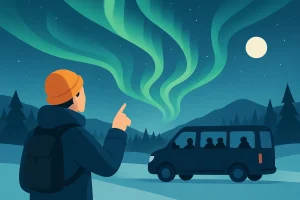
It is also worth asking what vehicle is used. You do not need luxury, but you do need enough room for gear and a warm place to recover feeling in your fingers between stops. Arctic photography is hard on batteries and harder on patience if you are cold.
One more point matters more than most people expect – honesty. The best operators do not oversell. They tell you the aurora is never guaranteed, but they explain exactly how they maximise the odds through local knowledge, mobility and proper timing. That kind of confidence is usually a good sign.
What photographers often underestimate
Many first-time aurora travellers think the challenge is camera settings. It is not. The hard part is being in the right place, on the right night, with enough comfort and patience to keep shooting when nothing seems to be happening yet.
Aurora can build slowly. A weak arc can suddenly blossom into a fast-moving display. If your tour only allows one short stop, you may miss the best moment. Likewise, if your guide is focused only on the strongest sky and not the foreground, you may come home with proof shots rather than images you want to print.
This is why the best photography tours feel less rushed and more intentional. They understand that a successful image needs both sky and setting. They also understand the emotional side of the experience. Seeing the first green band rise over a silent white landscape is unforgettable. Photographing it well takes calm, not panic.
Choosing the right tour for your style
If you are a casual shooter with a mirrorless camera and want a memorable night plus a few strong images, a small-group photo tour is probably perfect. If you already know your settings and care deeply about composition, private gives you more control. If you are planning a proper Arctic photography holiday, multi-day is the strongest play.
There is no shame in choosing convenience, either. Plenty of travellers want a guided experience that removes stress, handles transport, and still gives them a proper chance to shoot. In fact, that is often the smartest approach in winter. You can spend your energy watching the sky instead of second-guessing roads, forecasts and unfamiliar Arctic conditions.
The best trip is the one that matches how you actually travel, not the one that sounds most heroic on paper.
When you book, think less about marketing phrases and more about whether the tour gives you time, flexibility and real guiding. The aurora does not care about your itinerary, but the right guide can tilt the odds beautifully in your favour.