The first sound of husky sledding is not the runners cutting across snow. It is the dogs. Before the brake comes up, an eager chorus rises from the kennel, each team ready to run. Then the line tightens, the sled moves, and the noise falls away. Within minutes, you are travelling through a silent white forest with only paws, runners and cold Arctic air around you.
Husky sledding is one of those Lapland experiences that looks magical in photographs but feels even better in real life. It is not a theme-park ride or a passive winter transfer. You are outdoors, close to the dogs, learning the rhythm of the trail and seeing the wilderness at its most honest. For couples, families and friends travelling from the UK, it is often the moment their winter break becomes a proper Arctic adventure.
What husky sledding really feels like
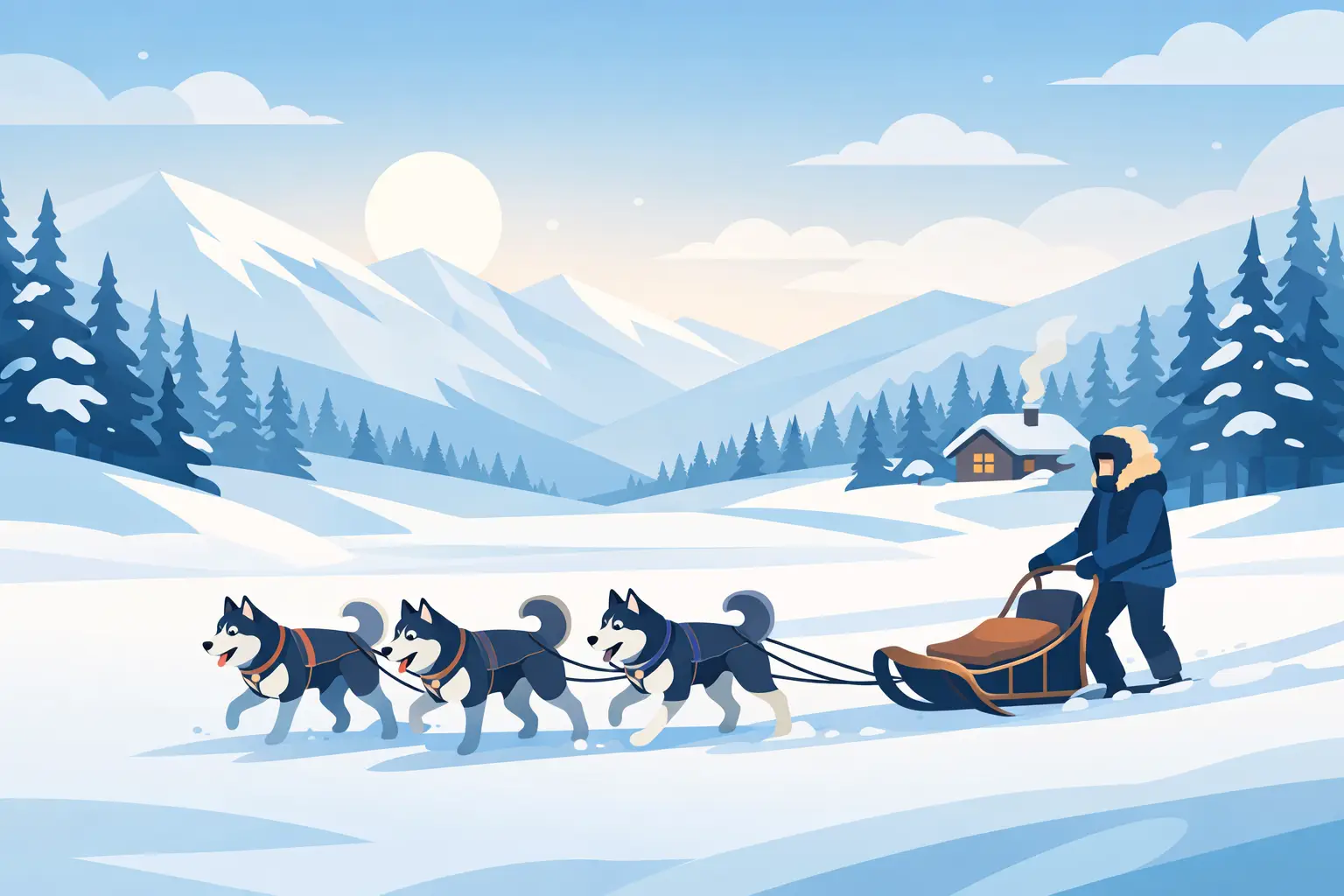
A husky safari is a mix of excitement, calm and a little bit of concentration. Most tours begin at a husky farm or kennel, where guides introduce the team and explain how the sled works. You will usually travel two adults to a sled, with one person standing at the back to steer and brake while the other sits under warm blankets. Many safaris include a chance to swap drivers during the route.
Standing on the runners is more active than people expect. The guide leads the route, but you are responsible for keeping a safe distance from the sled in front, using the brake when needed and helping on small uphill sections. You do not need previous experience or special fitness, but you do need to listen carefully and be comfortable spending time in the cold.
The reward is extraordinary. On open stretches, the dogs pick up speed and the sled glides with a rush that makes you grin into your neck warmer. In the forest, the pace settles. Snow-heavy spruce trees close in, breath hangs in the air, and the trail seems to pull you deep into a fairy-tale landscape. This contrast is what makes the experience unforgettable: energy at the start line, then the quiet of real Lapland.
The distance and pace depend on the safari. A shorter ride can suit young families or visitors fitting several activities into one day. A longer route, often around 8 to 10 kilometres or more, gives you more time to find your confidence as a driver and settle into the wilderness. Neither is automatically better. Choose the experience that fits your group, your winter clothing and the kind of day you want.
Why the dogs love to run
A good husky safari should never feel rushed or staged. Sled dogs are working animals bred and trained for endurance, teamwork and running. Their excitement before departure is part of the experience because they know exactly what is about to happen.
That said, it is right to be thoughtful about animal welfare when choosing an activity. A responsible provider should be open about the dogs’ care, their working routine and the guidance guests must follow around the kennel. Listen to the briefing. Do not feed a dog unless invited, keep fingers away from harnesses and give each team space, especially when they are waiting to depart.
After the ride, there is often time to meet the dogs more calmly. This is when many guests find a favourite – perhaps the confident lead dog, the friendly pup in training or the quieter husky who suddenly leans in for a stroke. Ask the musher questions. Learning the dogs’ names, personalities and roles turns a brilliant ride into a more meaningful encounter.
What to wear for a husky safari
Lapland cold has a way of finding the small gaps in your clothing. On a sled, you are not constantly walking to keep warm, particularly when sitting as a passenger, so good layers matter more than most first-time visitors realise.
Start with thermal base layers against the skin, then add a fleece or wool mid-layer. A winter overall or insulated outer layer helps block wind and snow. Warm socks, proper winter boots, insulated gloves, a hat and a buff or scarf are essential. If your operator provides thermal clothing and boots, use them. They are designed for Arctic conditions and save space in your suitcase.
Avoid cotton next to the skin, as it holds moisture and can leave you cold. Bring a spare pair of gloves if you have them, and keep your phone in an inside pocket when possible. Batteries lose power quickly in deep cold. A camera is worth bringing, but do not spend the whole ride looking through it. The best images often come during stops, when you can enjoy the trail with both hands free.
Choosing the right husky sledding experience
The best tour is not necessarily the longest or cheapest one. It is the one that gives your group enough time, clear guidance and a setting that feels personal rather than processed. Small groups are especially valuable in winter. There is less waiting at the start, more opportunity to ask questions and a calmer atmosphere on the trail.
Check whether you will drive your own sled or simply sit as a passenger. For many adults, taking turns to drive is a key part of the adventure. If you are travelling with children, confirm age guidance in advance, as they will usually ride in the sled with an adult rather than drive. Pregnant travellers or anyone with back, hip or mobility concerns should ask for tailored advice before booking, since bumpy trails and standing on runners may not be suitable.
Also consider the location and timing. A daytime safari reveals the blue light, frosted trees and endless detail of the forest. A late-afternoon ride can feel more atmospheric as darkness settles. If you are hoping to pair it with an aurora experience, remember that a husky ride is not the same as a Northern Lights hunt. The sky can be clear or cloudy, and the activity should be chosen for the dogs, trail and winter landscape first.
For visitors based in Rovaniemi, an organised tour removes the hard parts: transfers, cold-weather kit, safety instruction and finding a quality kennel. ArKtictopia builds this kind of experience around small groups and local guiding, so you can focus on the trail rather than the logistics.
A few moments that make the day better
Arrive ready to listen, even if you have ridden before. Conditions change with the weather, snow and dogs, and your guide’s instructions keep every team safe. Keep your hands clear of the runner when stopping, always use the brake as shown, and never let go of the sled. If a team pauses or becomes tangled, stay calm and wait for guidance.
Give yourself permission to be present, too. The first few minutes can feel busy as you learn when to brake and where to stand. Soon, the movement becomes natural. Look up from the track. Notice the tiny ice crystals catching the light, the warmth of the dogs’ breath and the extraordinary stillness between the trees.
A warm drink after the trail is more than a pleasant extra. It is the moment your cheeks begin to thaw, stories come out and you realise how far from everyday life you have travelled. This is why husky sledding belongs on a Lapland winter break: it gives you a real connection to the landscape, not just a view of it.
When you book, leave enough room in the day to enjoy the experience without racing to the next stop. Arctic travel is at its best when you slow down, trust your guides and let the trail set the pace.