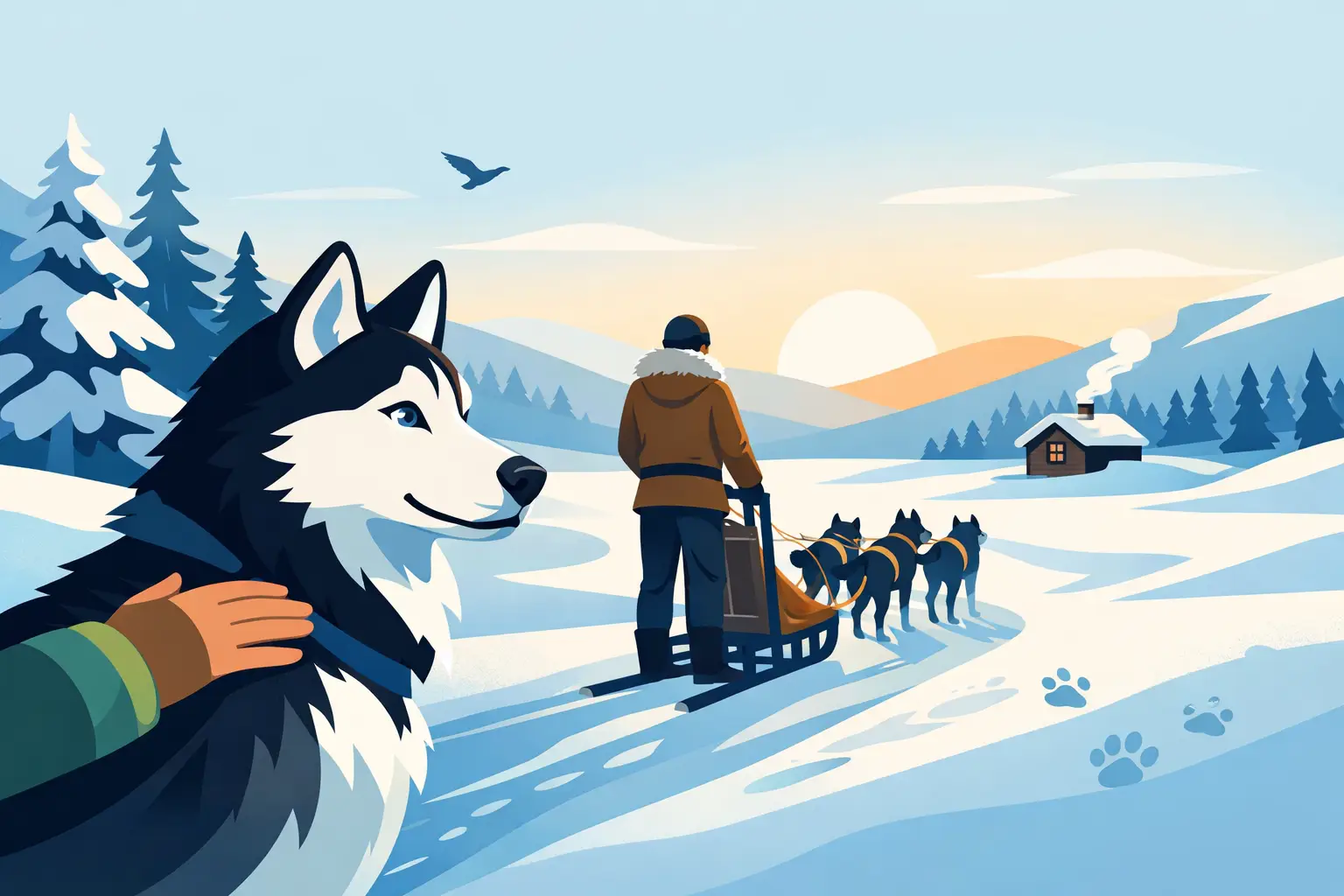
A husky team settling into the snow before a run is one of Lapland’s most unforgettable sights: bright eyes, wagging tails and an energy that seems to lift the whole forest. But husky safari ethics matter just as much as the fairy-tale feeling. A responsible ride should leave you thrilled by the Arctic, while giving you confidence that the dogs are healthy, willing and properly cared for.
For many travellers, this is their first close encounter with working sled dogs. It is right to be curious. The best experience is not simply the longest ride or the loudest promise. It is one where animal welfare, skilled handling and realistic Arctic conditions come first.
What husky safari ethics look like in practice
Huskies are active, purpose-bred working dogs. Many genuinely love the anticipation of running: they bark, bounce and pull towards the trail because the chance to run is exciting. That enthusiasm can look intense, particularly at the start line. It should not, however, be confused with a licence for poor practice.
Ethical husky safaris are built around the dogs’ needs rather than a fixed timetable. A kennel should adjust routes, pace, team size and rest periods according to temperature, snow conditions, fitness and the individual dog. During a cold, clear Lapland morning, a team may be eager to cover ground. In mild weather, slushy snow or strong winds, a responsible operator may shorten or alter the route. That is not a disappointing compromise. It is good judgement.
The dogs should be matched thoughtfully in pairs, with experienced handlers making decisions about temperament, strength and compatibility. Not every dog runs every day. Puppies, older dogs, dogs recovering from illness and dogs not suited to a particular route need different care. The point of a safari is to see a working partnership in action, not to ask every animal to perform for visitors.
The signs of a welfare-led kennel
You do not need to be a canine expert to ask sensible questions or observe the basics. Look beyond the polished photos. A good kennel visit should offer a clear view of daily life, including where dogs sleep, how they rest and how guests are expected to behave around them.
Clean, dry living areas, fresh water, weather protection and dogs in good body condition are foundational. In winter, well-insulated dog houses and deep straw bedding can help dogs stay warm. In warmer shoulder seasons, shade and cooling become especially relevant. There is no single kennel layout that proves excellence, but there should be evidence of attentive, routine care.
Watch the staff as much as the dogs. Professional mushers and handlers tend to work calmly and confidently. They understand their teams, handle equipment without rushing and explain safety rules clearly. They do not need to shout, frighten dogs or make the experience feel chaotic for the sake of entertainment.
Ask how the kennel manages veterinary care, feeding, exercise and retirement. A transparent answer is more reassuring than a rehearsed slogan. Some working dogs move into quieter roles, live with families or remain at the kennel after retirement. The right arrangement varies by dog, but a responsible operator should have a considered approach rather than treating retirement as an awkward question.
Questions worth asking before you book
Most guests only need a few direct questions. Ask whether the ride length may change for dog welfare or weather, how many guests share a sled, whether you will receive driving instructions, and whether there is time to meet the dogs without disturbing them. You can also ask how the kennel cares for older dogs and how it decides which dogs run on a given day.
The response matters. Honest operators will not guarantee a perfectly predictable experience in an unpredictable environment. They will explain the plan, the possible changes and why those changes protect both guests and animals.
A short ride can be the responsible choice
It is easy to compare tours by kilometres alone. Yet distance does not tell the whole story. An 8-10 km route can be a magical first taste of mushing, especially when it includes proper preparation, a safety briefing and time to understand the dogs. A longer expedition can be brilliant too, provided it is paced well and designed for the conditions.
The trade-off is simple: a schedule that never changes may sound convenient, but Arctic nature does not work to a brochure. Snow can become slow and heavy. Temperatures can rise unexpectedly. A dog may need a rest. Ethical operators leave room to make the right call.
Guests also have a role. Listen carefully when your guide explains braking, cornering and spacing between sleds. Do not encourage your team to race another sled, and do not stop suddenly without instruction. If your dogs need a pause, let them pause. The most memorable rides are rarely about speed. They are about the quiet stretch of trail when the sound of the runners replaces everything else.
Respect begins before the sled moves
A kennel is a workplace and a home for animals, not a petting zoo. Some huskies will enthusiastically seek a scratch behind the ears. Others may prefer space, particularly when they are harnessed, resting or focused on the trail. Always follow the handler’s guidance about approaching, touching and photographing the dogs.
Avoid feeding the team unless the kennel specifically invites it. A carefully managed diet is part of a working dog’s health, and even a well-meant snack can cause problems. Keep children close, move calmly and make sure gloves, hats and scarves are secure around excited dogs.
Photography deserves a little care as well. A beautiful image should never come at the cost of a dog’s comfort. Give dogs room, never climb into their resting areas and do not hold them in place for a photo. The best pictures tend to happen naturally: a lead dog focused on the trail, frost gathering on fur, a handler checking a harness with practised hands.
Ethical travel supports people as well as dogs
Husky safari ethics are not limited to animal welfare. The people who care for, train and guide the dogs are central to the experience. Good tourism supports knowledgeable local teams, fair working conditions and businesses that invest in year-round animal care rather than treating winter rides as a quick seasonal attraction.
This is also why very cheap offers deserve a closer look. Price alone does not prove that a safari is irresponsible, and a higher price is not an automatic guarantee of quality. Still, dogs, trained staff, safe equipment, veterinary care and suitable facilities all cost money. When comparing tours, consider what is actually included: transfers, small group size, driving guidance, time at the kennel and the quality of the overall operation.
For families, a shorter route with personal instruction may be far more rewarding than a crowded, rushed outing. For adventurous couples or friends, a longer self-drive experience may be the right fit. The responsible choice depends on the group, the weather and the operator’s willingness to put welfare ahead of a one-size-fits-all programme.
Choose the experience, not just the photo
A good husky safari can change the way you see Lapland. You begin with the excitement of meeting the team, then feel the forest open around you as the sled glides through snow-covered trees. Afterwards, the warmest part is often learning the dogs’ names, hearing how the kennel works and understanding that every strong pull on the trail comes from training, trust and care.
When choosing a Lapland adventure, look for clear information, thoughtful handlers and a pace that respects the animals. At ArKtictopia, that nature-first approach is part of what makes a small-group Arctic day feel real. Book the ride that gives you time to listen, ask questions and meet the dogs with the respect they deserve – the memory will feel better for it.