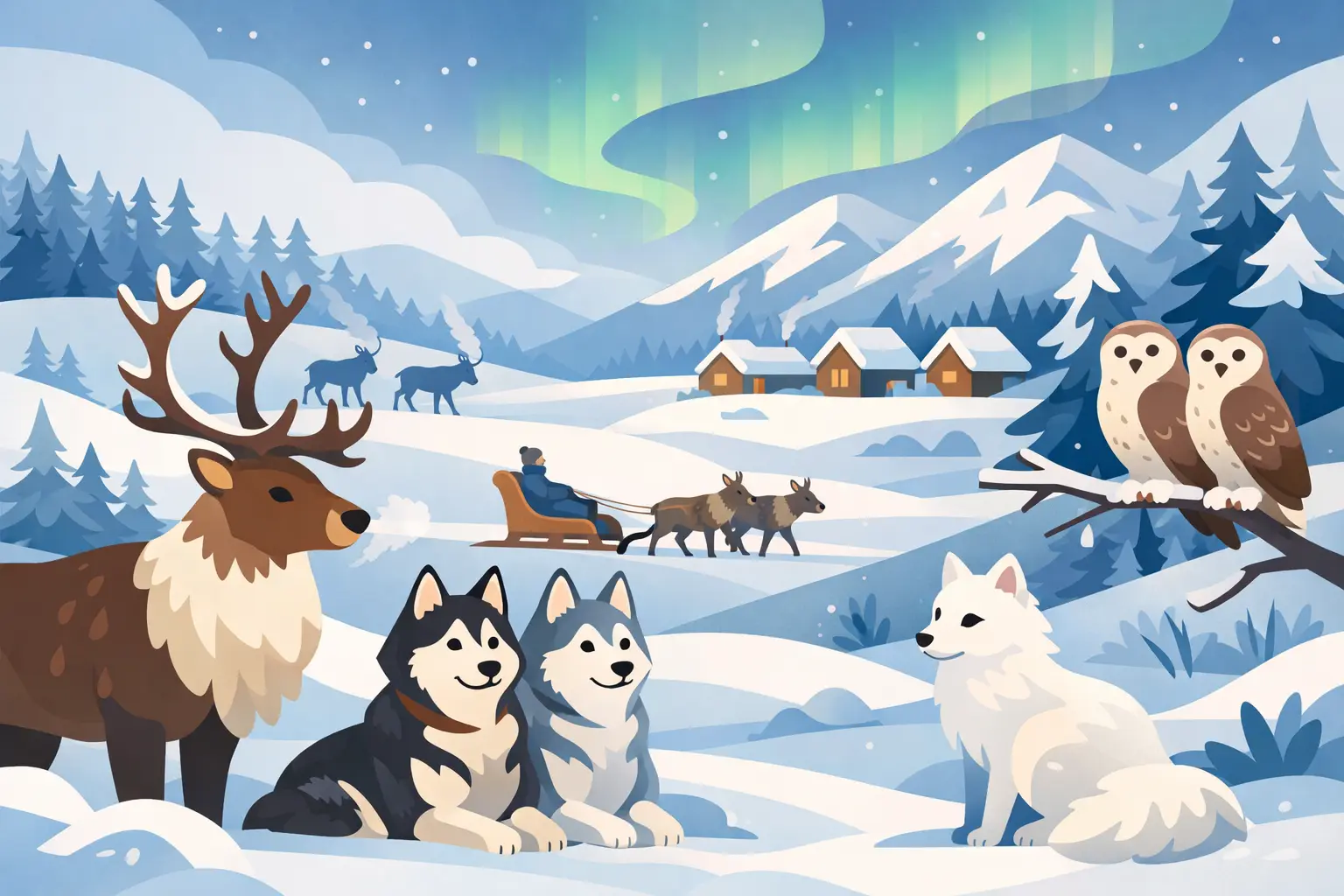
The first sound on a proper Lapland morning is rarely silence. It might be huskies howling with anticipation, reindeer hooves crunching over snow, or a raven calling across the frozen forest. The best Lapland animal experiences are not about ticking off a photograph beside an Arctic icon. They are about stepping into the rhythm of the north, with local guides, crisp air in your lungs and wilderness all around you.
For a winter break in Rovaniemi, animal activities bring variety to nights spent hunting the Northern Lights and days filled with snow. They suit couples seeking a fairy-tale moment, families travelling with excited children, and first-time Arctic visitors who want the adventure organised properly. Here is how to choose experiences that feel real, respectful and genuinely unforgettable.
Husky sledding: the wild-hearted Lapland classic
A husky ride is often the image that brings people to Lapland in the first place. There is a reason. Once the team sets off, the noise of the kennel disappears behind you and the sled glides through a landscape of snow-covered spruce trees and open white trails. It feels fast, elemental and wonderfully different from simply being a passenger in a vehicle.
Most husky experiences begin with a briefing on how to handle the sled. One person usually stands as the musher while the other sits in the sled, with an opportunity to swap during a longer route. Your guide is there to show you how to brake, steer and help the dogs on hills, so no prior experience is needed. The key is to dress warmly, listen closely and be ready for a little physical effort.
Route length matters. A short ride can be brilliant for young families or anyone adding several activities into one day. A longer safari, often around 8 to 10 kilometres or more, gives you time to find the rhythm of mushing and absorb the forest rather than rushing through it. If you are travelling as a couple, ask whether you can swap drivers. If driving a team is the dream, make that clear before booking.
The most meaningful visits also allow time to meet the dogs after the ride. Huskies are working dogs, bred to run, and their excitement before departure is part of the experience. Still, choose an operator that discusses animal care openly, gives clear instructions around the dogs and never treats them as props. A responsible kennel visit should leave you impressed by the relationship between mushers and their teams.
Reindeer safaris: a slower, older kind of magic
Where husky sledding is energetic, a reindeer safari is quiet and unhurried. Wrapped in warm blankets in a traditional sleigh, you travel through the forest behind a reindeer at a pace that invites you to notice every small detail: frosted branches, pale winter light and the soft pull of the harness.
Reindeer are deeply connected to the culture and livelihoods of the Sámi, the only recognised Indigenous people of the European Union. A well-led reindeer experience should make room for that story. You may hear about reindeer herding, seasonal migration and the practical skills that have made life possible in the Arctic for generations. It is not merely a sleigh ride. It is a glimpse into a living northern heritage.
This is usually the better animal activity for travellers who want calm rather than speed. It works particularly well for multi-generational groups and for anyone who would rather sit back than drive a sled. Children often adore the close encounter, but adults tend to remember the stillness. There is something almost unreal about moving through a blue winter forest with no engine noise at all.
Do not expect reindeer to behave like tame farm animals. They have distinct personalities and tend to move at their own pace. That is part of their charm. Dress for sitting still in the cold, because a reindeer sleigh can feel much chillier than a more active excursion.
Ranua Arctic Zoo: wildlife beyond the postcard
Huskies and reindeer are the headline acts, but Ranua Arctic Zoo offers a different kind of animal day. Set in the Finnish wilderness south of Rovaniemi, it is home to a range of Arctic and northern species, including polar bears, Arctic foxes, wolves, wolverines, owls and moose.
A visit here is especially valuable if seeing Arctic wildlife is high on your wish list but you understand that wild encounters can never be promised. In the forest, a fox or moose sighting is a gift, not an itinerary item. At Ranua, you can observe species that would otherwise be difficult, and sometimes impossible, to spot during a short holiday.
Winter gives the zoo a special atmosphere. Snow settles over the spacious enclosures, daylight is soft, and the walking route becomes a beautiful Arctic forest trail in its own right. Allow enough time to walk at a comfortable pace, take photographs and pause at the animals rather than treating it as a quick stop between activities.
This experience is a strong choice for families, wildlife enthusiasts and visitors staying for several days. It is less hands-on than a safari, but it adds depth to a Lapland itinerary. You leave with a better sense of how remarkably adapted these animals are to life in extreme cold.
The best Lapland animal experiences depend on your travel style
There is no single perfect choice. For the biggest rush, choose husky sledding. For traditional atmosphere and a peaceful winter journey, choose a reindeer safari. For a broader view of northern wildlife, make room for Ranua Arctic Zoo.
Timing also shapes the experience. December brings the full Christmas atmosphere, sparkling snow and long dark evenings, though it is one of the busiest periods. January and February are typically colder, brighter and excellent for classic winter activities. March often combines deep snow with longer daylight, making it particularly good for photography and families who prefer more time outdoors in the day.
Think carefully about how much you want to fit into one day. A husky ride followed by a Northern Lights hunt can be an incredible combination, but it is still a full Arctic day. Reindeer safaris pair naturally with Santa-themed experiences or a relaxed afternoon. Ranua is best treated as a dedicated day trip, especially if you want to enjoy the journey and the zoo without watching the clock.
How to keep your animal encounter authentic
The difference between a good animal activity and a memorable one often comes down to pace and guiding. Small groups give you more time to ask questions, more space on the trail and a more personal connection with the people who know the animals best. You should never feel processed through an experience.
Cold-weather preparation matters too. Thermal base layers, insulated boots, gloves, a hat and warm outer clothing will make a huge difference. Tour providers often supply an extra thermal suit and boots, but bring warm layers of your own. Cameras and mobile phone batteries drain quickly in sub-zero temperatures, so keep devices close to your body when you are not using them.
Finally, arrive with the right expectations. These are animals, not a scripted show. A reindeer may pause. A husky team may be noisy before running, then silent on the trail. Wild animals at the zoo may rest out of sight for a moment. The beauty lies in meeting the Arctic on its terms.
A great guide turns those unscripted moments into part of the story, whether that means explaining a husky’s eagerness to run or pointing out fresh tracks beside a forest trail. That personal knowledge is what transforms a cold day in the snow into a real Lapland memory.
Leave space in your itinerary for one animal experience that truly excites you, rather than trying to squeeze in everything. Then let the forest, the animals and the northern winter do what they do best: surprise you.