The first sound is not a fish breaking the surface. It is the clean crack of an auger cutting through lake ice, followed by a sudden, thrilling view into the dark water below. A guided ice fishing experience in Lapland turns a winter day into something far more memorable than simply standing on a frozen lake. You are out in the quiet wilderness, surrounded by snow-heavy forest, learning an Arctic tradition with someone who knows the conditions, the gear and the stories behind it.
For many visitors, ice fishing is the calm counterpoint to a fast husky ride or a night spent chasing the Northern Lights. It asks you to slow down, watch the line and enjoy being properly present in the Arctic. With the right guide, it is accessible for first-timers, families and anyone who wants to experience the real rhythm of Lapland.
What a guided ice fishing experience in Lapland feels like
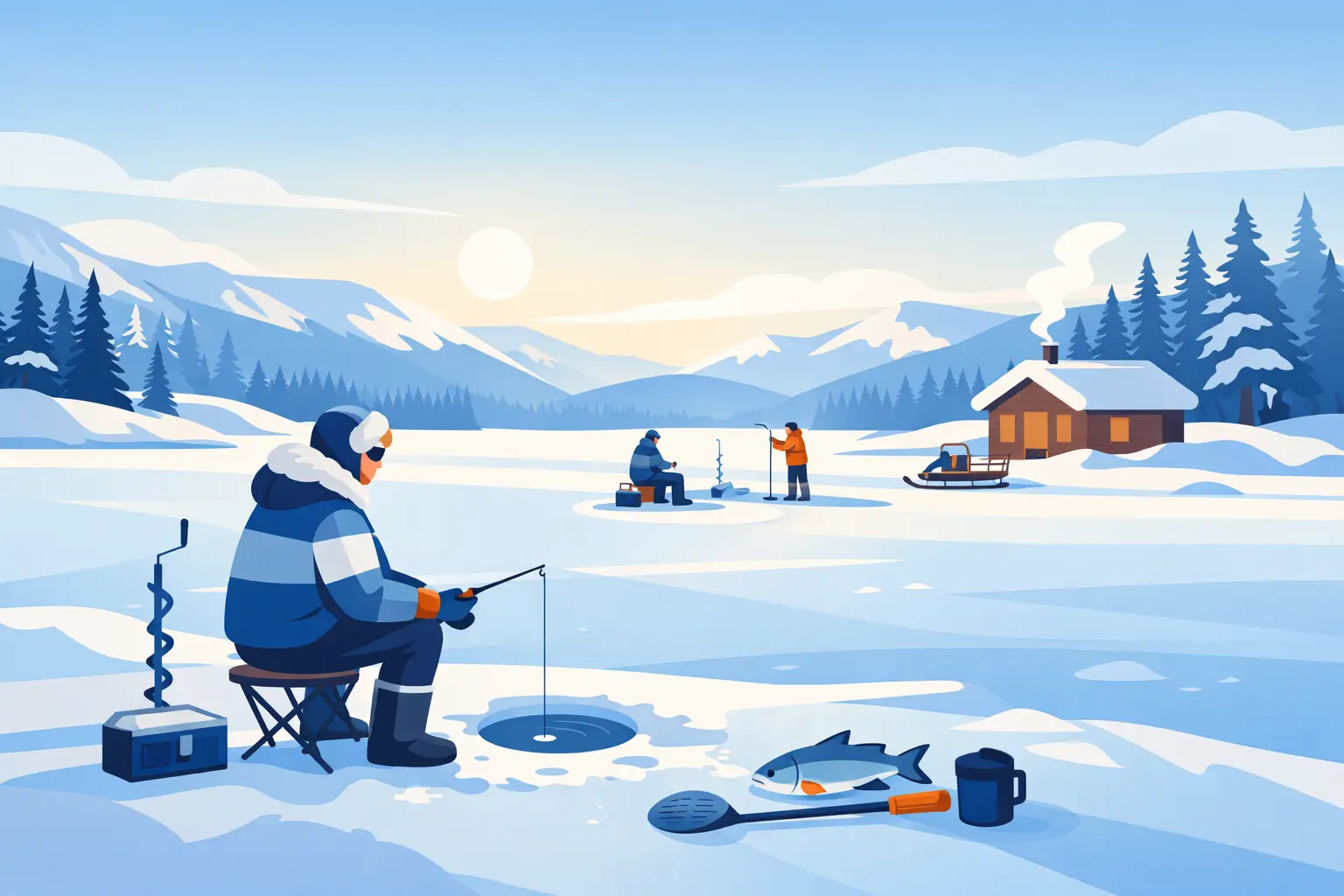
Ice fishing is wonderfully simple. Your guide selects a safe spot on a frozen lake, drills a hole through the ice and shows you how to lower the line. Then comes the patient part. You sit or stand by your fishing hole, feeling for the smallest movement beneath the ice while the wilderness carries on around you.
There is no need to arrive with fishing knowledge or specialist equipment. A well-organised guided trip provides the essentials, explains the technique clearly and makes sure you are fishing on ice that has been assessed as safe. That confidence matters. Frozen lakes can look inviting, but Arctic conditions change, and local judgement is part of what makes a guided activity feel relaxed rather than risky.
The catch is never the whole point. You may hook a perch, pike or another local freshwater fish, depending on the lake, season and conditions. Some days bring quick bites; on others, the line stays still. That uncertainty is honest nature, not a failed experience. The magic is in the anticipation, the silence and the satisfaction of learning something completely new in a place that feels almost unreal.
More than a fishing lesson
A good guide does more than drill the hole and hand over a rod. They make the landscape meaningful. You might hear why lakes freeze differently, how animals move through the forest in winter, or how ice fishing has long fitted into life in the north.
This personal element is why small groups make such a difference. You have time to ask questions, get help with your technique and enjoy the day without feeling rushed through a tourist production line. At ArKtictopia, the aim is always The Real experience: nature-first, personal and shaped around the people in the group.
Why go with a guide rather than fish independently?
Independent travel has its place, but ice fishing is one of those Arctic experiences where local support adds genuine value. A guide takes care of the practical decisions that visitors cannot easily make from a hotel room in Rovaniemi: where conditions are suitable, how thick the ice is, which equipment to use and how to stay comfortable outdoors.
They also remove the awkward parts of planning. You do not need to source an ice auger, work out licences, decipher local fishing rules or transport bulky equipment. Instead, you can focus on the part you came for: stepping onto a frozen lake and giving it a go.
For couples, it is an easy shared challenge with plenty of time for photographs and quiet moments together. Families often enjoy the hands-on nature of it, especially when children can watch a hole being drilled and take turns holding the rod. Solo travellers get the reassurance of a friendly group and a guide who can help them settle into the experience from the first minute.
What to expect on the day
Your exact itinerary depends on the tour, weather and location, but the rhythm is usually straightforward. After collection from your meeting point or accommodation area, you travel out from the city lights towards a lake or wilderness location. The route itself is part of the adventure: snowy roads, frost-covered trees and the feeling that Lapland is opening up around you.
Once at the lake, your guide introduces the equipment and safety basics before preparing the fishing holes. You will learn how to handle the short rod, bait or lure, and how to feel for a bite. It does not take long to understand the basics, although landing a fish can require a little patience and a surprisingly steady hand.
Many ice fishing experiences include a pause around an open fire. That is where the Arctic day becomes properly cosy: warm drinks, a simple snack and the scent of woodsmoke in cold, clean air. If fish are caught and conditions allow, your guide may prepare part of the catch over the fire. It is a brilliant moment, but it should be seen as a bonus rather than a promise. Wildlife and fishing cannot be scheduled.
The activity is generally gentle, yet the cold makes every outdoor hour feel more physical. Dress in layers and take the thermal clothing offered by your tour operator seriously. Warm boots, insulated gloves and a hat that covers your ears are not glamorous additions. They are the difference between enjoying the stillness and watching the clock.
When is the best time for ice fishing in Lapland?
The main season usually runs through the heart of winter and into spring, when lakes are reliably frozen and daylight gradually becomes longer. Early winter can feel especially fairy-tale-like, with deep snow and blue twilight. Later in the season often brings brighter skies and more daylight for enjoying the landscape.
There is no single best month for everyone. If your holiday is centred on Northern Lights hunting, the darker winter period may suit you best, with an ice fishing day adding variety between evening adventures. If you prefer more daylight for family photos and long outdoor days, late winter can be a strong choice. Your guide will select the location according to safe, current conditions rather than following a fixed script.
Weather also shapes the experience. A light snowfall can make the lake feel beautifully secluded, while a clear day may reveal wide-open skies and a glow of pale winter sun. Extreme cold is part of the Arctic character, but tours may be adjusted if conditions are not right. Flexibility is a sign of responsible guiding, not a compromise.
How to make the most of your ice fishing trip
Come with curiosity rather than a trophy-fishing mindset. The first catch may be small, or it may not arrive at all, but the experience still gives you a real connection to Lapland’s winter traditions. Put your mobile phone away for a few minutes after you arrive. Listen to the snow under your boots and the faint sounds of the lake beneath the ice.
Ask your guide about the place you are visiting. Local knowledge transforms a pretty view into a story: the tracks near the shoreline, the type of fish below you, the way a frozen lake behaves as temperatures rise and fall. These details stay with you longer than another standard holiday photograph.
If you are travelling as a couple or group of friends, consider pairing ice fishing with a more energetic daytime activity on another day, then reserve an evening for an aurora hunt. The contrast is part of the joy. One day you are moving through the snow at speed; the next, you are sitting beside a small hole in the ice, waiting for a flicker on the line.
A few practical questions answered
Do I need previous fishing experience? No. Guided ice fishing is designed for beginners, and your guide will demonstrate each step.
Will I be cold? You will be outdoors in Arctic winter, so cold is part of the experience. Proper layers, thermal overalls and suitable boots make it comfortable for most visitors.
Is it suitable for children? Often, yes, although minimum ages and practical arrangements vary by tour. Younger children may enjoy the fire, drilling demonstration and snowy setting as much as the fishing itself.
Can we guarantee a catch? No responsible operator can guarantee wild fish. What can be planned is safe access, good equipment, expert guidance and a genuine day on the ice.
A frozen lake in Lapland asks for patience, but it gives something back: a pocket of stillness in a holiday full of bright snow, wild skies and big emotions. Bring warm layers, an open mind and enough time to let the Arctic work its quiet magic.