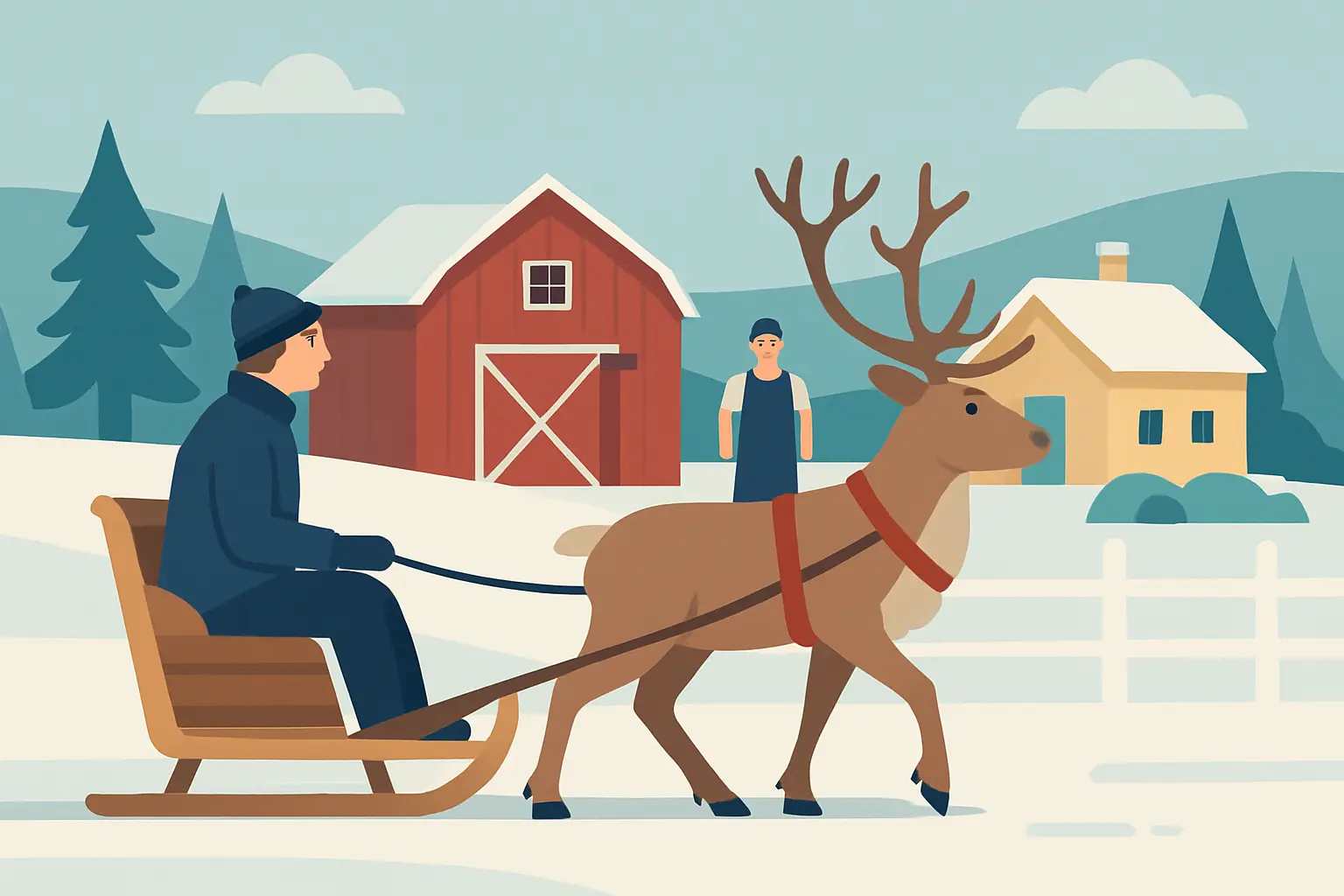
You step off the minibus and the first thing you notice is the quiet – that thick, snow-softened silence that makes even your breath feel loud. Then you hear it: a gentle clink of harness, a snort, and the slow crunch of hooves. This is the moment a lot of people picture when they dream about Lapland. The difference is, here you are, actually in it – wrapped up properly, stood in real Arctic air, about to meet the animals that have carried people across the North for generations.
A reindeer safari with farm lunch is one of those winter days that hits every note: calm wilderness, culture you can touch, and a warm meal that tastes better simply because you earned it. It is not an adrenaline ride like huskies. It is not a high-speed chase. It is a reset – a way to slow down and feel the place.
Why a reindeer safari with farm lunch feels so ‘real’ in Lapland
Reindeer are not a theme-park extra in Finnish Lapland. They are part of how the North has worked for a very long time – a living connection between landscape, livelihood, and identity. When you visit a reindeer farm, you are stepping into a working world, even if the day is set up for travellers.
Adding a farm lunch turns the experience from a quick activity into a proper winter day out. It gives you time to settle in, ask questions, warm up, and let the whole thing land. You are not just taking a few photos and moving on – you are tasting the place, too.
That said, “authentic” can mean different things depending on the operator. Some farms are more geared towards visitors, some are more low-key, and the vibe can vary from cosy family-run warmth to slicker, more scheduled experiences. Neither is automatically wrong – it depends what you want from your day.
What actually happens on the day
Most experiences from Rovaniemi follow a similar rhythm. You get picked up in town, drive out into the countryside, and arrive at a farm where you meet the herders and the reindeer. The introduction is usually hands-on but respectful: you learn how to be around the animals, how the harness works, and what to expect once you are on the sled.
The safari itself is typically a gentle ride through forest trails or open, snowy stretches. It is designed to be calm and accessible – couples, families, and first-timers usually find it comfortable. The pace is slow enough that you notice the detail: frost on branches, pale winter light, the soft sway of the sled.
After the ride, you will warm up indoors or in a sheltered hut. This is where the farm lunch comes into its own. In Lapland, food is part of hospitality – simple, hearty, and built for cold days. Think soup or stew, bread, hot drinks, and something sweet to finish. Some places offer more of a set menu, others feel like being fed by someone’s auntie. Both can be excellent.
In many cases you will also hear stories – about seasonal migrations, how reindeer are handled across the year, and what winter means for daily life out here. If you are travelling with kids, this is often the point where they start firing questions, and the whole room relaxes into that cosy, post-snow glow.
The safari is gentle – and that’s the point
If you are choosing between huskies and reindeer, here is the honest trade-off. Huskies are speed, noise, and pure excitement. Reindeer are quiet, steady, and almost meditative. A reindeer safari with farm lunch is for travellers who want atmosphere and meaning as much as they want an activity.
It also suits people who are nervous about fast rides or who want a more cultural, nature-first day. If you are travelling with grandparents or anyone who prefers calm experiences, reindeer are often the winner.
The only time it might not match your expectations is if you are hoping for a long, wild journey. Safaris are usually shorter than people imagine, partly for animal welfare and partly because the goal is to keep it comfortable for a broad range of guests. If you want hours out on the trail, you will need to look for an extended safari specifically.
How to pick the right experience (without overthinking it)
A few details make a big difference.
First, group size. Smaller groups feel more personal, and you usually get better time with the herders and more space to enjoy the ride without feeling processed. If you are travelling as a couple or small group and you want that “this is our moment” feeling, it is worth prioritising.
Second, the setting. Some farms are close to town, others are deeper into the countryside. A longer drive can mean more wilderness and less ambient light – which matters if your day is paired with an evening Northern Lights hunt. But it can also mean more time sat in a vehicle. If you are on a short break, balance is everything.
Third, lunch style. “Farm lunch” can mean a cosy meal in a warm building, or it can mean a fire-side meal in a kota-style hut. One is not automatically better. If you run cold easily, prioritise comfort. If you love the idea of eating by firelight with smoke in your clothes afterwards, go for the hut.
Finally, the guide. A good guide does more than translate. They read the group, keep things flowing, and turn a nice day into an unforgettable one by sharing context at the right moments. If you want the experience to feel personal rather than packaged, this is the factor that changes everything.
If you are building your Lapland week around small-group, guide-led days from Rovaniemi, you will find that companies like ArKtictopia position these experiences as part of a bigger winter story – the kind where each day has a different texture, but all of it feels grounded in the real North.
What to wear so you actually enjoy it
The cold is not the enemy. The wrong clothing is.
You will spend time sitting still on the sled and standing around listening, which can feel colder than walking. Dress in layers: a thermal base, a warm mid-layer, and a proper winter outer layer. Your feet matter more than you think – thick socks and insulated boots make or break the day. Gloves should be warm enough that you can stop thinking about your hands.
A small but real tip: avoid overdressing to the point you sweat on the drive. Sweat in the Arctic turns into chill. If you can, regulate with zips and layers rather than one massive jumper you cannot adjust.
When to go – and what changes across the season
Early winter (roughly late November to December) has a fresh, fairy-tale feel: new snow, festive energy in Rovaniemi, and that first proper Arctic atmosphere. Daylight is limited, which makes the farm lunch feel even cosier, but it also means your “golden hour” light is brief.
Mid-winter (January to February) is the classic deep-winter Lapland: colder temperatures, crisp snow, and often the most dramatic feeling of being properly north. If you want that sharp, blue-tinted winter look, this is your window. The trade-off is that it can be seriously cold, especially if there is wind.
Spring winter (March into early April) brings more daylight and often slightly softer conditions. It is brilliant for photos and for travellers who want the snow experience without the harshest cold. If you are combining activities like reindeer, snowmobiling, and aurora hunting, March can feel like the sweet spot.
A few moments people don’t expect (but remember)
There is a point on the trail where you stop hearing anything except the sled runners and the reindeer’s breathing. It is oddly emotional, especially if you have come from a loud week at work or a busy city life. People also underestimate how much they will love the warm-up – not just the heat, but the feeling of being looked after.
And yes, the photos are fantastic, but the best ones often happen when you are not trying too hard. Frost on eyelashes, steam from a mug, the reindeer turning its head at the exact second you look up.
Who this is perfect for – and who might choose something else
If you want a calm, meaningful winter day, a reindeer safari with farm lunch is hard to beat. It suits couples who want romance without the cringe, families who want something gentle but special, and solo travellers who want connection without needing to be “on” all day.
If your group is fuelled by adrenaline, you might prefer huskies or a longer snowmobile route, and keep reindeer as a shorter cultural visit. If you are very focused on wildlife photography, you may want to ask how close you will be to the animals and whether you will have time at the farm after the ride – sometimes schedules are tighter than you would like.
How to make the day feel like part of your Lapland story
The best Lapland trips are not a random stack of activities. They flow. A reindeer day pairs beautifully with an evening Northern Lights hunt because it keeps your energy steady – you are outdoors, but not exhausted. It also works well on a day you want to slow down after something more intense, like huskies.
If you can, leave space in your schedule afterwards. Not because the activity is long, but because the feeling lingers. Rushing straight into shops and crowds can break the spell.
Let it be a winter day that stays quiet in your head for a while. You will still have the photos. You will still have the stories. But what you will really take home is the sensation of moving slowly through snow, warmed by a farm lunch, and realising that Lapland is not just something you visit – it is something you feel.