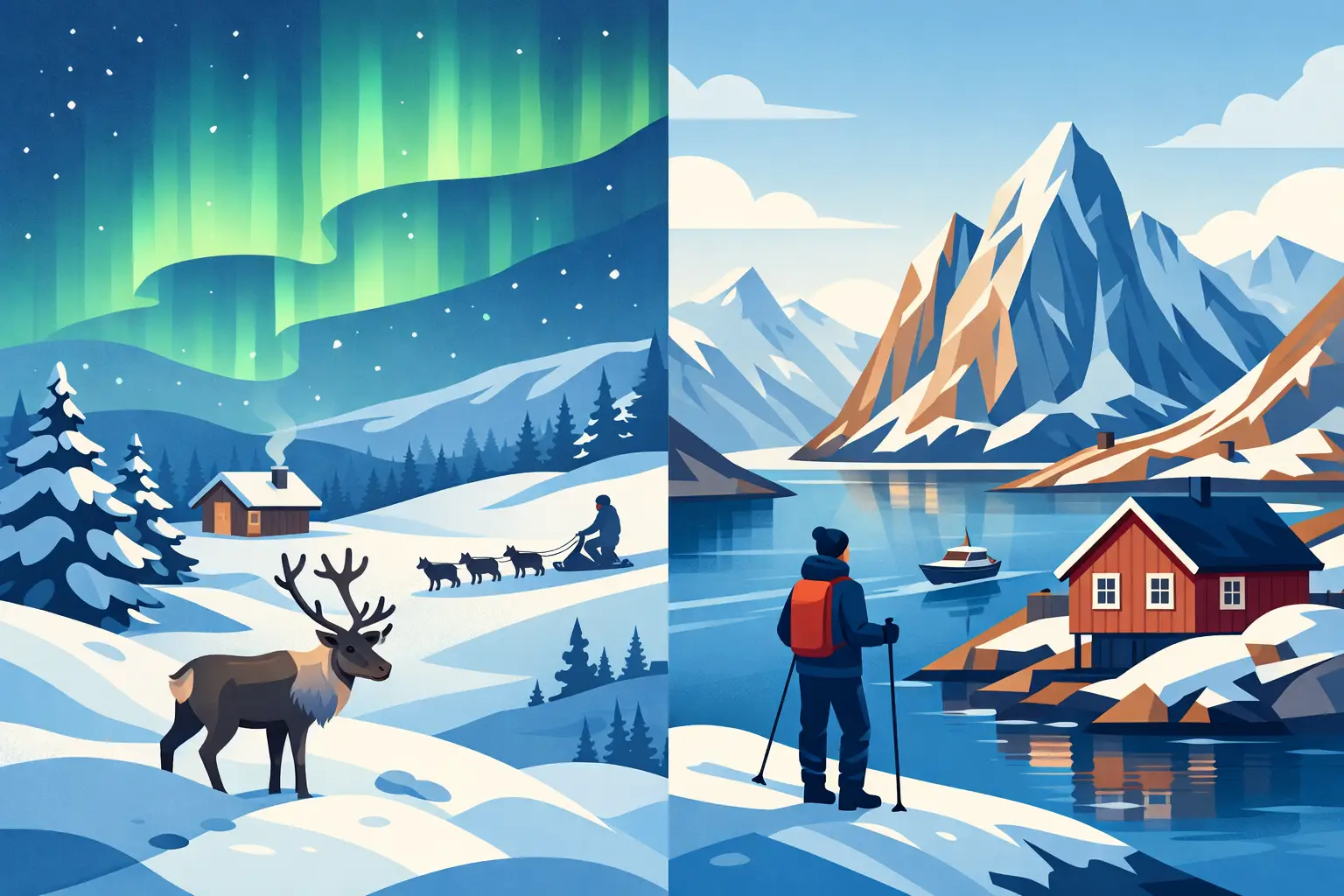
The choice between Finnish Lapland versus Norway usually comes down to one question: do you want to live inside a snow-covered fairy tale, or stand where mountains plunge straight into the sea? Both can deliver the Northern Lights, thrilling winter activities and Arctic magic. Yet they create completely different kinds of holidays.
Finnish Lapland is made for travellers who want an easy, activity-filled winter escape. Think snowy forests, frozen lakes, husky teams, reindeer, cosy fires and a welcoming base in Rovaniemi. Norway is wilder and more dramatic, with enormous coastal landscapes, fishing villages, fjords and a greater sense of journeying through the far north.
Neither is automatically better. The right choice depends on how you want your Arctic adventure to feel when you wake up each morning.
Finnish Lapland versus Norway: the winter atmosphere
Finnish Lapland feels like the Arctic many people have imagined since childhood. The landscape is softer and quieter than Norway’s coast: forests heavy with snow, wide white lakes, winding trails and cabins glowing in the blue light of polar night. It is immersive rather than showy. You do not always need to travel far to feel completely away from ordinary life.
Rovaniemi is especially strong for first-time Arctic travellers. Transfers are straightforward, accommodation choices are broad, and you can fit several unforgettable experiences into a short break. A morning husky ride, an afternoon reindeer safari and an evening Northern Lights hunt are all realistic parts of the same holiday, without spending every day repacking or driving long distances.
Norway has a more cinematic edge. Tromsø combines a lively Arctic city with easy access to wilderness. Kirkenes offers a remote, borderland feel and distinctive snow experiences. Lofoten is for travellers who want jagged peaks, sea views and red fishing cabins set against winter skies. It can be spectacular even when the aurora does not appear.
The trade-off is that Norway’s scenery often asks more of you. Distances can be longer, weather can affect road journeys and the terrain is less consistently blanketed in deep snow along the coast. If your dream is a dramatic road-trip-style Arctic adventure, that is part of the appeal. If you want a smooth, snow-filled winter break with minimal logistics, Finland often wins.
Where is best for Northern Lights hunting?
Both Finnish Lapland and northern Norway sit beneath the auroral oval, so both can offer extraordinary displays. But the Northern Lights are never a simple destination tick-box. Solar activity, cloud cover, local weather, moonlight and your willingness to move all matter.
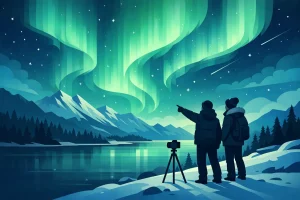
Finnish Lapland’s strength is its dark, accessible wilderness. Away from Rovaniemi’s town lights, frozen lakes and forest clearings create beautiful viewing locations. A dedicated guided hunt can adapt to conditions, travelling away from cloud cover where possible and choosing places with wide northern horizons. The best experiences are not about standing outside a hotel for ten minutes. They are about giving yourself time, warmth, local judgement and the freedom to chase clearer skies.
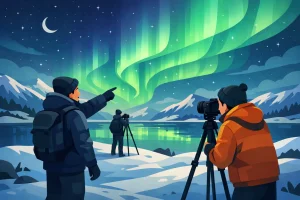
Norway’s coast can produce breathtaking aurora photographs because the lights may appear above mountains, fjords or the sea. Tromsø is a famous base for a reason, but coastal weather can be changeable, with clouds rolling in quickly. A clear night in Norway can be incredible. A cloudy one remains memorable for the landscapes, but may be frustrating if seeing the Lights is your only priority.
For travellers focused above all on aurora visibility, Finnish Lapland is a strong choice because of its inland climate, dark locations and reliable winter infrastructure. For those who value the chance to pair the Lights with epic coastal scenery, Norway earns its place. In either country, book more than one evening if your schedule allows. One night is a chance. Several nights give nature more room to work.
Snow activities: Finland is built for variety
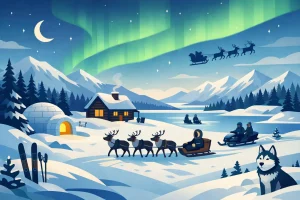
This is where Finnish Lapland shines. Deep snow, forest trails and frozen lakes create an ideal setting for the classic Arctic experiences many visitors have travelled north to find. Husky sledding is fast, joyful and full of character. Reindeer safaris move at a gentler pace through the forest. Snowshoeing lets you hear the silence between the trees, while ice fishing invites you to slow down on a frozen lake and wait for a tug beneath the ice.
These activities are easy to combine from Rovaniemi, making Finland particularly good for couples, families and groups with mixed interests. You can build a proper winter programme without needing specialist skills or a hire car. Guided experiences also mean warm clothing, safety briefings, transport and local knowledge are handled for you.
Norway certainly offers dog sledding, snowmobiling, snowshoeing and king crab adventures, particularly around Tromsø and Kirkenes. But the activity mix can be more location-dependent. On the coast, weather and snow conditions vary more than in inland Finnish Lapland. If snowmobiling through a white wilderness, meeting reindeer and trying several snow-based activities are non-negotiable, Finland is usually the simpler and more dependable fit.
That does not make Norway less adventurous. Its adventure is often about the setting: a snowshoe walk above a fjord, a boat trip through Arctic waters, or watching winter light shift across a mountain ridge.
Travel time, budget and ease of planning
For a four- or five-night winter holiday from the UK, Rovaniemi is hard to beat. Direct seasonal flights and a compact activity area make it possible to arrive, settle in and start experiencing Lapland quickly. This matters when every day counts.
Finland is also generally easier to budget. Prices vary sharply around Christmas and New Year, but the overall structure of a Rovaniemi break is clear: choose your accommodation, choose your activities and allow time for an aurora hunt. You can keep things simple or go all-out with private guiding and photography-focused nights.
Norway can be more expensive, especially for accommodation, eating out and internal travel. It is worth it for many travellers, particularly those who are drawn to Lofoten’s scenery or want the energy of Tromsø. Just leave room in your budget for transfers, meals and the possibility that a destination may need more travel time than it appears to on a map.
Families often find Finnish Lapland more straightforward because the experiences are close together and designed around winter visitors. Couples and solo travellers may be equally tempted by both, but Norway is especially appealing if they enjoy photography, road journeys and landscapes that feel raw and untamed.
Choose Finland if you want the classic Lapland story
Choose Finnish Lapland if you picture snow in every direction, want several iconic activities in one trip, or prefer a relaxed base with guided adventures on your doorstep. It is the better match for a first Arctic holiday, a short festive escape and anyone who wants the practical side of winter travel handled with confidence.
Rovaniemi also offers variety beyond the trails. You can balance wilderness days with cultural stops, family-friendly attractions and a visit to Ranua Arctic Zoo. The important thing is not to fill every hour. Arctic daylight is precious, and the quiet moments matter too: warming your hands by a fire, hearing huskies settle after a run, or looking up at a sky that may suddenly turn green.
Small-group guiding makes a real difference here. You are not just moved from one activity to the next. You have time to ask questions, understand the landscape and feel looked after when the temperature drops. At ArKtictopia, that is the heart of The Real experience: personal Arctic adventures designed around nature, not a conveyor belt of attractions.
Choose Norway if scenery leads your wish list
Choose Norway if mountains, fjords and coastal villages stir you more than a packed list of snow activities. It is ideal for travellers who are happy to embrace a little unpredictability in return for huge views and a stronger sense of expedition.
Tromsø works well if you want restaurants, culture and guided aurora trips alongside city comfort. Kirkenes is for something more remote and unusual, while Lofoten rewards travellers who can slow down and let the weather shape their route. A stormy day in Lofoten may change your plans, but it can also be one of the most atmospheric moments of the trip.
The best approach is to decide what you want to remember most. If it is the rush of driving a husky team, the crunch of snow underfoot and a warm drink beside a frozen lake before an aurora hunt, head for Finnish Lapland. If it is the sight of green lights reflected in a fjord beneath black mountain silhouettes, Norway may be calling.
Give your Arctic holiday enough nights to breathe, book the experiences that genuinely excite you, and keep one evening open for the sky. The magic is rarely found by rushing through it.