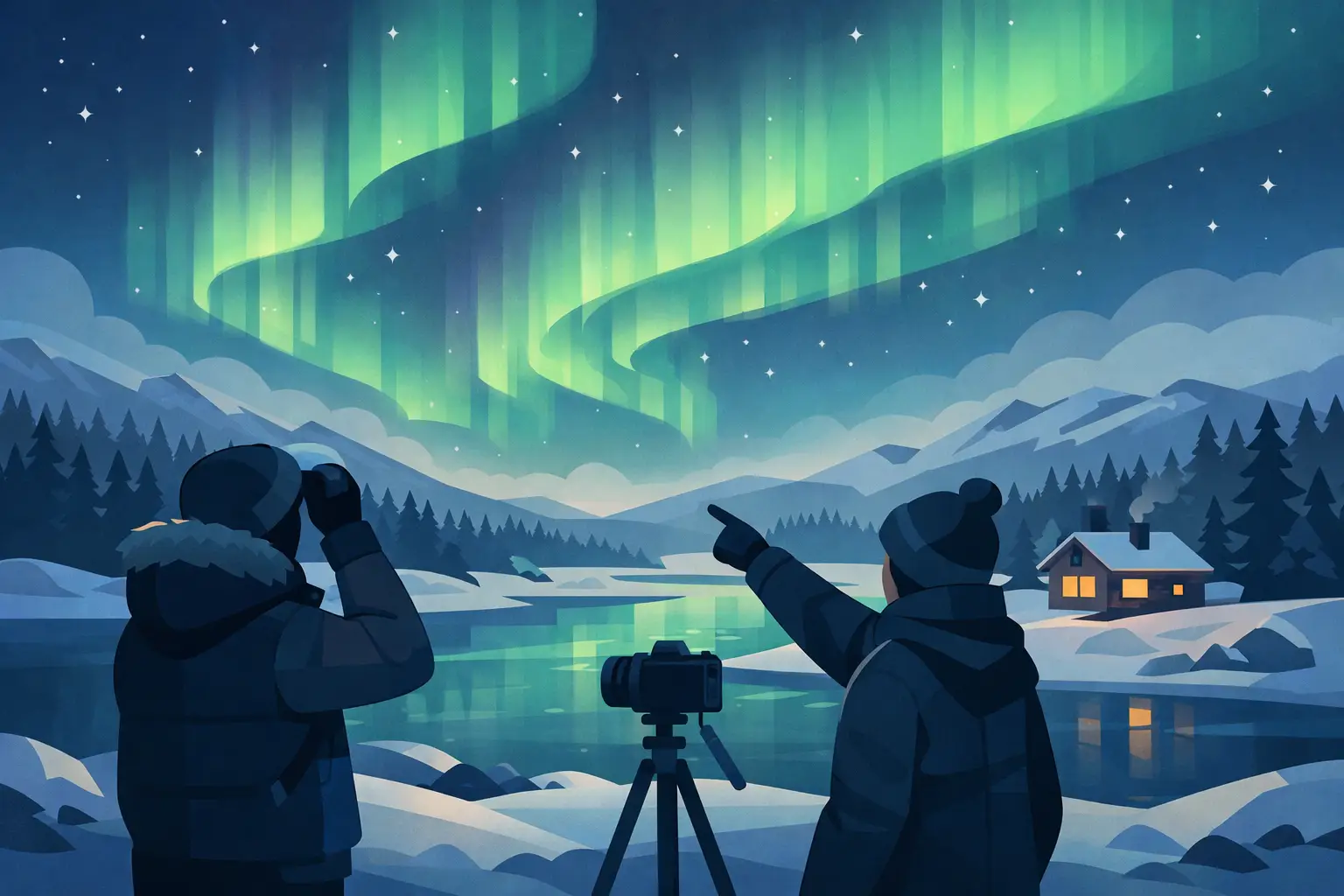
You can stand under a clear Lapland sky for hours and see nothing. Then, on another night, the whole horizon starts to move – green ribbons, a pale arc turning into a full-blown show, the sort of moment that makes everyone go quiet at once. That is exactly why a proper Rovaniemi northern lights hunting guide matters. Seeing the aurora is never something anyone can promise on command, but your choices on timing, location and tour style can make a big difference.
Rovaniemi is one of the easiest places in Finnish Lapland to begin an aurora trip. It has good flight connections, a strong winter infrastructure and fast access to dark forests, frozen lakes and open riverbanks. For travellers coming from the UK and across Europe, that balance is gold. You get the comfort of a well-connected base, but within a short drive you can still reach places that feel wild, silent and gloriously far from city glow.
Why Rovaniemi works for northern lights hunting
Some travellers assume they need to go as far north as possible. Sometimes that helps, but it is not the whole story. Rovaniemi sits right on the edge of convenience and wilderness, which makes it a smart launch point for hunting nights. When conditions line up, you can move quickly between different viewing spots instead of committing to one fixed location and hoping for the best.
That mobility matters more than many first-time visitors realise. Cloud cover can vary hugely over a relatively short distance. One area may be fully overcast while another, an hour away, has a clean opening in the sky. The best hunts are not passive evenings spent waiting beside a fire unless the forecast is already firmly on your side. They are active, weather-aware and flexible.
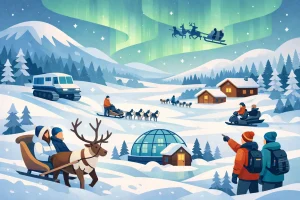
There is also a second advantage to Rovaniemi – variety. If you are planning a winter break rather than a single-purpose photography trip, you can combine aurora hunting with huskies, reindeer, snowshoeing or ice fishing without spending half your holiday on transfers. That makes the destination especially strong for couples, families and small groups who want a magical Lapland trip, not just a chase-and-repeat weather mission.
Best time to see the aurora in Rovaniemi
The season usually runs from late August into early April, but winter is when most visitors arrive and for good reason. From roughly November to March, nights are long, landscapes are snow-covered and the whole region feels like a fairy-tale set. The catch is that the prettiest winter scenery does not automatically mean the best aurora conditions every night. You still need darkness and, above all, enough clear sky.
December and January are hugely popular because they deliver peak Lapland atmosphere. Think deep snow, frosty trees and proper Arctic mood. They can also bring stubborn cloud and very short daylight hours, which some travellers love and others find surprisingly intense. February and March are often brilliant choices because the snow remains, the days become brighter and temperatures can feel a touch easier to handle. In March especially, you can get a lovely balance of winter landscapes and more manageable travel days.
If your holiday is built around the northern lights specifically, aim for at least three nights in Rovaniemi, and more if you can. One night gives you a chance. Three or four gives you a strategy.
The weather rule most people underestimate
People often focus only on aurora forecasts, but cloud cover is usually the deciding factor. Strong solar activity means very little if the sky is sealed shut. On the other hand, even moderate activity can produce a beautiful sight if you are standing in the right dark place under a clear gap.
That is why experienced guides treat forecasts as moving pieces, not fixed answers. They watch cloud maps, timing windows, moonlight, local conditions and road practicality, then adapt. Sometimes the best decision is to head far from town. Sometimes it is smarter to stay closer and wait for a break in the cloud. It depends on the night.
This is also where guided hunting starts to pull ahead of self-driving. If you hire a car and head to one scenic spot you found online, you are gambling on one guess. A proper hunt is about reading the conditions as they change and making calm, fast decisions on the move.
Rovaniemi northern lights hunting guide: choosing the right tour style
Not every aurora trip is built the same, and that is good news because not every traveller wants the same night.
A standard small-group hunt suits most visitors. It gives you the core experience – transport, local judgement, dark-sky locations and the shared excitement of searching with people who are just as invested in the sky as you are. If you want the thrill without overcomplicating the holiday, this is often the sweet spot.
A guaranteed hunt, or an outcome-focused hunt, is better for travellers who care most about maximising the odds. The emphasis is less on a cosy static camp and more on covering distance, chasing weather windows and doing what the night demands. It can mean more driving and a later finish, but if your priority is to give yourself the strongest possible chance, that trade-off makes sense.
Private hunts are ideal if you want flexibility. Couples celebrating something special, families with children, or small friend groups often prefer a guide focused only on their pace and interests. You can usually tailor stops, avoid the feel of a mixed group and keep the evening more personal.
Photography-focused hunts are worth it if you genuinely care about images rather than just a phone snap for memory. Camera settings in Arctic darkness are not intuitive, and finding a safe, dark composition while handling cold fingers and changing light can be frustrating. A guide who knows both the roads and the camera side can save a lot of trial and error.
For travellers who want that authentic, small-group feel with guides who are chasing the real thing rather than staging it, this is where operators like ArKtictopia stand out.
What to wear on an aurora hunt
You will enjoy the night far more if you dress for waiting, not walking. Hunting often involves a mix of driving and standing still in open areas, and standing still in Lapland cold bites harder than people expect.
Start with a thermal base layer, then add insulating mid-layers and a proper winter outer layer. Warm boots matter more than fashionable ones. Thick socks, a hat that covers your ears, insulated gloves and hand warmers can make the difference between an unforgettable night and an early retreat to the vehicle. If you tend to feel the cold, say so when booking. Better to ask practical questions in advance than spend the evening shivering beside a frozen lake.
Can you see the northern lights without a tour?
Yes, absolutely. If the sky is clear and activity is strong, you can sometimes see the aurora near Rovaniemi without much effort at all. There are nights when it appears above surprisingly accessible places.
But the honest answer is that DIY hunting comes with limits. You need confidence in winter driving, a sense of where artificial light drops off, and the patience to monitor changing forecasts. You also need to accept that first-time visitors often misread conditions. They either head out too early, give up too soon, or choose scenic spots that look lovely by day but are less useful for an actual hunt.
A guide does not control nature. What a good guide controls is the plan.
Camera expectations and phone reality
Modern phones are better than ever, and on a bright night you may get a decent shot. But your eyes and your camera do not see the aurora in the same way. Sometimes the lights look faint at first, then grow stronger. Sometimes a phone over-brightens the scene and gives an unrealistic result. Sometimes the show is magical in motion but awkward to capture.
If photos matter, bring a camera with manual settings and a tripod, or book a hunt where photography support is part of the experience. If they do not, give yourself permission to watch rather than document. Many travellers spend too long fighting with settings and miss the best part – that strange, electric moment when the sky begins to move.
How to give yourself the best chance
The simple version is this: stay at least a few nights, stay flexible, and choose a hunt designed around conditions rather than convenience. Do not pick a tour based only on the cheapest price or the promise of snacks by a fire. Ask how mobile the hunt is, whether groups are small, and whether the route changes according to cloud cover.
Also, plan your holiday so the aurora is not your only source of joy. That may sound odd in a guide like this, but it matters. The best Lapland trips mix anticipation with everything else that makes the Arctic unforgettable – a husky team charging through the snow, the hush of a forest trail, the blue light of afternoon on a frozen river. Then if the aurora arrives, it feels like the perfect exclamation mark rather than the entire trip resting on one uncertain night.
The northern lights reward patience, luck and smart planning in unequal measure. You cannot command them, but you can put yourself in the right place, at the right time, with people who know how to read the night. And when the sky finally turns on above Rovaniemi, it will not feel like a box ticked on a holiday list. It will feel gloriously real.