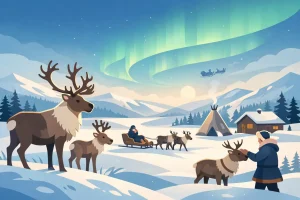
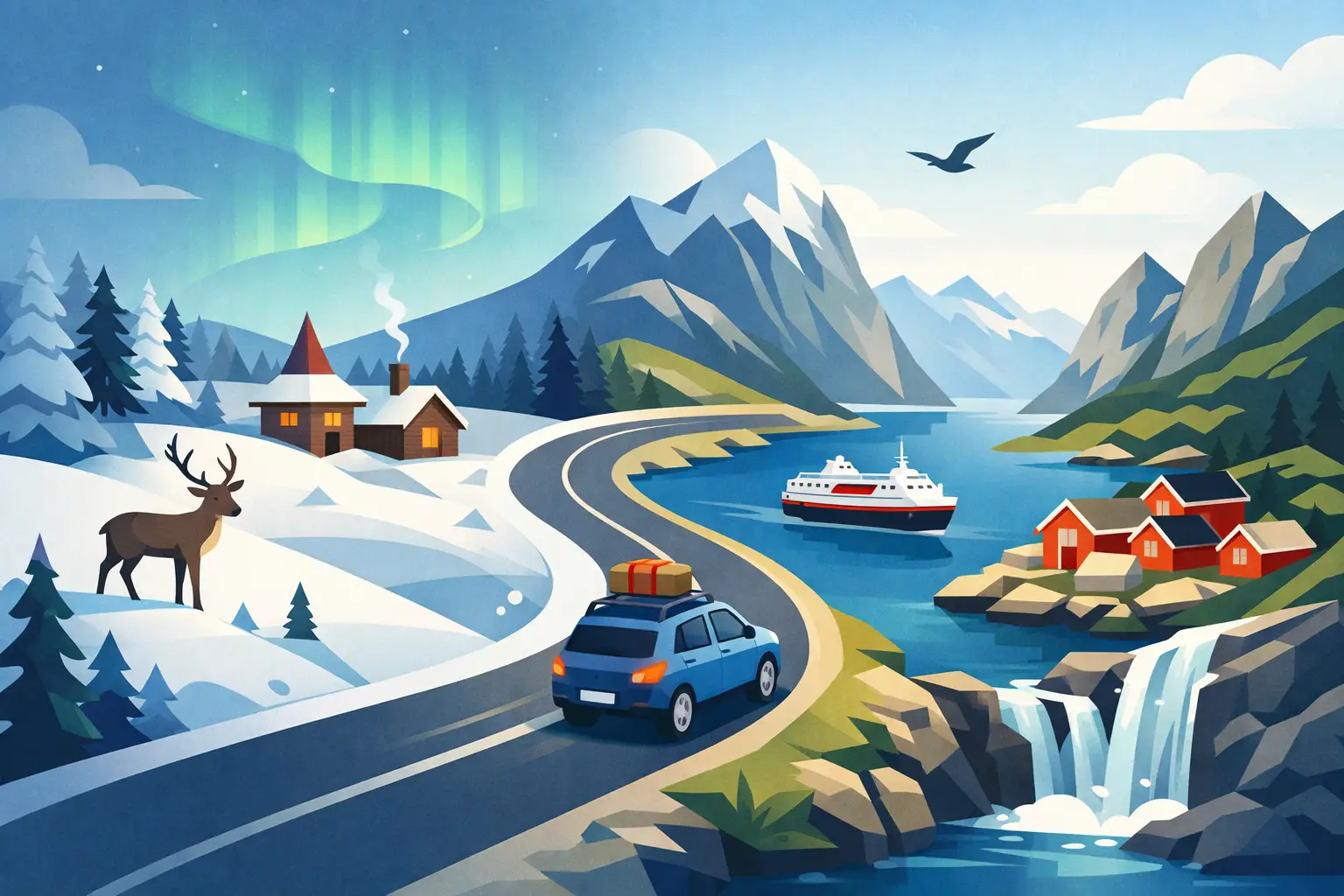
The moment you leave Rovaniemi and point north-west, Lapland starts to feel bigger, wilder and far more dramatic. A good Rovaniemi to Norway travel guide is not just about kilometres on a map – it is about choosing the right Arctic experience, in the right season, with the right pace, so your trip feels unforgettable rather than exhausting.
For many travellers, Rovaniemi is the perfect launch point. You can sleep in a lively Lapland hub, combine your stay with huskies, reindeer, snowshoeing or a Northern Lights hunt, then continue into Norway for fjords, whale-watching, coastal roads and that raw edge-of-the-world feeling. It is one of the best Arctic combinations in Europe, but winter travel here rewards good planning.
Why travel from Rovaniemi to Norway?
Rovaniemi gives you an easy arrival point, strong visitor services and plenty of winter activities. Norway gives you a different side of the Arctic – steeper landscapes, dramatic coastlines and towns that feel more exposed to the sea and weather. Put them together and you get contrast, which is what makes the journey so special.
If your dream trip includes forest silence, frozen rivers and Santa-country magic, Finnish Lapland delivers. If you also want open ocean, jagged mountains and fishing villages under Arctic light, Norway adds the next chapter. This is why so many winter travellers start in Rovaniemi rather than trying to build the whole trip around one destination.
The trade-off is distance. Norway looks close on a map, but Arctic roads, weather and border-region stretches can make journeys longer than expected. This is not the kind of trip to rush if you want to enjoy it.
Rovaniemi to Norway travel guide: choosing your route
The best route depends on what kind of Arctic holiday you actually want. Not every traveller needs the same Norway.
Rovaniemi to Tromsø
This is a strong choice if your priority is a lively Arctic city with great scenery. Tromsø has a real buzz in winter – restaurants, museums, cable car views, boat trips and a strong aurora reputation. It suits couples and friend groups who want wilderness by day but still enjoy somewhere energetic in the evening.
The journey is long, so it works best as part of a multi-day plan rather than a quick out-and-back. If you are trying to squeeze too much into four or five days total, Tromsø can feel ambitious. If you have a week or more, it becomes far more realistic.
Rovaniemi to Kirkenes
Kirkenes is a different mood altogether. It is closer in feel to the remote borderlands of the far north, and it works well for travellers who want snow activities, king crab experiences and a quieter, more rugged atmosphere. This route can make sense if you like the idea of going deeper into Arctic winter without chasing city life.
For families and travellers who prefer easier logistics, Kirkenes can be more manageable than heading all the way to Tromsø or Lofoten. It still feels adventurous, but the itinerary can be built in a cleaner, more compact way.
Rovaniemi to Lofoten
Lofoten is the dream shot route – red cabins, steep peaks, icy beaches and some of the most photogenic winter scenery anywhere in the north. It is also the one that demands the most patience. Distances are serious, roads can be slow, and the weather can change the character of the trip in a single afternoon.
If you are photographers, road-trip lovers or travellers happy to build your holiday around the journey itself, Lofoten can be magical. If you want a simple winter break with minimal moving parts, it may be more than you need.
How to travel from Rovaniemi into Norway
There is no single best answer here – only the option that fits your confidence, budget and appetite for winter driving.
Self-driving gives you freedom and some truly unforgettable roadside moments. You can stop for frozen rivers, pink midday light and snow-heavy forests that look lifted from a fairy tale. But Arctic driving is not casual driving. Roads may be well maintained, yet conditions still change fast, daylight is limited in midwinter, and a route that looks simple can become tiring after hours of concentration.
A guided multi-day trip is often the smarter choice for travellers who want the experience without the stress. It takes care of routing, timings, local judgement and those small but important decisions around weather, stops and changing plans. That matters in the Arctic, where the best day is often the one shaped by someone who knows the region rather than by a sat nav.
Public transport is possible in parts, but it is rarely the most efficient or most exciting way to do this kind of journey. Connections can be limited, and once you factor in transfers, waiting time and winter disruption, what looked cheaper on paper may cost you energy and flexibility.
When to go
December to March is the classic winter window, but each month gives you a different version of the north.
December is all atmosphere – festive lights, deep snow if the season is behaving, and that proper Christmas-card Lapland feeling. It is brilliant for travellers who want magic, but daylight is at its shortest and prices can be higher around peak dates.
January and February usually bring proper winter conditions. Think crisp air, cold temperatures and excellent snow-based activities. This is a strong period for travellers who want the full Arctic look and feel. You need to dress seriously, but the reward is the real thing.
March often suits first-time visitors especially well. There is still plenty of snow, the days are longer, and the balance between activity time and darkness for aurora hunting can be excellent. If you are worried about handling extreme cold or constant darkness, March is often a sweet spot.
What to expect at the border and on the road
For GB and European travellers, the practical side is usually straightforward, but you still need to check your own passport, driving and insurance requirements before departure. Border rules, vehicle conditions and winter equipment matter more here than on an ordinary city break.
Mobile coverage is generally good in towns and along major routes, but it is not wise to rely on your phone for everything. Batteries drain faster in the cold, and remote sections feel remote for a reason. Keep key details accessible offline and make sure your clothing, snacks and timing do not depend on a perfect signal.
Fuel, food and driving times also need a bit more respect than they do at home. In Arctic regions, services can be further apart than expected, especially outside bigger towns. A half-full tank can be less comfortable than it sounds when the next stretch is long and the temperature is well below freezing.
How many days do you need?
If you want to combine Rovaniemi and Norway properly, six to nine days is a strong minimum. Anything shorter can still work, but only if you keep the Norway section focused.
For example, a traveller with six days might spend three in Rovaniemi enjoying a Northern Lights hunt, a reindeer or husky experience and some easy time around the city, then move on for two or three days in Kirkenes. That feels full, but not frantic.
For Tromsø, seven to nine days is more comfortable. For Lofoten, it is better to think in terms of a longer winter itinerary rather than trying to force it into a rushed week.
This is where guided routing comes into its own. A well-built itinerary can help you combine the best of Finnish Lapland with Norway’s coastal drama without wasting energy on logistics. That is exactly why some travellers choose a specialist operator such as ArKtictopia for the journey rather than treating it as a DIY puzzle.
What should you pack?
Pack for stillness, not just activity. People often prepare for snowmobiling or outdoor excursions but forget how cold it can feel when standing around waiting for the aurora, taking photos or simply admiring the landscape.
Good base layers, insulated outerwear, proper gloves, warm socks and winter boots matter more than stylish extras. If you are doing a guided trip, some specialist gear may be provided for certain activities, but you should never assume your everyday winter coat is enough for Arctic evenings.
A camera is worth bringing if you enjoy photography, but do not let gear take over the trip. Some of the best Arctic moments happen when you stop fiddling with settings and just look up.
The best kind of traveller for this trip
This journey suits travellers who want more than a city break and more structure than a wild expedition. It is ideal for couples chasing a magical winter escape, families wanting safe but memorable adventure, and small groups who like the idea of nature doing the heavy lifting.
It is less ideal if you dislike long travel days, hate changing weather or want every moment to be polished and predictable. The Arctic has a mind of its own. That is part of the thrill.
The real beauty of a Rovaniemi to Norway journey is that it gives you two versions of the north in one holiday – Lapland’s soft, snowy wonder and Norway’s dramatic coastal edge. Leave space for both, dress properly, and do not try to outsmart the Arctic. It usually gives the best memories to travellers who meet it on its own terms.